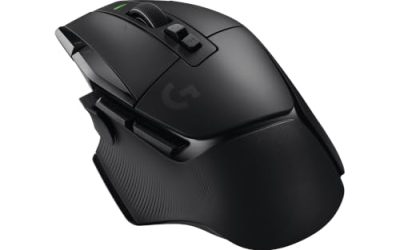
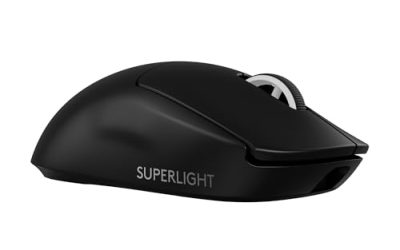
Our Short List of 3

- Best for: desk workers who play strategy, simulation and RPG games after hours
- Sensor: Darkfield high-precision, up to 8,000 DPI
- Tracking: works on glass, 4 mm minimum thickness
- Buttons: 7, with Quiet Clicks
- Scroll: MagSpeed electromagnetic wheel plus thumb wheel

- Best for: players with wrist or forearm discomfort who mostly play slower-paced games
- Sensor: optical, up to 4,000 DPI
- Shape: 57-degree vertical angle, right-handed
- Buttons: 4
- Connection: Bluetooth, USB receiver and wired; pairs with up to 3 computers

- Best for: laptop owners who game on the road or at a second desk
- Sensor: Darkfield high-precision, up to 8,000 DPI, tracks on glass
- Buttons: 6, with Quiet Clicks
- Scroll: MagSpeed electromagnetic wheel
- Connection: Bluetooth; Logi Bolt receiver supported but not included
All 4 Picks at a Glance
| Product | Specs | Action |
|---|---|---|
| Logitech MX Master 3S |
| Check price on Amazon |
| Logitech MX Vertical |
| Check price on Amazon |
| Logitech MX Anywhere 3S |
| Check price on Amazon |
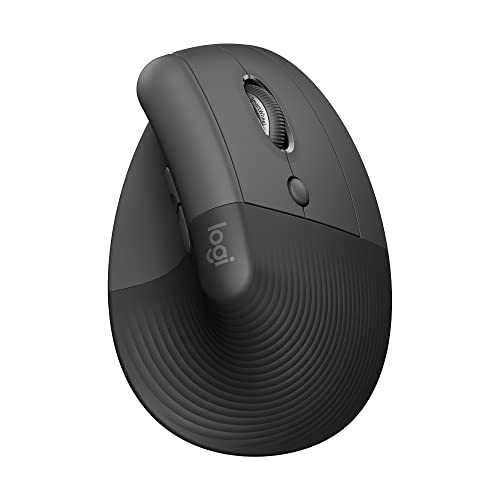 Logitech Lift Vertical |
| Check price on Amazon |
Our Top Picks
The mouse you want for eight hours of spreadsheets is rarely the mouse sold for ranked play, but plenty of people only own one desk and one mouse. The good news is that modern office mice have quietly closed much of the gap: sensors that track on glass, accurate high-DPI optics and wireless links that no longer drop out mid-session. What they still give up is report rate and weight, and those two trade-offs decide which games feel fine and which feel compromised.
This guide is for hybrid users: people who work at a desk all day and play slower-paced or casual games at night, players whose wrists prefer an ergonomic shape, and laptop owners who need one mouse for everything. Every pick below is a productivity or ergonomic mouse first, chosen because the sensor, buttons and connection listed on its Amazon product page are good enough to game on without embarrassment.
Quick Picks
As an Amazon Associate we earn from qualifying purchases
| Product | Best for | Key spec from title |
|---|---|---|
| Logitech MX Master 3S | All-day work plus evening strategy and RPG sessions | 8K DPI Darkfield sensor that tracks on glass |
| Keychron M6 8K | Players who refuse to give up gaming-grade response | PixArt 3950 sensor with 8000 Hz polling |
| Logitech MX Vertical | Wrist comfort during long work and play sessions | 57-degree vertical angle |
| Logitech MX Anywhere 3S | Laptop bags and small desks | 8K DPI sensor in a 99 g compact body |
| Logitech Lift Vertical | Smaller hands that want a vertical shape | 57-degree design sized for small to medium hands |
How to Choose
Polling rate is the compromise you will actually feel
Gaming mice report their position to the PC 1,000 times per second or more, while most office mice report far less often, which adds a small delay between moving your hand and seeing the cursor answer. In turn-based strategy, city builders, RPGs and casual shooters that delay is almost impossible to notice. In competitive FPS play it is the first thing you will feel, especially on a high-refresh monitor. If you play both, look for an office mouse with a 2.4 GHz mode and the highest polling figure on its listing, and treat Bluetooth as the work-only connection.
Sensor quality matters more than the DPI headline
An 8,000 or 30,000 DPI ceiling sounds like a gaming spec, but what decides whether a mouse games well is tracking accuracy at the 400 to 3,200 DPI range most people actually use. Look for a named sensor on the listing, a stated tracking speed in IPS, and any-surface tracking if your desk has no pad. Office sensors from Logitech’s Darkfield line track on glass and rarely spin out during fast swipes, which covers casual play comfortably. What they lack is the raw tracking speed of esports sensors, so very fast flick shots remain their weak point.
Shape and weight decide comfort, not specs
Office mice are heavier than gaming mice because they carry bigger batteries, metal scroll wheels and sculpted shells, and that weight is fine until you start lifting the mouse to recenter it fifty times a match. A sculpted right-handed shape suits palm grips and long sessions; a vertical shape rotates your forearm into a handshake position that many sore wrists prefer. Check the listed weight and dimensions against your current mouse before buying, and be honest about your grip: small travel mice punish large hands, and tall ergonomic shells feel clumsy for fingertip aiming.
Buttons, wheels and connections do the daily work
Productivity mice earn their keep with hardware gaming mice often skip: free-spinning or dual scroll wheels for long documents, thumb wheels for timelines and spreadsheets, and buttons you can remap in software for each app or game. For gaming, confirm the listing shows at least back and forward side buttons, since those become push-to-talk, melee or ability keys. Connection matters too. A 2.4 GHz receiver gives the most responsive link these mice offer, Bluetooth frees a port for laptop work, and a wired mode that works while charging saves you when the battery dies mid-session.
The 5 Best Options
Logitech MX Master 3S
- Best for: desk workers who play strategy, simulation and RPG games after hours
- Sensor: Darkfield high-precision, up to 8,000 DPI
- Tracking: works on glass, 4 mm minimum thickness
- Buttons: 7, with Quiet Clicks
- Scroll: MagSpeed electromagnetic wheel plus thumb wheel
desk workers who play strategy, simulation and RPG games after hours
the report rate is office-grade, so competitive FPS aiming feels a step behind a 1,000 Hz gaming mouse; confirm the listing is the Standard Edition with the Logi Bolt receiver in the box, since the Bluetooth Edition leaves it out.
The MX Master 3S is the default recommendation for people whose mouse has to do everything. Its sculpted shell fills a medium or large palm, the Darkfield sensor tracks on glass and polished desks where gaming sensors give up, and the MagSpeed wheel plus thumb wheel are genuinely useful in editors and timelines. For gaming it suits strategy, simulation, RPG and slower shooters: tracking is accurate and the side buttons remap well in Logi Options+. What it cannot do is match a gaming mouse for report rate or flick speed, and at 141 g it is the heaviest mouse here by a wide margin.
Keychron M6 8K
The M6 8K is the exception that proves the rule: an ergonomic office mouse with a flagship gaming sensor inside. Its PixArt 3950 tracks at up to 750 IPS and the 2.4 GHz link polls at up to 8,000 Hz, figures no other mouse in this guide comes close to, so fast-paced games feel properly responsive. Around that sensor Keychron built a work mouse: a tall right-handed shell with a thumb rest, silent switches, an infinite scroll wheel and a side wheel for horizontal scrolling. If your only objection to office mice was latency, this is the one that removes it.
Specs
- Sensor: PixArt 3950 optical, up to 30,000 DPI
- Tracking speed: up to 750 IPS
- Polling rate: up to 8,000 Hz over 2.4 GHz
- Connection: 2.4 GHz, Bluetooth and wired
- Buttons: 10+ customizable, silent switches
- Scroll: dual wheels, infinite and horizontal scrolling
- Weight: 86 g
- Dimensions: 4.82 x 2.97 x 1.97 in
Best for: hybrid players who want office ergonomics without giving up gaming-grade response
Watch out for: this listing sells several M6 versions, so confirm you are ordering the 8K PixArt 3950 model rather than the 1K variants; running 8,000 Hz polling also drains the battery far faster than office settings.
ASIN: B0FP2F8843
Logitech MX Vertical
- Best for: players with wrist or forearm discomfort who mostly play slower-paced games
- Sensor: optical, up to 4,000 DPI
- Shape: 57-degree vertical angle, right-handed
- Buttons: 4
- Connection: Bluetooth, USB receiver and wired; pairs with up to 3 computers
players with wrist or forearm discomfort who mostly play slower-paced games
the vertical grip takes days to feel natural and suits palm grips only; with four buttons and an office-grade report rate, ability-heavy or competitive play will expose its limits quickly.
If your wrist complains before your games end, the MX Vertical is the pick shaped around that problem. The 57-degree shell puts your hand in a handshake position and keeps your forearm from twisting flat against the desk, which many people find easier across a full workday plus an evening session. Its 4,000 DPI sensor is modest on paper but tracks cleanly for strategy games, RPGs, MMOs and casual shooters, and the four buttons cover the basics plus a DPI switch on top. It connects to three computers, so one mouse can serve a work laptop and a gaming PC.
Logitech MX Anywhere 3S
- Best for: laptop owners who game on the road or at a second desk
- Sensor: Darkfield high-precision, up to 8,000 DPI, tracks on glass
- Buttons: 6, with Quiet Clicks
- Scroll: MagSpeed electromagnetic wheel
- Connection: Bluetooth; Logi Bolt receiver supported but not included
laptop owners who game on the road or at a second desk
there is no receiver in the box, so a desktop without Bluetooth needs a Logi Bolt receiver bought separately; large hands will find the low shell tiring in palm grip.
The Anywhere 3S shrinks the MX formula into a 99 g mouse that disappears into a laptop sleeve, which makes it the natural pick for anyone who works and plays in more than one place. It keeps the important parts: the same 8,000 DPI Darkfield sensor that tracks on glass, quiet clicks, a MagSpeed wheel and six buttons. Hotel desks, kitchen tables and cafe counters are all fair game, and battery life stretches to 70 days. The compromises are size and speed: the small shell supports fingertip and claw grips better than a relaxed palm, and the report rate is still office-grade.
Logitech Lift Vertical
- Best for: smaller hands that want vertical comfort for work and relaxed gaming
- Sensor: optical, up to 4,000 DPI
- Shape: 57-degree vertical angle, sized for small to medium hands
- Clicks: Quiet Clicks
- Connection: Bluetooth or Logi Bolt USB receiver
smaller hands that want vertical comfort for work and relaxed gaming
count the buttons on the listing before ordering, because the title and Logitech’s own spec sheet disagree on the total; the AA battery also means no quick-charge rescue when it finally runs flat.
The Lift takes the vertical idea and scales it down for small to medium hands, which are exactly the hands the bigger MX Vertical overwhelms. The same 57-degree angle keeps your forearm untwisted, the clicks are quiet enough for shared rooms, and the sensor adjusts up to 4,000 DPI, plenty for management games, RPGs and casual co-op. Battery life is the headline for low-maintenance users: a single AA cell is rated for up to two years, so there is no charging cable in your routine. Left-handed buyers should note the mirrored Lift Left is a separate listing.
Which One Fits Your Situation
You play strategy, simulation and city builders
These games reward precise clicking and long comfortable sessions rather than raw sensor speed, so the MX Master 3S is the safest buy: its sensor tracks anywhere, the free-spinning wheel flies through build menus, and the thumb buttons map well to camera controls. The MX Vertical is the alternative if your wrist aches during marathon sessions, trading some button count for a kinder grip angle.
You play casual shooters with friends
Occasional FPS nights are where the polling gap shows up, so pick the Keychron M6 8K and run it on the 2.4 GHz receiver: its 8,000 Hz polling and 750 IPS sensor are genuine gaming hardware, and the silent ergonomic shell still behaves at work the next morning. Every other mouse here will feel a half-step behind in fast firefights, however good its sensor is on paper.
Your wrist hurts after long desk days
Start with shape, not specs. The MX Vertical fits medium and large hands and gives you a rechargeable battery plus three-device switching; the Lift covers small to medium hands and runs for up to two years on one AA battery. Either will handle turn-based games, RPGs and co-op sessions comfortably, and both pair with the PC you already work at.
You game on a laptop in several places
The MX Anywhere 3S is built for a moving desk: it is small enough for a sleeve pocket, tracks on glass and laminate surfaces, and lasts up to 70 days between charges. Pair it over Bluetooth and the same mouse covers your work laptop and your gaming laptop. Just confirm your machines have Bluetooth, because no receiver is included in the box.
Common Mistakes
- Buying for the DPI headline: a 30,000 DPI ceiling does nothing if you play at 800 DPI; tracking accuracy and polling rate matter more.
- Gaming over Bluetooth: Bluetooth adds latency on top of an already modest report rate, so use the 2.4 GHz receiver or a cable for anything fast-paced.
- Ignoring the listed weight: a 141 g productivity mouse will tire your arm in games built around constant lifting and recentering.
- Assuming the receiver is in the box: several office mice ship as Bluetooth-only packages, which strands older desktops that have no Bluetooth.
- Expecting esports results: no office mouse here replaces a dedicated gaming mouse for ranked FPS play, so buy one for hybrid use, not for a promotion push.
Frequently Asked Questions
Can an office mouse really keep up in games?
For most genres, yes. Strategy, RPG, simulation, MMO and casual co-op games ask for accurate tracking and comfortable buttons, which these mice deliver. The gap appears in fast competitive shooters, where lower report rates and heavier shells cost you reaction time. Match the mouse to the games you actually play most, not the hardest title you touch twice a year.
Why does polling rate matter more than DPI here?
Polling rate sets how often the mouse reports movement, so it directly affects how responsive aiming feels. DPI only sets how far the cursor travels per inch of hand movement, and most players use a narrow band of it. An office mouse with a strong sensor but a slow report rate feels smooth in menus yet laggy in a firefight, which is why this guide weighs polling first.
Is a vertical mouse good for gaming?
A vertical mouse works well for slower-paced gaming because the handshake grip is sustainable for hours and the sensors in picks like the MX Vertical and Lift track cleanly at sensible DPI settings. It struggles where games demand rapid lifting, fingertip corrections and many side buttons. Treat it as a comfort-first choice for strategy, RPG and co-op play rather than an FPS tool.
Should I just buy a gaming mouse instead?
If competitive shooters are your main hobby, yes: a dedicated gaming mouse gives you 1,000 Hz or higher polling, a lighter shell and switches built for rapid clicking, and nothing here changes that. If gaming is the second job of a mouse that works all day, the picks above are the sensible compromise, especially the Keychron M6 8K, which narrows the performance gap the most.
FAQ
Can an office mouse really keep up in games?
Why does polling rate matter more than DPI here?
Is a vertical mouse good for gaming?
Should I just buy a gaming mouse instead?
More from Amazon
Programs that pair well with the guide above. Offers and eligibility are set by Amazon and may change.
Free shipping on eligible items, Prime Video and more. Eligible new members can start with a free trial.
Start a Prime free trialAd-free music streaming. Eligible new subscribers can start with a free trial.
Try Music Unlimited freeA Prime membership for ages 18-24 with a trial period. Eligibility is set by Amazon.
See Prime for Young AdultsAudiobooks and podcasts to listen to on the go. Eligible new members can start with a free trial.
Try Audible freeAs an Amazon Associate we earn from qualifying purchases.