Key takeaways
- VRAM capacity: 4GB is the bare minimum for modern gaming; 8GB or more is recommended for 1080p-and-up titles with high-res textures.
- GPU generation and architecture: Newer architectures (like RTX 30-series or RX 7000-series) deliver far better performance-per-watt than older cards, even at similar price points.
- Physical fit and power draw: Check your case clearance, PCIe slot type, and whether your PSU has the required 6/8-pin connectors before buying a full-size gaming card.
- Output ports: Match the card’s HDMI, DisplayPort, DVI, or VGA outputs to your monitor’s inputs, especially if you’re using an older display.
- Intended use case: Low-profile cards like GT 710/730/740 are built for HTPCs and office use, not gaming; reserve them for basic display needs and pick a dedicated gaming GPU for actual play.
What's inside
Choosing a graphics card in 2026 means wading through a market split between budget office-style cards, legacy low-profile options for slim builds, and genuine gaming GPUs capable of handling modern titles at high settings. The wrong pick can leave you bottlenecked in esports titles or unable to run AAA games at acceptable frame rates, while overspending on horsepower you don’t need wastes money that could go toward a better monitor or more RAM.
This guide breaks down six popular graphics cards spanning entry-level HTPC and productivity builds up through capable 1080p and 1440p gaming performers, so you can match a card to your case size, power supply, and the games you actually want to play.
As an Amazon Associate we earn from qualifying purchases.




🎮 Get More From Your Setup — Free
Prime Gaming gives you free PC games every month, in-game loot, and a free Twitch channel sub — plus fast free shipping on all the gear above. New members get a 30-day free trial.
Watch: Best Vga Card For Gaming — Video Review
How to Choose a Vga Card For Gaming (2026)
- VRAM capacity: 4GB is the bare minimum for modern gaming; 8GB or more is recommended for 1080p-and-up titles with high-res textures.
- GPU generation and architecture: Newer architectures (like RTX 30-series or RX 7000-series) deliver far better performance-per-watt than older cards, even at similar price points.
- Physical fit and power draw: Check your case clearance, PCIe slot type, and whether your PSU has the required 6/8-pin connectors before buying a full-size gaming card.
- Output ports: Match the card’s HDMI, DisplayPort, DVI, or VGA outputs to your monitor’s inputs, especially if you’re using an older display.
- Intended use case: Low-profile cards like GT 710/730/740 are built for HTPCs and office use, not gaming; reserve them for basic display needs and pick a dedicated gaming GPU for actual play.
The Best Vga Card For Gaming (2026)s Reviewed
GIGABYTE RTX 3060 Gaming OC 12G
The clear gaming pick of this lineup, the RTX 3060 pairs 12GB of GDDR6 with triple-fan WINDFORCE cooling to deliver smooth 1080p and solid 1440p performance in current titles. Its generous VRAM buffer also gives it better longevity than cards with 8GB or less as game requirements climb.
Gigabyte RX 7600 8GB Gaming OC
AMD’s RX 7600 offers excellent 1080p performance and efficient power draw, making it a strong alternative for gamers who prioritize value and don’t need ray tracing muscle. It’s a well-rounded choice for competitive shooters and most modern AAA titles at high settings.
SOYO GeForce GT 740 4GB
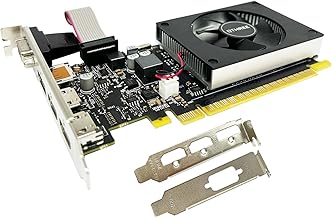
This low-profile GT 740 is designed for slim desktops and light gaming or media use rather than demanding titles, with triple display output flexibility via HDMI, VGA, and DVI-D. It’s a practical upgrade from integrated graphics for older or compact systems, not a card for modern AAA gaming.
QTHREE GeForce GT 730 4GB
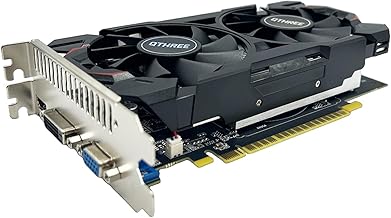
The GT 730 targets basic multi-monitor productivity and older or indie game support, with dual HDMI plus DP and VGA outputs offering excellent display flexibility for small form factor builds. Treat it as a display-output upgrade rather than a gaming performance solution.
msi GeForce GT 710 2GB
An entry-level, single-fan low-profile card, the GT 710 is best suited to HTPC setups, office rigs, or systems needing basic video output rather than gaming workloads. Its 2GB GDDR3 buffer and 64-bit bus keep it firmly in the “display card” category.
Frequently Asked Questions
Can low-profile cards like the GT 710, GT 730, or GT 740 handle modern gaming?
Not comfortably. These cards are built for basic display output, media playback, and older or lightweight games; for current titles you’ll want a dedicated gaming GPU like the RTX 3060 or RX 7600.
Is 8GB of VRAM enough for gaming in 2026?
For 1080p gaming, 8GB is generally sufficient for most current titles. If you’re gaming at 1440p or want more headroom for future releases, 12GB cards like the RTX 3060 offer better long-term value.
Do I need extra power supply connectors for a gaming GPU?
Yes, most dedicated gaming cards like the RTX 3060 and RX 7600 require one or more PCIe power connectors (typically 6-pin or 8-pin) from your PSU, unlike low-profile cards that draw power solely from the PCIe slot.
What’s the difference between NVIDIA and AMD cards at similar price points?
NVIDIA cards like the RTX 3060 tend to offer stronger ray tracing and upscaling features (DLSS), while AMD cards like the RX 7600 often provide competitive raw rasterization performance and efficiency at a comparable or lower price.
Final Thoughts
For genuine gaming performance in 2026, the GIGABYTE RTX 3060 Gaming OC 12G is the standout pick thanks to its ample VRAM and reliable cooling, with the Gigabyte RX 7600 8GB close behind as a strong value alternative. If you only need basic display output for a slim HTPC or office build, the SOYO GT 740 remains the most practical low-profile option of the group.