Key takeaways
- Unrivaled performance: The fastest consumer GPU for gaming, creation, and AI.
- Huge 32GB buffer: Ample memory for the most demanding workloads.
- Excellent cooling: Premium partner designs keep temps and noise low.
- DLSS 4 support: Extends the performance lead in supported titles.
What's inside
The RTX 5090 launched as the most powerful and most expensive consumer GPU available, and its price has been a moving target ever since. For anyone considering Nvidia’s flagship, understanding what you actually get for the money, and how partner card pricing varies, is essential before committing to such a significant purchase. This review examines the RTX 5090 through the lens of current pricing and value.
Using top partner designs from ASUS, GIGABYTE, and ZOTAC, we assess whether the 5090’s performance justifies its premium at today’s prices. The focus is on who genuinely benefits from this card and how to buy it wisely if you decide it’s for you.
As an Amazon Associate we earn from qualifying purchases.


🎮 Get More From Your Setup — Free
Prime Gaming gives you free PC games every month, in-game loot, and a free Twitch channel sub — plus fast free shipping on all the gear above. New members get a 30-day free trial.
Watch: Rtx 5090 Price Now: Review & Buyer’s Guide — Video Review
Design & Build
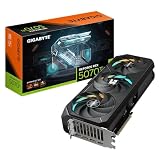
The 5090 is a physically imposing card in every form. The ASUS TUF Gaming RTX 5090 uses a 3.6-slot cooler with military-grade components, while GIGABYTE’s Gaming OC, Windforce, and AORUS Master ICE designs feature large triple-fan coolers and reinforced structures. The ZOTAC AMP Extreme Infinity adds elaborate cooling and ARGB, and the AORUS AI Box offers an unusual external-GPU option. All are superbly built, but their size and power draw demand careful case and PSU planning.
Performance
The RTX 5090 is unmatched. With 32GB of GDDR7 and DLSS 4, it delivers effortless 4K gaming at high refresh rates and dominates creator and AI workloads. No other consumer card comes close. Partner models differ mainly in cooling and acoustics, with premium designs like the AORUS Master ICE and ZOTAC AMP Extreme running cooler and quieter under sustained load. The performance is extraordinary, but it’s only fully realized in genuinely demanding scenarios, for lighter gaming, much of that power goes unused.
Pros & Cons
- Unrivaled performance: The fastest consumer GPU for gaming, creation, and AI.
- Huge 32GB buffer: Ample memory for the most demanding workloads.
- Excellent cooling: Premium partner designs keep temps and noise low.
- DLSS 4 support: Extends the performance lead in supported titles.
- Very high price: Justified only for demanding users; partner premiums add more.
- Size and power demands: Requires a large case and strong PSU.
Alternatives to Consider
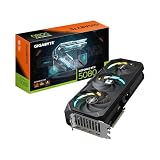
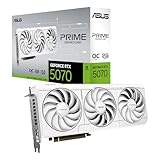
For most gamers, the RTX 5080 delivers the majority of the 4K experience for far less money, and the 5070 Ti is excellent for high-refresh 1440p. The 5090 only makes financial sense if you need its memory and compute for 4K-max gaming combined with professional or AI work. Otherwise, a lower tier offers better value.
Frequently Asked Questions
Is the RTX 5090 worth its current price?
It depends on your needs. For 4K-max gaming plus creator or AI work, it’s the best available. For gaming alone, the 5080 offers better value.
How much do partner cards cost above baseline?
Premium designs with elaborate cooling command notable premiums. If value matters, look for models closer to the baseline price rather than flagship variants.
What system do I need to run a 5090?
Plan for a large case with clearance, a high-wattage quality PSU with the correct connector, and a strong CPU to avoid bottlenecking the card.
Will 5090 prices drop?
Flagship cards tend to hold value longer than mid-range models. If you need one, buying a near-baseline model is more reliable than waiting for large discounts.
Verdict
The RTX 5090 remains the undisputed performance king, but it’s a specialist tool for those who need its power. If you game at 4K and work in creation or AI, it justifies the cost, look for a near-baseline model like the ASUS TUF or GIGABYTE Gaming OC. For pure gaming, the 5080 is the smarter buy. Match the card to your workload before spending.