Key takeaways
- 1080p: the gap shrinks to around 10-15%, often limited by the CPU.
- 1440p: the 7900 XT is roughly 14-19% faster.
- 4K: the gap tends to widen toward the upper end of that range, as the GRE’s narrower memory bus becomes a bottleneck.
Moving from an RX 7900 XT to an RX 7900 GRE is not an upgrade: the GRE is roughly 14-19% slower at 1440p, has 4 GB less VRAM and the same feature set, so an XT owner should keep their card, while a buyer choosing between the two should pick the RX 7900 XT for 1440p high refresh and 4K, and the GRE only when it costs clearly less. The one scenario where swapping makes sense is selling an XT to fund something else and accepting a modest performance drop in exchange for lower power draw.
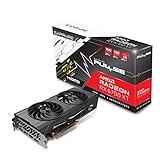
Both cards are RDNA 3 Radeons built on the same Navi 31 silicon family, so this comparison is really about how much of that chip you get. The RX 7900 XT launched in November 2022 at $899, and the RX 7900 GRE (“Golden Rabbit Edition”) arrived in July 2023 at $549 as a cut-down version. Both are now previous-generation cards, sitting below AMD’s current RDNA 4 lineup (RX 9070, 9070 XT and 9070 GRE), which matters when it comes to features.
What Changes on Paper
| Specification | RX 7900 XT | RX 7900 GRE |
|---|---|---|
| Architecture | RDNA 3.0 | RDNA 3.0 |
| Release date | 3 November 2022 | 27 July 2023 |
| Launch MSRP | $899 | $549 |
| Stream processors | 5376 | 5120 |
| Boost clock | 2394 MHz | 2245 MHz |
| Process | 5 nm | 5 nm |
| TDP | 300 W | 260 W |
| Memory | 20 GB GDDR6 | 16 GB GDDR6 |
| Memory bus | 320-bit | 256-bit |
| Bandwidth | 800.0 GB/s | 576.0 GB/s |
| L2 / Infinity Cache | 6 MB / 80 MB | 6 MB / 64 MB |
| Interface | PCIe 4.0 x16 | PCIe 4.0 x16 |
| Power connectors | 2x 8-pin | 2x 8-pin |
| Length / width | 276 mm, 2-slot | 276 mm, 2-slot |
| Outputs | 1x HDMI 2.1a, 2x DP 2.1, 1x USB-C | 1x HDMI 2.1a, 2x DP 2.1, 1x USB-C |
The shader count gap is small (5376 vs 5120, about 5%), so most of the performance difference comes from clocks and memory. The XT has a wider 320-bit bus, 39% more bandwidth (800 vs 576 GB/s) and more Infinity Cache. That memory advantage matters most at 4K, which is exactly where the gap between these two cards grows.
Performance Class: How Far Apart Are They?
Reviewers broadly agree that the RX 7900 XT is a full tier above the GRE. According to Gamers Nexus’ review data, the 7900 XT led the GRE by around 14% in its 1440p results, with the GRE sitting roughly halfway between the 7900 XT and the RX 7800 XT. KitGuru’s per-game numbers showed the GRE trailing the 7900 XT by about 17-19% in titles such as Red Dead Redemption 2 and Alan Wake 2. Across published reviews, a fair summary is:
- 1080p: the gap shrinks to around 10-15%, often limited by the CPU.
- 1440p: the 7900 XT is roughly 14-19% faster.
- 4K: the gap tends to widen toward the upper end of that range, as the GRE’s narrower memory bus becomes a bottleneck.
The GRE performs about on par with an RTX 4070 Super in raster, while the 7900 XT sits closer to the RTX 4070 Ti Super class. In real terms, a demanding AAA game that runs around 70-80 FPS at 1440p ultra on the GRE would typically land somewhere in the 80-95 FPS range on the XT, though exact figures vary by settings, CPU and patch. Notably, the GRE’s memory was clocked conservatively at launch, and later driver-side memory overclocking options helped enthusiasts claw back a few percent, but it does not close the gap fully.
Ray tracing
Both cards use the same RDNA 3 ray tracing hardware, so the relative gap in RT titles is similar to raster, roughly the same 15-20% advantage for the XT. Neither card is strong in heavy path-traced games compared with NVIDIA’s RTX 40 or 50 series, or with AMD’s own RDNA 4 cards, which made big RT gains.
Features: Nothing New Either Way
Because both are RDNA 3, switching between them does not unlock or lose any features:
- Both support FSR 3.1 upscaling and frame generation, and AMD Fluid Motion Frames at the driver level.
- FSR 4’s machine-learning upscaler is officially built for RDNA 4 cards, so neither card gets it as a supported feature.
- Neither card supports DLSS, which is NVIDIA-only.
- Both have the same AV1 encoder, DisplayPort 2.1 outputs and USB-C port on reference designs.
If you want FSR 4 or a big jump in ray tracing, the meaningful move is to an RDNA 4 card such as the RX 9070 XT, not sideways within the RDNA 3 family.
VRAM: 20 GB vs 16 GB
A practical guide to how much memory current games want:
- 1080p: 8-12 GB covers almost every game.
- 1440p: 12-16 GB is comfortable, even with ray tracing.
- 4K: 16 GB handles most games; 20 GB adds a buffer for ultra texture packs, heavy mods and future titles.
The GRE’s 16 GB is not a weakness for gaming today. The XT’s 20 GB is more of a long-term cushion, and it is also useful for local AI workloads and large creative projects where extra VRAM directly enables bigger models or scenes.
Power, PSU and Fit
Both cards use two 8-pin connectors and the same 276 mm, 2-slot reference size, so a swap requires no new cables and no case changes. Partner cards can be longer and thicker, so measure if you buy a triple-fan model.
PSU sizing using GPU TDP + CPU + about 150 W headroom:
- RX 7900 XT: 300 W + 125 W CPU + 150 W = 575 W, so a quality 650-750 W unit.
- RX 7900 GRE: 260 W + 125 W CPU + 150 W = 535 W, so a quality 650 W unit.
The 40 W difference in rated board power is the GRE’s one tangible benefit for an existing XT owner: slightly less heat and fan noise, and a few dollars a year in electricity depending on your usage and local rates. It is not enough to justify a swap on its own.
Cost per Frame: The Real Math
Using launch MSRPs and treating the GRE as 100 and the XT as about 116 (middle of the 14-19% range at 1440p):
- RX 7900 GRE: $549 / 100 = about $5.49 per performance point.
- RX 7900 XT: $899 / 116 = about $7.75 per performance point.
At launch prices the GRE was the better value, which is why it became popular. The XT’s price fell substantially after launch, though, and in today’s used market the two are much closer. Used RX 7900 XT cards usually sell around $450-$550, and used RX 7900 GRE cards usually around $380-$450, depending on model and condition. At those levels, the XT often costs only 15-20% more for roughly 15-19% more performance, which makes it the better buy if you game at 1440p high refresh or 4K.
Who Should Do What
| You are… | Recommendation |
|---|---|
| An RX 7900 XT owner thinking of “upgrading” to a GRE | Do not. It is a downgrade in speed and VRAM with no new features. |
| A GRE owner looking at a used 7900 XT | Only worth it at 4K or for VRAM-heavy work; the 15-19% gain is noticeable but not transformative. |
| Buying used for 1440p, budget-limited | RX 7900 GRE if the price gap is large. |
| Buying used for 4K or high-refresh 1440p | RX 7900 XT. |
| Want FSR 4 or much better ray tracing | Skip both and look at RDNA 4 or RTX 50 cards. |
Verdict
The RX 7900 XT is the stronger card in every performance metric, with more VRAM and bandwidth. The RX 7900 GRE is the value pick that delivers most of the experience at 1440p for less money and a little less power. Owners of a 7900 XT have no reason to switch down; buyers should let the price gap decide.
Frequently Asked Questions
Is the RX 7900 GRE better than the RX 7900 XT?
No. The RX 7900 XT is roughly 14-19% faster at 1440p according to published reviews, and it has 20 GB of VRAM versus 16 GB. The GRE’s advantages are lower price and slightly lower power draw.
Is the 7900 GRE enough for 1440p gaming?
Yes. It performs around RTX 4070 Super level in raster games and handles 1440p at high or ultra settings in most titles. Heavy ray tracing still benefits from upscaling.
Can either card use FSR 4?
FSR 4 is officially aimed at RDNA 4 cards such as the RX 9070 series. The RX 7900 XT and GRE support FSR 3.1 upscaling and frame generation instead. Both can also use XeSS in supported games.
Do I need a new PSU to move between these cards?
No. Both use two 8-pin connectors and similar power ratings. A quality 650-750 W unit runs either card with a mainstream CPU.
What is a fair used price for an RX 7900 XT in 2026?
Used RX 7900 XT cards usually trade around $450-$550 depending on cooler model and condition. Compare that against current RDNA 4 and RTX 50 pricing before buying, since new cards add warranty and newer features.