Key takeaways
- RTX 4070 Ti Super: DLSS 4 with the transformer upscaling model, DLSS Frame Generation (2x) and Reflex. RTX 40 cards do not get Multi Frame Generation, which is reserved for the RTX 50 series. Even so, DLSS is supported in a very large share of new releases and its image quality is the benchmark the others are measured against.
- RX 6800 XT: FSR 3.1 upscaling and frame generation, plus driver-level AFMF frame generation. AMD launched FSR 4 as an RX 9000 exclusive, then in mid-2026 announced FSR 4.1 upscaling support for RX 6000 and RX 7000 cards. That is good news for 6800 XT owners, but game support and driver rollout are still settling, so DLSS remains the more reliable option today.
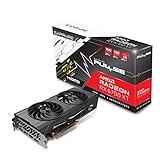
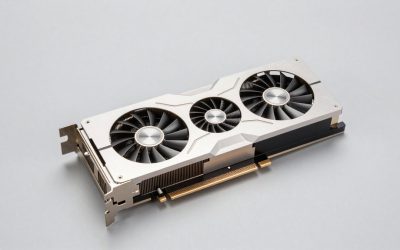
The RTX 4070 Ti Super is the better graphics card for 1440p and 4K gamers who care about ray tracing, DLSS or frame generation, while the RX 6800 XT is the smarter buy only for raster-focused players who can find one used for a lot less. Both cards carry 16 GB of VRAM, so neither will run out of memory soon, but the Nvidia card is roughly 25–30% faster in traditional rasterized games and far ahead once ray tracing is switched on. The real question is price: a used 6800 XT at a deep discount can still deliver more frames per dollar.
Generations Apart, Same Memory Capacity
The RX 6800 XT was AMD’s high-end RDNA 2 card in late 2020, built around a 256-bit bus and a 128 MB Infinity Cache. The RTX 4070 Ti Super came more than three years later, in January 2024, as a mid-cycle refresh of Nvidia’s Ada Lovelace line. Nvidia moved it to the full-width 256-bit bus and 16 GB that the original 4070 Ti lacked. Both are now previous-generation parts: the RTX 50 series and Radeon RX 9000 series have replaced them on new-card shelves, so most buyers will be looking at used listings or leftover stock.
Specs Side by Side
| Specification | Radeon RX 6800 XT | GeForce RTX 4070 Ti Super |
|---|---|---|
| Architecture | RDNA 2.0 | Ada Lovelace |
| Release date | 28 October 2020 | 8 January 2024 |
| Launch MSRP | $649 | $799 |
| Shaders | 4608 stream processors | 8448 CUDA cores |
| Boost clock | 2250 MHz | 2610 MHz |
| Process | 7 nm | 5 nm |
| Memory | 16 GB GDDR6 | 16 GB GDDR6X |
| Bus width | 256-bit | 256-bit |
| Bandwidth | 512.0 GB/s | 672.3 GB/s |
| Cache | 4 MB L2 + 128 MB L3 (Infinity Cache) | 48 MB L2 |
| TDP | 300 W | 285 W |
| Power connectors | 2x 8-pin | 1x 16-pin |
| Length / width (reference) | 267 mm, 2-slot | 310 mm, 3-slot |
| Outputs | 1x HDMI, 2x DisplayPort, 1x USB Type-C | 1x HDMI 2.1, 3x DisplayPort 1.4a |
| Interface | PCIe 4.0 x16 | PCIe 4.0 x16 |
Gaming Performance: Raster and Ray Tracing
Rasterized games
Across aggregated benchmark suites that cover dozens to more than a hundred games, the RTX 4070 Ti Super usually lands about 24–27% ahead of the RX 6800 XT, and PassMark’s G3D scores show a similar gap of roughly 27%. Results vary by test suite: one seven-game 4K comparison measured closer to 37%, while at least one 1440p dataset shows only single digits. A fair summary is that the Nvidia card is roughly 20–30% faster in typical raster workloads, with the gap a bit larger at 4K where its higher bandwidth helps.
For a rough feel: in a demanding current game at 1440p high, if the 6800 XT averages roughly 70–85 FPS, the 4070 Ti Super tends to land roughly 90–105 FPS. Treat those as broad ranges that move with settings, CPU and game version.
Ray tracing
This is where the two cards stop being close. RDNA 2 was AMD’s first ray tracing generation and handles heavy RT effects poorly. Ada Lovelace has much stronger RT cores and Nvidia’s ray reconstruction. In heavily ray-traced games the gap grows far beyond the raster difference, and path-traced modes are realistically playable only on the Nvidia card. If titles like Cyberpunk 2077 with full RT, Alan Wake 2 or Indiana Jones are on your list, the decision is easy.
Upscaling and Frame Generation in 2026
- RTX 4070 Ti Super: DLSS 4 with the transformer upscaling model, DLSS Frame Generation (2x) and Reflex. RTX 40 cards do not get Multi Frame Generation, which is reserved for the RTX 50 series. Even so, DLSS is supported in a very large share of new releases and its image quality is the benchmark the others are measured against.
- RX 6800 XT: FSR 3.1 upscaling and frame generation, plus driver-level AFMF frame generation. AMD launched FSR 4 as an RX 9000 exclusive, then in mid-2026 announced FSR 4.1 upscaling support for RX 6000 and RX 7000 cards. That is good news for 6800 XT owners, but game support and driver rollout are still settling, so DLSS remains the more reliable option today.
In practice, the 4070 Ti Super can run DLSS Quality at 4K and still look very close to native, which closes much of the gap to higher-end cards. The 6800 XT gets the most out of native 1440p.
Value Math: Launch Price vs Performance
Using launch MSRPs and the middle of the performance range (6800 XT = 100, 4070 Ti Super ≈ 127):
- RX 6800 XT: $649 ÷ 100 ≈ $6.49 per performance point
- RTX 4070 Ti Super: $799 ÷ 127 ≈ $6.29 per performance point
At launch prices they were nearly identical on raster value, and the Nvidia card added much better ray tracing and DLSS on top. That changes on the used market. If a 6800 XT costs around half of a used 4070 Ti Super, its cost per frame drops well below the Nvidia card’s, and that is the only scenario where the AMD card clearly wins.
Power Draw, PSU and Physical Size
Rated board power is close: 300 W for the 6800 XT and 285 W for the 4070 Ti Super. Ada is more efficient overall, though, because it delivers about a quarter more performance at slightly lower power. Using the GPU TDP + CPU + ~150 W headroom rule with a gaming CPU drawing around 120 W:
- RX 6800 XT: 300 + 120 + 150 = 570 W, so a quality 650–750 W unit
- RTX 4070 Ti Super: 285 + 120 + 150 = 555 W, so a quality 650–750 W unit
Connectors differ. The 6800 XT uses two standard 8-pin cables. The 4070 Ti Super uses a single 16-pin 12VHPWR/12V-2×6 plug: newer ATX 3.x PSUs have a native cable, and older units need the included adapter. Push the plug fully in and avoid bending the cable sharply right at the connector.
Size matters more. The reference-style 6800 XT figures are 267 mm and 2 slots, while the 4070 Ti Super figures are 310 mm and 3 slots, and many partner cards run longer still. Measure your case’s GPU clearance and front-fan depth before buying, especially in compact mid-towers.
Decision Table by Resolution and Budget
| Scenario | Pick |
|---|---|
| 1440p raster gaming, tight budget, good used deal | RX 6800 XT |
| 1440p high refresh with ray tracing on | RTX 4070 Ti Super |
| 4K gaming with upscaling | RTX 4070 Ti Super |
| Linux gaming with open-source drivers | RX 6800 XT |
| Compact case under ~300 mm GPU clearance | RX 6800 XT (or a short 4070 Ti Super model) |
| Streaming, video editing or CUDA apps alongside gaming | RTX 4070 Ti Super |
If you are buying new in 2026, also compare the current-generation RX 9070 XT and RTX 5070 Ti, which compete in this performance band with newer features.
Buying Used: What to Expect
The RX 6800 XT has been on the market since 2020, and plenty of used cards are available. Most sell in roughly the $300–$400 range, depending on model and condition. A used RTX 4070 Ti Super usually costs considerably more, often around $550–$700. On older 6800 XT cards, check for coil whine, fan wear and high hotspot temperatures, and ask whether the card was used for crypto mining. Prefer cards that still have transferable warranty, and stress-test before you pay.
Frequently Asked Questions
How much faster is the RTX 4070 Ti Super than the RX 6800 XT?
In rasterized games it is usually about 20–30% faster, depending on the test suite and resolution. With ray tracing enabled the gap grows much wider, because RDNA 2 handles heavy RT effects poorly.
Is 16 GB of VRAM equal on both cards?
The capacity is the same, but the 4070 Ti Super uses faster GDDR6X with 672.3 GB/s against 512.0 GB/s. Neither card is likely to run short of memory at 1440p in the near future.
Can the RX 6800 XT use FSR 4?
FSR 4 launched only for RX 9000 cards. In mid-2026 AMD announced FSR 4.1 upscaling support for RX 6000 and RX 7000 GPUs, so 6800 XT owners should keep drivers up to date. Game-by-game support still depends on developers.
Do I need a new PSU for the RTX 4070 Ti Super?
Not if you already have a good 650–750 W unit. Older PSUs can use the included 16-pin adapter with multiple 8-pin cables. An ATX 3.x unit with a native 12V-2×6 cable is the cleaner setup.
Is the RX 6800 XT still good for 1440p?
Yes, for rasterized games at high settings it remains a strong 1440p card, and its 16 GB buffer ages well. It falls behind mainly in ray tracing and upscaling quality.