Key takeaways
- Mid-range CPU around 125 W: 300 + 125 + 150 = 575 W, so a quality 650-750 W unit is the realistic target.
- High-power CPU around 250 W: 300 + 250 + 150 = 700 W, so 750-850 W is safer.
Moving from an RX 6700 XT to an RX 7900 XT roughly doubles performance at 1440p and 4K and adds 8 GB of VRAM, so it is a strong upgrade for high-refresh 1440p or entry-level 4K gaming, but buyers paying new prices in 2026 should compare it against the current RX 9070 XT, which offers similar raster speed, better ray tracing and FSR 4 support. For 1080p players, the RX 6700 XT remains capable enough that the jump is harder to justify.
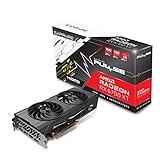
Both cards are Radeon, both use GDDR6 and both rely on AMD’s Infinity Cache, so this upgrade does not change the software ecosystem. What changes is the performance class: the RX 6700 XT was AMD’s 1440p mainstream card of 2021, while the RX 7900 XT was the second-highest card of the RDNA 3 generation, aimed at 4K.
Spec Comparison: Mid-Range RDNA 2 vs High-End RDNA 3
| Specification | RX 6700 XT | RX 7900 XT |
|---|---|---|
| Architecture | RDNA 2.0 | RDNA 3.0 |
| Release date | 3 March 2021 | 3 November 2022 |
| Launch MSRP | $479 | $899 |
| Stream processors | 2560 | 5376 |
| Boost clock | 2581 MHz | 2394 MHz |
| Process | 7 nm | 5 nm |
| TDP | 230 W | 300 W |
| Memory | 12 GB GDDR6 | 20 GB GDDR6 |
| Memory bus | 192-bit | 320-bit |
| Bandwidth | 384.0 GB/s | 800.0 GB/s |
| L2 / L3 cache | 3 MB / 96 MB | 6 MB / 80 MB |
| Interface | PCIe 4.0 x16 | PCIe 4.0 x16 |
| Power connectors | 1x 6-pin + 1x 8-pin | 2x 8-pin |
| Length / width | 267 mm / 2-slot | 276 mm / 2-slot |
| Outputs | 1x HDMI, 3x DisplayPort | 1x HDMI 2.1a, 2x DP 2.1, 1x USB-C |
The key numbers are 2.1 times the stream processors and slightly more than twice the memory bandwidth. The RX 6700 XT actually has the higher boost clock and more Infinity Cache, but neither makes up for a GPU with more than double the shader count and a 320-bit bus. RDNA 3 also introduced dual-issue shaders and AI accelerators, which mostly matter for compute-heavy workloads.
Gaming Performance: Roughly a 2x Step at 1440p
Published results put the RX 7900 XT well ahead. TechSpot’s multi-generation Radeon testing found the RX 9070 about 100% faster than the RX 6700 XT on average, and the RX 7900 XT trades blows with, or slightly exceeds, the RX 9070 in rasterized games. Aggregated game benchmarks from comparison sites put the RX 7900 XT around 75% ahead at 1440p and close to 90% ahead at 4K, while the gap at 1080p shrinks to roughly 40% because the CPU starts limiting the faster card.
A fair summary is that the RX 7900 XT is roughly 75-100% faster at 1440p, depending on the game. As an approximate illustration that will vary with settings, CPU and patch, a demanding title running in the 45-60 FPS range on the RX 6700 XT at 1440p high can be expected in the 90-115 FPS range on the RX 7900 XT. At 4K, the RX 6700 XT generally needs aggressive upscaling, while the RX 7900 XT can run many games near 60 FPS natively at high settings.
Where the gap is smallest
At 1080p with a mid-range CPU, the RX 7900 XT will often sit waiting on the processor, especially in esports titles that already exceed 200 FPS on the RX 6700 XT. If your monitor is 1080p and 144 Hz, much of the RX 7900 XT’s power goes unused.
Ray tracing
Ray tracing improves meaningfully but remains a relative weak spot. RDNA 3’s second-generation ray accelerators handle light and medium RT loads well, and the RX 7900 XT can run ray-traced reflections and shadows at 1440p with FSR upscaling. Heavy path-traced modes remain difficult on both cards, and in that area the newer RDNA 4 RX 9070 XT and current NVIDIA cards hold a clear lead.
Features: FSR and Frame Generation
Both cards support FSR 3.1 upscaling and frame generation in supported games, plus driver-level AMD Fluid Motion Frames. The important caveat is FSR 4: AMD’s machine-learning upscaler launched as an RX 9000-series feature, so neither the RX 6700 XT nor the RX 7900 XT gets the image-quality improvement it brings. That is the main reason a buyer paying new-card prices today should look at the RX 9070 XT alongside the RX 7900 XT.
Is 20 GB Worth It?
The RX 6700 XT’s 12 GB is already a decent amount for 1440p. The RX 7900 XT’s 20 GB is effectively future-proof for gaming at any resolution in the current generation, including 4K with maximum textures and mods. As rough guidance, 8-10 GB covers 1080p, 12 GB covers 1440p well, and 16 GB or more is the comfortable target for 4K. In other words, the VRAM bump matters most if you are moving to 4K or using heavy texture mods; at 1440p, the extra speed matters more than the extra memory.
Power Supply and Connector Check
The RX 7900 XT is rated at 300 W versus 230 W for the RX 6700 XT, a 70 W increase. Using the rule of GPU TDP plus CPU plus roughly 150 W for the rest of the system and transient spikes:
- Mid-range CPU around 125 W: 300 + 125 + 150 = 575 W, so a quality 650-750 W unit is the realistic target.
- High-power CPU around 250 W: 300 + 250 + 150 = 700 W, so 750-850 W is safer.
Many RX 6700 XT builds ship with 550-650 W units, so check yours before upgrading. The connector requirement changes from one 6-pin plus one 8-pin to two 8-pin connectors. Use two separate PCIe cables rather than one daisy-chained cable where possible. Some factory-overclocked partner models add a third 8-pin connector, so check the specific card.
Case clearance
The reference RX 7900 XT is 276 mm long, just 9 mm longer than the reference RX 6700 XT, and both are listed as two-slot designs. Partner cards are another story: many RX 7900 XT models are triple-fan, around 300-340 mm long and 2.5-3 slots thick. Measure the case before buying.
Cost per Performance
At launch MSRP, set the RX 6700 XT to 100 and the RX 7900 XT to roughly 185 (midpoint of the 75-100% range at 1440p):
- RX 6700 XT: $479 / 100 = $4.79 per performance point.
- RX 7900 XT: $899 / 185 = about $4.86 per performance point.
At launch prices, value was almost identical, which tells you the RX 7900 XT’s launch price was steep for what it offered. Real-world prices have fallen since, which changes the math in its favor. On the used market an RX 7900 XT typically trades for roughly $450-$550, and the RX 6700 XT for roughly $200-$260, so selling the old card covers a meaningful slice of the upgrade.
Upgrade Decision by Resolution
| Scenario | Recommendation |
|---|---|
| 1080p at 60-144 Hz | Stay on the RX 6700 XT unless specific games struggle |
| 1440p at 144 Hz or higher | RX 7900 XT is a large upgrade; a used one is good value |
| Entry 4K | RX 7900 XT, thanks to 20 GB and 800 GB/s bandwidth |
| Ray tracing and best image quality | Look at RX 9070 XT for FSR 4 and stronger RT |
| PSU under 650 W | Budget for a PSU, or pick a lower-power card |
Final Verdict
The RX 7900 XT is a genuine doubling over the RX 6700 XT in most modern games at 1440p and above, with VRAM that will not be a bottleneck for years. It makes the most sense bought used or at a discount, paired with a 1440p high-refresh or 4K monitor. If buying new, compare it directly with the RX 9070 XT: similar rasterization, better ray tracing, FSR 4 support and lower power draw make the newer card the safer pick at similar prices.
Frequently Asked Questions
How much faster is the RX 7900 XT than the RX 6700 XT?
Published benchmarks place it roughly 75-100% faster at 1440p, with the gap growing at 4K. At 1080p the difference is smaller, often around 40%, because the CPU becomes the limit. The exact result depends on game, settings and processor.
Do I need a new power supply for the RX 7900 XT?
Possibly. The RX 7900 XT is rated at 300 W and needs two 8-pin connectors. A quality 650-750 W unit suits most systems with a mid-range CPU, while high-power CPUs call for 750-850 W.
Does the RX 7900 XT support FSR 4?
FSR 4 launched as a feature for the RX 9000 series. The RX 7900 XT supports FSR 3.1 upscaling and frame generation along with AMD Fluid Motion Frames. If FSR 4 matters to you, the RX 9070 or RX 9070 XT is the better choice.
Is the RX 7900 XT worth it over the RX 9070 XT?
Only if it is noticeably cheaper. The RX 9070 XT matches or beats it in rasterized games, is stronger in ray tracing and supports FSR 4. The RX 7900 XT’s advantage is its larger 20 GB frame buffer.
Will my RX 6700 XT CPU bottleneck an RX 7900 XT?
Older six-core processors can limit the RX 7900 XT at 1080p and in high-FPS esports titles. At 1440p and 4K, the GPU does more of the work and the bottleneck shrinks. A modern six- or eight-core CPU gets the most out of the card.