Key takeaways
- Raw performance: The RTX 5070 delivers roughly 25–35% higher frame rates depending on resolution and title, with the gap widening at 1440p and above where its wider memory bus does the most work.
- Memory: The 5070 ships with 12GB GDDR7 on a 192-bit bus; the 5060 Ti offers either 8GB or 16GB on a narrower 128-bit bus. More total capacity on one, substantially more bandwidth on the other.
- Price: Expect around $429 for a 16GB RTX 5060 Ti and $549 for an RTX 5070 at typical street pricing, with 8GB models like the GIGABYTE Gaming OC 8G landing meaningfully lower.
- Power draw: The 5060 Ti sits near 180W and runs comfortably on a quality 550W supply with a single connector. The 5070 climbs to roughly 250W and realistically wants 650W or more.
- Form factor: The 5060 Ti has far better compact options — the ASUS SFF-Ready Prime 16GB and the 2-slot PNY Epic-X RGB both target tight cases. Most RTX 5070 designs are chunkier triple-slot cards.
- Connectivity: Both support PCIe 5.0, HDMI 2.1b and DisplayPort 2.1b, but the 5060 Ti runs an x8 link versus the 5070’s full x16 — a non-issue on modern boards, a small penalty on older PCIe 3.0 systems.
What's inside
Nvidia’s Blackwell mid-range has settled into a clear two-tier structure, and for most builders in 2026 the decision comes down to a single question: is the RTX 5070 worth roughly $120 more than an RTX 5060 Ti? On paper the gap looks straightforward — more cores, a wider memory bus, higher power draw — but the 5060 Ti’s 16GB configuration complicates things in a way that raw benchmark charts don’t fully capture.
This matters more now than it did at launch. Game engines have grown noticeably more texture-hungry, ray tracing is standard rather than optional in most AAA releases, and DLSS 4 with Multi Frame Generation has changed what “playable” means at 1440p. A card that wins today’s benchmarks by 30% can still hit a wall first if it runs out of memory. Below we break down where each GPU genuinely earns its price, and which specific models are worth your money.
As an Amazon Associate we earn from qualifying purchases.


⚡ Save on Your Next PC — Amazon Prime
Prime members get fast free shipping on the systems above, plus early access to Prime Day & Black Friday PC deals. New members get a 30-day free trial.
Watch: RTX 5060 Ti vs 5070: Which Wins in 2026? — Video Review
Quick Verdict
The RTX 5070 is the better raw gaming GPU and the right pick if you play at 1440p, chase high refresh rates, or want the most frames per dollar in traditional rasterized performance. The RTX 5060 Ti — specifically the 16GB version, like the ASUS Dual RTX 5060 Ti 16GB OC — is the smarter buy for 1080p gamers, small-form-factor builds, power-limited systems, and anyone doing creative or local AI work where memory capacity beats memory bandwidth. The 8GB variants make sense only as budget 1080p cards.
Key Differences
- Raw performance: The RTX 5070 delivers roughly 25–35% higher frame rates depending on resolution and title, with the gap widening at 1440p and above where its wider memory bus does the most work.
- Memory: The 5070 ships with 12GB GDDR7 on a 192-bit bus; the 5060 Ti offers either 8GB or 16GB on a narrower 128-bit bus. More total capacity on one, substantially more bandwidth on the other.
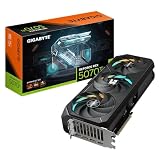
- Price: Expect around $429 for a 16GB RTX 5060 Ti and $549 for an RTX 5070 at typical street pricing, with 8GB models like the GIGABYTE Gaming OC 8G landing meaningfully lower.
- Power draw: The 5060 Ti sits near 180W and runs comfortably on a quality 550W supply with a single connector. The 5070 climbs to roughly 250W and realistically wants 650W or more.
- Form factor: The 5060 Ti has far better compact options — the ASUS SFF-Ready Prime 16GB and the 2-slot PNY Epic-X RGB both target tight cases. Most RTX 5070 designs are chunkier triple-slot cards.
- Connectivity: Both support PCIe 5.0, HDMI 2.1b and DisplayPort 2.1b, but the 5060 Ti runs an x8 link versus the 5070’s full x16 — a non-issue on modern boards, a small penalty on older PCIe 3.0 systems.
RTX 5060 Ti: The Efficiency and Capacity Play
The 16GB RTX 5060 Ti has quietly become one of the most sensible cards in the lineup. At 1080p it handles essentially everything at high or ultra settings, and with DLSS 4 upscaling it remains very capable at 1440p in all but the heaviest ray-traced titles. That 16GB frame buffer means texture packs, heavy mod loads, and path-traced settings won’t cause the sudden stuttering that plagues memory-starved cards. The ASUS Dual OC and its White OC sibling are the safe defaults here: quiet, 2.5-slot, 0dB idle fans, and a three-year warranty.
Its other advantage is flexibility. The ASUS SFF-Ready Prime model is designed to clear the length and clearance limits of compact ITX cases, and the GIGABYTE AORUS RTX 5060 Ti AI Box packages the GPU into a Thunderbolt 5 external enclosure — a genuinely useful option for laptop owners who want desktop-class performance without a second machine. The 8GB versions, including the PNY Epic-X RGB OC and GIGABYTE Gaming OC 8G, are perfectly good 1080p cards but should be treated as a different product tier, not a discounted 16GB.
RTX 5070: The 1440p Frame Rate Winner
If your monitor is 1440p and your goal is high refresh gaming, the RTX 5070 is simply the correct card. Its extra shader cores and 50% wider memory bus translate into consistently higher minimums, not just higher averages, which is what you actually feel in fast-paced games. Ray-traced titles benefit disproportionately, and with Multi Frame Generation enabled the 5070 comfortably clears 100 FPS in most current AAA releases at native 1440p quality settings.
The compromises are real, though. Twelve gigabytes is adequate today but offers less headroom than 16GB for maxed textures and future releases, and the higher 250W draw means more heat, more noise, and a stricter power supply requirement. You’re also paying a genuine premium — roughly 28% more money for roughly 30% more performance, which is fair value but not a bargain.
Which Should You Buy?
- For 1440p high-refresh gaming: Pick the RTX 5070. The bandwidth advantage is exactly what this resolution demands.
- For 1080p gaming on a budget: Pick the RTX 5060 Ti 16GB, or the 8GB PNY Epic-X if you need to save further.
- For small-form-factor builds: Pick the ASUS SFF-Ready Prime RTX 5060 Ti 16GB — the clearance and power headroom make it far easier to fit.
- For creative work or local AI models: Pick the RTX 5060 Ti 16GB. Capacity determines what you can run at all; speed only determines how fast.
- For laptop users: Pick the GIGABYTE AORUS AI Box and connect over Thunderbolt 5.
Frequently Asked Questions
Is the 16GB RTX 5060 Ti better than the RTX 5070 because it has more VRAM?
No — not for gaming. The 5070’s wider bus and higher core count make it faster in nearly every title. The 16GB advantage only becomes decisive in memory-limited scenarios like heavy modding, 4K texture packs, or AI workloads that simply won’t load in 12GB.
Do I need a new power supply for the RTX 5070?
Likely yes if you’re running an older 500–550W unit. Plan for a quality 650W supply. The RTX 5060 Ti’s 180W draw is far more forgiving and usually works with existing mid-range PSUs.
Is an 8GB RTX 5060 Ti still worth buying in 2026?
Only for 1080p at high (not ultra) settings, or esports titles. Several 2025–2026 releases already exceed 8GB at 1440p, so treat it as an entry-level card rather than a long-term investment.
Do both cards support DLSS 4 and Multi Frame Generation?
Yes. Both are Blackwell-architecture GPUs with full DLSS 4 support including Multi Frame Generation, so the feature set is identical — only the underlying horsepower differs.
Final Verdict
Buy the RTX 5070 if you game at 1440p and want the best frame rates in this price bracket; buy the RTX 5060 Ti 16GB if you game at 1080p, build