Key takeaways
- Spend the biggest share of your budget on the GPU, since it is the one component you cannot upgrade later.
- Insist on at least a 144Hz display; the smoothness upgrade over 60Hz is immediately noticeable in every game.
- Choose 16GB of RAM minimum, and favor a model with an accessible slot so you can add more down the road.
- Read reviews about thermals and fan noise; a cool-running laptop sustains higher real-world frame rates.
What's inside
A gaming laptop promises the freedom to play anywhere, but that portability comes with trade-offs you need to understand before spending real money. Between GPUs, refresh rates, cooling, and battery life, the spec sheets can feel like alphabet soup, and marketing loves to highlight the numbers that sell rather than the ones that matter for your games. Choosing well means knowing which specs move the needle.
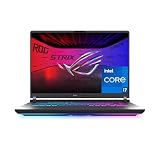
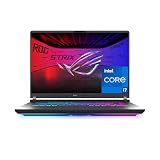
This 2026 guide breaks down the components that actually determine gaming performance and long-term happiness: the GPU, display, CPU and memory, cooling, and build quality. We will reference current machines like the ASUS ROG Strix G16 and Acer Nitro V so you can connect the advice to real options on the shelf.
As an Amazon Associate we earn from qualifying purchases.


⚡ Save on Your Next PC — Amazon Prime
Prime members get fast free shipping on the systems above, plus early access to Prime Day & Black Friday PC deals. New members get a 30-day free trial.
Watch: What to Look for in a Gaming Laptop — Video Review
The GPU Is King
Nothing affects gaming performance more than the graphics card. In 2026, an RTX 5060 as found in the ASUS ROG Strix G16 delivers strong 1080p and 1440p play, while stepping up to an RTX 5070 Ti in higher-end Strix models unlocks smoother high-refresh gaming and ray tracing. Prioritize your GPU budget first; you can upgrade RAM and storage later, but the GPU is fixed for the life of the laptop.
Display: Refresh Rate and Resolution
A fast panel makes games feel dramatically smoother. Look for at least a 144Hz to 165Hz refresh rate, standard on machines like the GIGABYTE Gaming A16 and Acer Nitro V, so fast-paced titles stay fluid. A 16:10 WUXGA or 2.5K resolution balances sharpness with performance, while high-end 240Hz panels suit competitive players. Do not overspend on 4K in a laptop, since it strains the GPU for little practical gain.
CPU, RAM, and Storage
A modern multi-core CPU like an Intel Core i7 or Ryzen 7 keeps the GPU fed and handles background tasks. Aim for 16GB of DDR5 RAM as a minimum, with 32GB ideal for heavy multitaskers and future-proofing, as seen in higher-tier Strix configurations. A 1TB Gen4 SSD gives you fast load times and room for several large games; prefer models with an empty slot so you can expand later.
Cooling and Thermals
Powerful components generate heat, and a laptop that throttles under load wastes its own hardware. Good cooling with multiple heat pipes and generous venting lets the GPU and CPU sustain their performance during long sessions. Thinner laptops often run hotter and louder, so if you value sustained frame rates, favor a chassis with a robust cooling design over the slimmest possible profile.
Build Quality, Battery, and Ports
Consider the whole package. A sturdy chassis and a comfortable backlit keyboard matter for daily use, and modern connectivity like Wi-Fi 7 and full-function USB-C future-proofs your setup. Be realistic about battery: gaming drains any laptop quickly, so most machines are best played plugged in, while lighter tasks can stretch to a workday. Check that the port selection matches your monitor and peripherals.
Tips
- Spend the biggest share of your budget on the GPU, since it is the one component you cannot upgrade later.
- Insist on at least a 144Hz display; the smoothness upgrade over 60Hz is immediately noticeable in every game.
- Choose 16GB of RAM minimum, and favor a model with an accessible slot so you can add more down the road.
- Read reviews about thermals and fan noise; a cool-running laptop sustains higher real-world frame rates.
Frequently Asked Questions
Which GPU should I get in a gaming laptop?
For solid 1080p and 1440p gaming in 2026, an RTX 5060 is a great starting point. Step up to a 5070 Ti or higher for smoother high-refresh and ray-traced play.
How much RAM do I need for gaming?
16GB of DDR5 is the practical minimum today, comfortably running modern games. 32GB is worthwhile if you multitask heavily or want to future-proof your machine.
Is a 4K laptop screen worth it for gaming?
Usually not. A high-refresh 1440p or 16:10 panel offers a better experience because it keeps frame rates high, whereas 4K heavily taxes the GPU for modest visual gains.
Can gaming laptops be upgraded?
RAM and storage often can be, especially on models with accessible slots, but the GPU and CPU are typically soldered. Buy the graphics performance you need up front.
Conclusion
Choosing a gaming laptop comes down to prioritizing the GPU, insisting on a fast high-refresh display, pairing them with enough RAM and fast storage, and making sure cooling can sustain that power. Factor in build quality, connectivity, and realistic battery expectations, and match the configuration to the games you play. Get those priorities in order and you will have a portable machine that games well for years.