Key takeaways
- The fastest gaming CPU you can buy in 2026, with excellent 1% lows
- Fully unlocked for overclocking, a first for an X3D chip
- Much stronger productivity performance than previous X3D parts
- Drops into existing AM5 boards, protecting your platform investment
What's inside
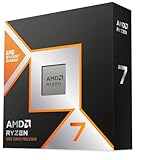
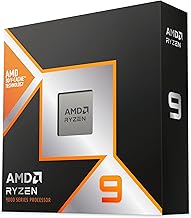
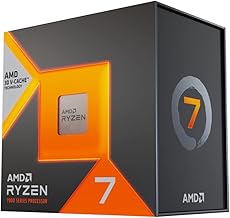
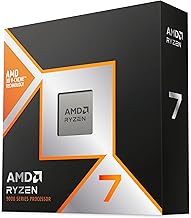
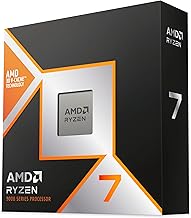
The AMD Ryzen 7 9800X3D is the CPU most PC gamers have been waiting for: an 8-core, 16-thread Zen 5 chip with AMD’s second-generation 3D V-Cache, this time placed underneath the compute die rather than on top. That change is the whole story, because it lets the 9800X3D clock higher and, for the first time on an X3D part, run fully unlocked for overclocking.
It is built for one job above all: driving the highest frame rates in games, especially at 1080p and 1440p where the CPU matters most, and paired with a fast GPU. It suits enthusiasts building a dedicated gaming rig or a gaming-first workstation. Pure productivity users who never touch a game will find cheaper cores elsewhere, but for anyone who wants the fastest gaming CPU you can buy, this is the reference point.
As an Amazon Associate we earn from qualifying purchases.



⚡ Save on Your Next PC — Amazon Prime
Prime members get fast free shipping on the systems above, plus early access to Prime Day & Black Friday PC deals. New members get a 30-day free trial.
Watch: Ryzen 7 9800X3D Review — Video Review
Design & Build
The 9800X3D uses the AM5 socket, so it drops into existing X670, B650, X870, and B850 boards after a BIOS update, and it keeps the same DDR5 memory support as the rest of the Ryzen 9000 line. The redesigned cache layout puts the V-Cache below the cores, which improves heat transfer and is why AMD can let this chip boost to 5.2GHz and run unlocked. It carries a 120W TDP, up from the 7800X3D’s 120W-class but with meaningfully higher real power draw under load, so it wants a capable air cooler or a 240mm-plus AIO. There is no bundled cooler, which is expected at this tier.
Performance
In games the 9800X3D is the fastest chip available, full stop. Against its own predecessor, the 7800X3D, it delivers a genuine, measurable step up rather than a rounding error, and it opens a clear lead over Intel’s competing parts in CPU-bound titles. The enormous L3 cache is what feeds the cores in games with heavy world simulation and large maps, where frame rates and, just as importantly, 1% lows climb noticeably.
The pleasant surprise is productivity. Because the cores now clock like a standard Zen 5 part, the 9800X3D is far more competent in rendering, compiling, and content creation than earlier X3D chips, which had to run at lower clocks. It will not beat a 12- or 16-core chip in heavily threaded work, but it is no longer the compromise it once was. The catch is thermals and price: it runs hot under sustained load and commands a premium over non-X3D options.
Pros & Cons
- The fastest gaming CPU you can buy in 2026, with excellent 1% lows
- Fully unlocked for overclocking, a first for an X3D chip
- Much stronger productivity performance than previous X3D parts
- Drops into existing AM5 boards, protecting your platform investment
- Commands a clear price premium over non-X3D and older X3D chips
- Runs hot under load and needs a serious cooler
- Overkill for anyone who does not play CPU-bound games
Alternatives to Consider
If value matters more than the last few frames, the previous-generation Ryzen 7 7800X3D remains an outstanding gaming chip for less money. Users who split their time between gaming and heavy multitasking should look at the 16-core Ryzen 9 9950X3D, which adds far more productivity muscle, while those who want strong all-round Zen 5 performance without the V-Cache premium can consider the Ryzen 7 9700X.
Frequently Asked Questions
Is the Ryzen 7 9800X3D worth upgrading to from a 7800X3D?
If you already own a 7800X3D, the gaming gain is real but not transformative, so it is a hard sell unless you also want the better productivity performance and overclocking. Coming from an older chip, it is a large leap.
What cooler does the 9800X3D need?
It ships without a cooler and runs hot under load, so plan on a high-end air cooler or a 240mm or larger liquid cooler to keep clocks stable during long sessions.
Do you need a new motherboard for the 9800X3D?
No, as long as you have an AM5 board (600 or 800 series). Most existing boards just need a BIOS update to support it, along with DDR5 memory.
Is the 9800X3D good for productivity as well as gaming?
Yes, much more so than earlier X3D chips because it now clocks like a standard Zen 5 part. It is strong in creative work, though dedicated high-core-count chips still win in heavily threaded tasks.
Verdict
The Ryzen 7 9800X3D earns its reputation as the gaming CPU to beat in 2026. It is expensive, thermally demanding, and more than most people strictly need, but it delivers the best frame rates available while finally being a capable all-rounder. If gaming is your priority and the budget allows, nothing else offers this combination of speed and headroom.