Key takeaways
- Extraordinary motion clarity at 360Hz to 500Hz for competitive play.
- Perfect OLED blacks and 0.03ms response times across the board.
- Vivid QD-OLED color with 99% DCI-P3 coverage on most models.
- Burn-in safeguards like OLED Care+ and custom heatsinks protect the panel.
What's inside
OLED gaming monitors have already spoiled us with perfect blacks and near-instant response times, and now the refresh-rate race is pushing into territory that once seemed absurd. High-refresh OLED panels, climbing past 360Hz toward the 400Hz-plus frontier, promise a level of motion clarity that competitive players chase obsessively. If you want the sharpest, smoothest esports experience money can buy, this is the category to understand.
This review looks at what the fastest OLED gaming monitors deliver, drawing on flagship QD-OLED and WOLED panels from ASUS ROG, Samsung Odyssey, Alienware, and INNOCN. We will cut through the spec-sheet hype to explain what a 400Hz-class refresh rate actually buys you, and who genuinely benefits from it.
As an Amazon Associate we earn from qualifying purchases.


🎮 Get More From Your Setup — Free
Prime Gaming gives you free PC games every month, in-game loot, and a free Twitch channel sub — plus fast free shipping on all the gear above. New members get a 30-day free trial.
Watch: 400 Hz Oled Monitor: Review & Buyer’s Guide — Video Review
Design & Build
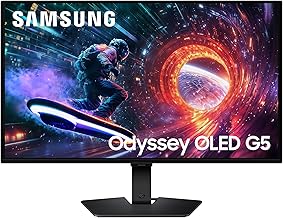
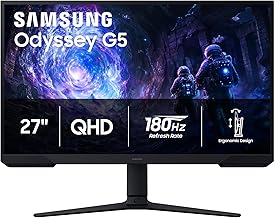
Premium OLED gaming monitors pair their exotic panels with equally serious hardware. The ASUS ROG PG27AQDP, a 27-inch 1440p 480Hz WOLED, features a custom heatsink and AI assistant, while the ROG Strix XG27ACDNG QD-OLED brings OLED Care+ burn-in mitigation and a 360Hz refresh. Samsung’s Odyssey OLED G6 (G60SF) at 500Hz and its 240Hz G61SH sibling wrap QD-OLED panels in height-adjustable stands with OLED safeguards, and the Alienware AW2725DF offers a 360Hz Quantum-Dot WQHD panel with full ergonomic adjustment. Across the board, expect robust stands, DisplayPort and HDMI 2.1 connectivity, and thoughtful anti-burn-in features, because at these prices, panel longevity is a real consideration.
Performance
The headline is motion clarity. At 480Hz and 500Hz, panels like the ROG PG27AQDP and Samsung Odyssey OLED G6 G60SF render fast-moving objects with a fluidity that transforms competitive shooters, while the universal 0.03ms response time eliminates the smearing that haunts LCD. QD-OLED options like the ROG Strix XG27ACDNG, INNOCN GA27M1Q at 500Hz, and Alienware AW2725DF add stunning color, with 99% DCI-P3 coverage and per-pixel HDR that makes single-player games glow. G-SYNC and FreeSync compatibility keep everything tear-free. The practical caveat: to feed 480Hz-plus at 1440p you need a very powerful GPU, and casual players may not perceive the jump from 240Hz as dramatically as the numbers suggest.
Pros & Cons
- Extraordinary motion clarity at 360Hz to 500Hz for competitive play.
- Perfect OLED blacks and 0.03ms response times across the board.
- Vivid QD-OLED color with 99% DCI-P3 coverage on most models.
- Burn-in safeguards like OLED Care+ and custom heatsinks protect the panel.
- Demanding GPU requirements to actually reach the top refresh rates.
- Premium pricing that puts these monitors out of budget reach.
Alternatives to Consider
If your GPU cannot sustain 480Hz, a 360Hz QD-OLED like the ROG Strix XG27ACDNG or Alienware AW2725DF delivers nearly all the benefit for less strain and often less money. Players who prioritize immersive single-player games over pure speed may prefer the Samsung Odyssey OLED G6 240Hz model, which still offers gorgeous HDR at a friendlier refresh. The INNOCN GA27M1Q, meanwhile, is the value-minded route to a genuine 500Hz QD-OLED experience.
Frequently Asked Questions
Do I really need 400Hz or more?
Only dedicated competitive players will fully appreciate refresh rates above 360Hz. For most gamers, a 240Hz or 360Hz OLED already feels extraordinarily smooth, and the diminishing returns are real.
What GPU do I need to hit these refresh rates?
Reaching 480Hz to 500Hz at 1440p requires a top-tier graphics card, especially in demanding titles. Esports games at lower settings are far easier to drive than AAA titles.
Should I worry about OLED burn-in?
Modern panels include safeguards like OLED Care+, pixel shifting, and custom heatsinks that make burn-in unlikely with normal mixed use. Varying your content and using screen savers helps further.
Is QD-OLED or WOLED better?
QD-OLED, as on the Strix and Samsung models, typically offers punchier color, while WOLED like the ROG PG27AQDP can be brighter in some scenes. Both deliver excellent contrast and speed.
Verdict
For competitive players who want the fastest OLED experience available, the ASUS ROG PG27AQDP at 480Hz and the Samsung Odyssey OLED G6 G60SF at 500Hz are the pinnacle. Most gamers, though, will be thrilled with a 360Hz QD-OLED like the Alienware AW2725DF or ROG Strix, which balance blistering speed with stunning color. Just make sure your GPU can keep up before chasing the highest numbers.