Key takeaways
- High refresh rates: Up to 240Hz for ultra-smooth motion.
- Tear-free gaming: FreeSync support across the lineup.
- Immersive curves: 1500R panels pull you into the action.
- Options for every budget: From value Sceptre to premium Samsung.
What's inside
A new gaming monitor is one of the most impactful upgrades you can make, often more noticeable than a faster GPU. Higher refresh rates make motion buttery smooth, faster response times sharpen fast action, and features like FreeSync banish screen tearing. The trick is matching the panel to your rig and the games you love.
This review looks at a range of new gaming monitors for 2026, spanning budget high-refresh displays up to immersive curved panels with blazing 240Hz refresh rates. We will assess design and image quality, real gaming performance, the pros and cons, and help you pick the screen that suits your setup and budget.
As an Amazon Associate we earn from qualifying purchases.



🎮 Get More From Your Setup — Free
Prime Gaming gives you free PC games every month, in-game loot, and a free Twitch channel sub — plus fast free shipping on all the gear above. New members get a 30-day free trial.
Watch: New Gaming Monitor: Review & Buyer’s Guide — Video Review
Design & Build
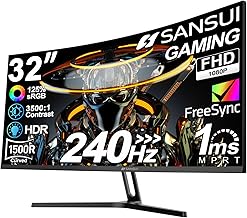
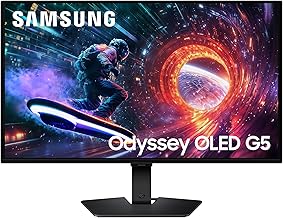
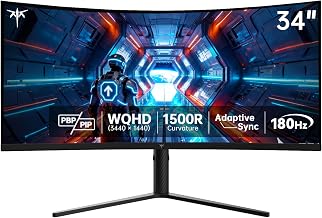
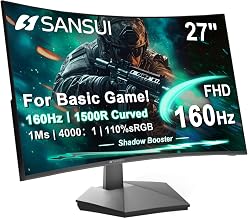
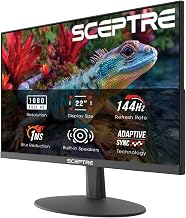
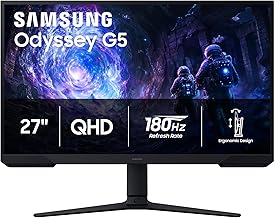
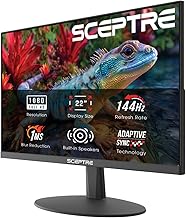
These monitors cover a wide spread of sizes and styles. The compact Sceptre 22-inch and 24-inch models keep things affordable and desk-friendly with slim bezels and built-in speakers, while the SANSUI 32-inch and 27-inch curved panels wrap a 1500R curvature around your field of view for a more immersive feel. Samsung’s 27-inch Odyssey G5 brings a premium QHD panel with a height-adjustable stand and thoughtful gaming extras. Build quality scales with price, but even the budget Sceptre displays include useful touches like DisplayPort and HDMI inputs and integrated audio, making them easy plug-and-play upgrades.
Performance
Refresh rate and resolution are where gaming monitors earn their keep. The SANSUI 32-inch and 27-inch curved models hit a blistering 240Hz at FHD 1080p, ideal for competitive shooters where smooth, tear-free motion matters most, backed by FreeSync and fast 1ms response. The Samsung Odyssey G5 steps up to QHD 1440p at 180Hz with HDR10 and a black equalizer for sharper detail in dark scenes, a great balance of clarity and speed. The Sceptre models offer accessible 144Hz and 165Hz options for gamers upgrading from a basic 60Hz screen. Wide sRGB coverage on several panels also makes them pleasant for media and everyday use.
Pros & Cons
- High refresh rates: Up to 240Hz for ultra-smooth motion.
- Tear-free gaming: FreeSync support across the lineup.
- Immersive curves: 1500R panels pull you into the action.
- Options for every budget: From value Sceptre to premium Samsung.
- FHD at high refresh: The 240Hz models trade resolution for speed.
- Built-in speakers are basic: Fine for casual use, not for immersion.
- Stand adjustability varies: Budget models offer limited ergonomics.
Alternatives to Consider
If you want the sharpest possible image, a 4K gaming monitor delivers stunning detail, though it demands a powerful GPU. Creators who need color accuracy might prioritize an IPS or OLED panel over raw refresh rate. But for most gamers, these displays hit the mark. The SANSUI 240Hz curved models suit competitive players, while the Samsung Odyssey G5 is the pick for balanced QHD gaming.
Frequently Asked Questions
Is 144Hz enough or should I get 240Hz?
144Hz to 165Hz is a huge leap over 60Hz and plenty for most gamers. Competitive players in fast shooters will appreciate the extra smoothness of 240Hz.
QHD or FHD for gaming?
FHD 1080p is easier to drive at high refresh rates, while QHD 1440p offers sharper detail. Choose based on your GPU power and whether you prioritize speed or clarity.
Are curved monitors better for gaming?
Curved panels can feel more immersive, especially at larger sizes, by filling your peripheral vision. It comes down to personal preference more than raw performance.
Do I need FreeSync?
Yes, if you want to eliminate screen tearing. FreeSync syncs the monitor’s refresh to your GPU’s frame rate for smoother, tear-free gameplay, and it is included on every model here.
Verdict
A new gaming monitor can transform how your games feel and look. For competitive players chasing smooth motion, the SANSUI 240Hz curved displays offer incredible value, while the Samsung Odyssey G5 delivers a beautiful, balanced QHD experience. Budget upgraders will love the high-refresh Sceptre models. Match the refresh rate and resolution to your GPU and play style, and your next gaming session will look better than ever.