Key takeaways
- Boosts productivity by keeping reference material always visible.
- Portable options travel easily and run over a single USB-C cable.
- Vertical orientation is ideal for reading and coding.
- Affordable, with useful panels at every price point.
What's inside
A side monitor transforms how you work and play. Whether mounted vertically for reading code and documents, angled beside your main display for chat and reference material, or used as a portable second screen, a well-chosen secondary monitor multiplies your productivity without cluttering your desk. The best part is that side monitors do not need to be expensive to be genuinely useful.
This review explores the different types of side monitors, from ultra-portable USB-C panels to dedicated vertical displays, and helps you decide which suits your setup. We cover what to look for in size, orientation, and connectivity so your second screen earns its place.
As an Amazon Associate we earn from qualifying purchases.




🎮 Get More From Your Setup — Free
Prime Gaming gives you free PC games every month, in-game loot, and a free Twitch channel sub — plus fast free shipping on all the gear above. New members get a 30-day free trial.
Watch: Side Monitors For Pc: Review & Buyer’s Guide — Video Review
Design & Build
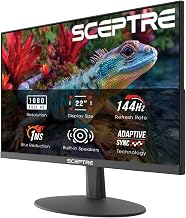
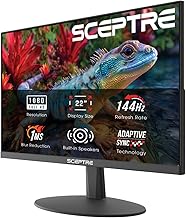
Side monitors come in several form factors. Portable panels like the Veout 16-inch and VILVA 15.6-inch are slim, lightweight, and USB-C powered, making them ideal for tucking beside a laptop or main display, and the Veout even includes a multi-angle kickstand. Dedicated vertical monitors, such as the 23.8-inch rotating panel, ship with a multi-function stand built for portrait orientation, perfect for reading long documents or code. Traditional desktop panels like the Sceptre 22-inch and Philips 24-inch offer sturdier stands and larger screens for a permanent second display. Build quality scales with price, but even the portable options feel solid.
Performance
For a side monitor, clarity and connectivity matter more than raw speed. The Veout 16-inch stands out with a sharp 1920×1200 IPS panel, dual USB-C, and a blue-light filter that eases eye strain during long sessions, while the VILVA 15.6-inch offers similar portable convenience with built-in speakers and broad device compatibility, from PCs to game consoles. The 23.8-inch vertical monitor shines for reading and reference thanks to its rotating stand and multiple inputs. If you want a larger, high-refresh secondary screen, the Sceptre 22-inch reaches 144Hz, and the Philips 24-inch delivers flicker-free, low-blue-light comfort for all-day use.
Pros & Cons
- Boosts productivity by keeping reference material always visible.
- Portable options travel easily and run over a single USB-C cable.
- Vertical orientation is ideal for reading and coding.
- Affordable, with useful panels at every price point.
- Portable panels are dimmer than desktop monitors.
- Built-in speakers are basic at best.
- Stand quality varies on budget models.
Alternatives to Consider
If portability is your priority, the Veout 16-inch is the standout for its sharp IPS panel and single-cable convenience. For a permanent vertical setup, the 23.8-inch rotating monitor is purpose-built for the job. Those who want a larger, more capable second screen that can also game should look at the Sceptre 22-inch with its 144Hz refresh, while the Philips 24-inch is the comfortable choice for extended office work.
Frequently Asked Questions
What size should a side monitor be?
It depends on your desk and use. Portable 15 to 16-inch panels suit laptops, while 22 to 24-inch displays make better permanent second screens.
Can I use a portable monitor with just one cable?
Yes. USB-C panels like the Veout and VILVA draw power and video over a single cable from compatible laptops, keeping your setup tidy.
Is a vertical monitor worth it?
For reading long documents, code, and web pages, absolutely. A rotating monitor in portrait mode shows far more content at once than a horizontal screen.
Do side monitors work with consoles?
Many do. Panels with HDMI inputs, like the VILVA, connect to game consoles and other devices as well as PCs and laptops.
Verdict
A side monitor is one of the most cost-effective upgrades you can make. The Veout 16-inch is our top pick for portable versatility, the 23.8-inch vertical monitor wins for reading and coding, and the Sceptre 22-inch suits those wanting a larger dual-purpose screen. Choose the orientation and size that fit your workflow, and your productivity will thank you.