Key takeaways
- Maximum workspace: three or four extra panels rival a desktop multi-monitor setup.
- Fully portable: folds flat and travels attached to your laptop.
- Flexible layouts: auto-rotation and detachable panels adapt to any task.
- Single-cable options: KYY units drive multiple screens from one USB-C port.
What's inside
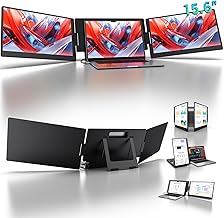
Working from a single laptop screen feels increasingly cramped, and hauling standalone monitors defeats the point of being mobile. Portable multi-monitor extenders solve the dilemma: they clamp onto your laptop lid, fold flat for travel, and unfold into two, three, or even four extra panels, turning any laptop into a multi-screen command center wherever you land.
This review examines the best portable multi-monitor solutions of 2026, from triple and quad KYY extenders to detachable and lightweight options, focusing on screen count, portability, and the setup realities you should know before buying.
As an Amazon Associate we earn from qualifying purchases.




🎮 Get More From Your Setup — Free
Prime Gaming gives you free PC games every month, in-game loot, and a free Twitch channel sub — plus fast free shipping on all the gear above. New members get a 30-day free trial.
Watch: Laptop Multiple Monitors Portable — Video Review
Design & Build
These extenders are built around folding aluminum-alloy frames that grip your laptop lid and deploy auxiliary IPS panels to either side. The KYY triple and quad units are among the most ambitious, adding three or four screens for a true workstation spread, while the Funhill 14-inch and various detachable 15.6-inch models keep things a bit lighter with a triple layout. Better designs feature auto-rotation and 360-degree hinges so you can angle or flip panels for sharing. The more screens you add, the more weight you strap to your lid, so build sturdiness and your laptop’s own robustness both matter. Detachable designs, like the upgraded 15.6-inch model, let you use one or more panels independently for flexibility.
Performance
All of these use 1080p FHD IPS panels running at 60Hz, tuned for productivity, trading, coding, and research rather than fast gaming. Image quality is good, with wide viewing angles and decent color. The critical variable is how they connect and how much your laptop can drive: the KYY quad and triple extenders use a single USB-C cable to power multiple screens but require a driver, and they lean heavily on your laptop’s USB-C bandwidth and GPU. Driving three or four external panels is demanding, so a capable modern laptop with DisplayPort Alt Mode support is important for smooth results. Expect a few minutes of first-time setup arranging displays in your operating system.
Pros & Cons
- Maximum workspace: three or four extra panels rival a desktop multi-monitor setup.
- Fully portable: folds flat and travels attached to your laptop.
- Flexible layouts: auto-rotation and detachable panels adapt to any task.
- Single-cable options: KYY units drive multiple screens from one USB-C port.
- Heavy on the lid: more panels mean more strain on your laptop hinge.
- Driver and power demands: multi-screen units need software and strong USB-C bandwidth.
- 60Hz panels: not designed for fast competitive gaming.
Alternatives to Consider
If four screens is overkill, a dual-panel extender is far lighter and simpler while still doubling your workspace. Desk-based users might prefer standalone portable monitors on stands, which avoid loading the laptop lid entirely. And anyone whose laptop lacks robust USB-C bandwidth should temper expectations, since driving three or four panels is taxing. But for the ultimate mobile multitasking rig, a KYY triple or quad extender is unmatched.
Frequently Asked Questions
Can my laptop handle three or four extra screens?
It depends on your USB-C bandwidth and GPU. Modern laptops with DisplayPort Alt Mode generally manage two auxiliary panels comfortably; three or four rely on driver-based compression and a capable machine. Older laptops may struggle to drive them all smoothly.
Do these extenders require a driver?
The single-cable multi-screen models, like the KYY triple and quad units, typically need a DisplayLink-style driver to run the extra panels. Install it before your first use and arrange the displays in your OS settings.
Will the weight damage my laptop lid?
Quality extenders distribute weight across the lid, but adding three or four panels is significant. Make sure your laptop is sturdy and within the extender’s supported size range, and handle the open assembly carefully to avoid stressing the hinge.
Are detachable panels worth it?
Yes, if you value flexibility. Detachable designs let you use one panel on its own or reposition screens freely, which is handy when you don’t need the full array or want to share a display with someone across the table.
Verdict
Portable multi-monitor extenders bring desktop-class multitasking to the road, and the KYY quad and triple units lead for sheer screen count, provided your laptop has the USB-C muscle to feed them. The detachable 15.6-inch and Funhill 14-inch models offer a lighter, more flexible middle ground. Confirm your laptop’s bandwidth and size compatibility first, and you’ll unlock a mobile workspace that rivals a full desk setup.