Key takeaways
- Resolution: At 27 inches, QHD (2560×1440) is the sweet spot for balanced performance, offering noticeably sharper image quality than FHD without the heavy GPU load of 4K. Choose FHD only if you prioritize maximum frame rates on a mid-range GPU.
- Refresh Rate vs. GPU Power: 180Hz to 200Hz is ideal for most players, delivering fluid motion that still feels premium over 144Hz. 240Hz is worth it for dedicated esports titles, but only if your system can consistently push beyond 200 fps.
- Panel Type: Fast IPS is the best all-rounder for balanced use, combining wide viewing angles, strong color accuracy, and low response times. Look for 95%+ DCI-P3 or 99%+ sRGB coverage if you also create content or stream.
- Adaptive Sync: AMD FreeSync Premium and G-SYNC Compatible support eliminate tearing and stuttering. Verify HDMI 2.1 and DisplayPort 1.4 support to ensure you can run QHD at full refresh rate on both PC and consoles.
- Ergonomics and Connectivity: A height-adjustable, tilt-capable stand, VESA mount support, and multiple inputs (2x HDMI, DisplayPort) improve long-session comfort and streaming setups. Features like black equalizer, flicker-free, and low blue light help with eye strain.
What's inside
The Alienware 27 Gaming Monitor AW2725DM is our Best Overall pick for balanced 27-inch gaming performance, with the Samsung 27″ Odyssey G5 G53F as the runner-up thanks to its faster 200Hz refresh rate and QHD IPS panel. Both deliver the ideal mix of sharp resolution, high refresh rates, and adaptive sync for smooth, immersive play without pushing your GPU to 4K extremes.
Choosing a 27-inch gaming monitor means balancing resolution, speed, and color without overspending on features you don’t need or settling for a blurry FHD panel at this size. Many buyers get stuck between cheap 1080p 240Hz displays and premium 4K 144Hz models that demand a high-end GPU. This guide cuts through the noise to compare the top balanced QHD and FHD options for competitive and everyday gaming, so you can find the right fit for your rig, desk, and budget.
As an Amazon Associate we earn from qualifying purchases.




🛒 Best Price Today on Amazon
Prime members get fast, free shipping on everything above, plus member-only deals. New members get a 30-day free trial — cancel anytime.
Quick Comparison
| Product | Best For | Standout Feature | Rating |
|---|---|---|---|
| Alienware 27 Gaming Monitor AW2725DM | Balanced Performance | WQHD Fast IPS 180Hz, G-SYNC & FreeSync | 4.9/5 |
| Samsung 27″ Odyssey G5 G53F | Premium QHD Speed | 200Hz IPS, HDR10, FreeSync Premium | 4.8/5 |
| Dell 27 240Hz Gaming Monitor SE2726HG | Competitive FPS | 240Hz FHD IPS, FreeSync Premium | 4.7/5 |
| Samsung 27″ Odyssey G5 G51F | Value QHD Gaming | 180Hz QHD, 1ms, Height Adjustable Stand | 4.6/5 |
| Sceptre 27-inch Prime Gaming Monitor E275W-FW100T | Budget Casual Gaming | 100Hz IPS, 100% sRGB, Built-in Speakers | 4.5/5 |
How to Choose a/an 27 Inch Gaming Monitors for Balanced Performance
- Resolution: At 27 inches, QHD (2560×1440) is the sweet spot for balanced performance, offering noticeably sharper image quality than FHD without the heavy GPU load of 4K. Choose FHD only if you prioritize maximum frame rates on a mid-range GPU.
- Refresh Rate vs. GPU Power: 180Hz to 200Hz is ideal for most players, delivering fluid motion that still feels premium over 144Hz. 240Hz is worth it for dedicated esports titles, but only if your system can consistently push beyond 200 fps.
- Panel Type: Fast IPS is the best all-rounder for balanced use, combining wide viewing angles, strong color accuracy, and low response times. Look for 95%+ DCI-P3 or 99%+ sRGB coverage if you also create content or stream.
- Adaptive Sync: AMD FreeSync Premium and G-SYNC Compatible support eliminate tearing and stuttering. Verify HDMI 2.1 and DisplayPort 1.4 support to ensure you can run QHD at full refresh rate on both PC and consoles.
- Ergonomics and Connectivity: A height-adjustable, tilt-capable stand, VESA mount support, and multiple inputs (2x HDMI, DisplayPort) improve long-session comfort and streaming setups. Features like black equalizer, flicker-free, and low blue light help with eye strain.
The Best 27 Inch Gaming Monitors for Balanced Performances Reviewed
Best Overall: Alienware 27 Gaming Monitor AW2725DM
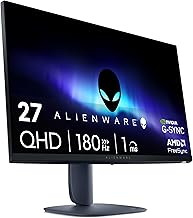
The AW2725DM is the most well-rounded 27-inch option for gamers who want it all without compromise. Its WQHD Fast IPS panel at 180Hz, G-SYNC and FreeSync support, 95% DCI-P3 color, and 400 nits brightness with anti-glare coating make it excellent for competitive shooters, open-world RPGs, and color-accurate streaming work alike.
Best Budget: Sceptre 27-inch Prime Gaming Monitor E275W-FW100T
Ideal for casual gamers and first-time setup builders, the Sceptre E275W-FW100T delivers surprising value with a 100Hz IPS display, 1ms response, 100% sRGB coverage, and built-in speakers. It is best for players upgrading from a 60Hz office display who want smoother gameplay on a tight budget without needing top-tier refresh rates.
Best Premium: Samsung 27″ Odyssey G5 G53F
The G53F is built for gamers who want a premium QHD experience with extra speed. Its 200Hz IPS panel, HDR10, and FreeSync Premium support offer a noticeable step up from 180Hz models, and the Auto Source Switch and Black Equalizer are perfect for multi-device setups and spotting enemies in dark scenes.
Best for Competitive Esports: Dell 27 240Hz Gaming Monitor SE2726HG
Made for esports-focused players who prioritize raw speed over resolution, the Dell SE2726HG pushes a blazing 240Hz at FHD on an IPS panel with FreeSync Premium. It is best for Valorant, CS2, and Fortnite players who want ultra-low input lag and fluid motion and are willing to trade QHD sharpness for frames.
Best for Value QHD: Samsung 27″ Odyssey G5 G51F
The G51F hits the value sweet spot for balanced QHD gaming, pairing a sharp 1440p IPS panel with 180Hz, 1ms response, HDR10, and a height-adjustable stand. It is best for mainstream gamers and students who want a premium-feeling QHD display with great ergonomics without paying the 200Hz premium.
Frequently Asked Questions
Is QHD (1440p) worth it over FHD (1080p) at 27 inches?
Yes, for most gamers QHD is the better balanced choice at 27 inches. FHD can look soft or pixelated at this size, while QHD provides a much sharper, more detailed image for gaming and streaming without demanding the GPU power of 4K. FHD 240Hz only makes sense if you play competitive esports and need maximum fps on a mid-range graphics card.
Will I notice the difference between 180Hz, 200Hz, and 240Hz?
Going from 144Hz to 180Hz or 200Hz is clearly smoother, especially in fast camera movements. The jump from 200Hz to 240Hz is more subtle and most beneficial for competitive FPS players with systems that can sustain 240 fps. For balanced performance, 180Hz to 200Hz offers the best blend of smoothness and accessibility.
Do I need G-SYNC or FreeSync on a 27-inch gaming monitor?
Adaptive sync is essential for tear-free gaming. Most modern monitors support FreeSync Premium or are G-SYNC Compatible, which works with both NVIDIA and AMD GPUs over DisplayPort and HDMI. The Alienware AW2725DM supports both natively, ensuring smooth variable refresh rate performance regardless of your graphics card.
How important are HDR and color gamut for balanced gaming?
For balanced use that includes gaming, streaming, and content creation, wide color gamut matters more than entry-level HDR. Look for 95% DCI-P3 or 99% sRGB coverage for vibrant, accurate colors. HDR10 support improves contrast in supported games, but for true HDR impact you would need higher peak brightness than most balanced monitors offer.
Final Thoughts
For the best all-around balance of sharpness, speed, and color, the Alienware 27 Gaming Monitor AW2725DM remains the top pick for most gamers, while the Samsung Odyssey G5 G53F is an excellent premium alternative if you want 200Hz. On a tighter budget, the Samsung Odyssey G5 G51F delivers outstanding QHD value without major compromises.