Key takeaways
- RTX 4070: DLSS super resolution, including the improved transformer model introduced with DLSS 4, plus DLSS frame generation. It cannot use the multi frame generation that is limited to RTX 50 cards.
- RX 7900 GRE: FSR 3.1 upscaling and AMD frame generation. FSR 4, AMD’s much better machine-learning upscaler, is officially reserved for RDNA 4 (RX 9000) cards, so the GRE does not get it through official drivers.
Pick the Radeon RX 7900 GRE if you mostly play without ray tracing and want 16 GB of VRAM for the money, and pick the GeForce RTX 4070 if you value ray tracing, DLSS and a cooler, lower-power build. In raw rasterized performance at 1440p the GRE is usually a little faster; with ray tracing switched on, the RTX 4070 usually comes out ahead.
Both cards belong to the previous generation now. Nvidia’s current mid-range is the RTX 50 series and AMD’s is the RX 9000 series, so most people comparing these two are shopping the used market, clearance stock, or deciding whether a card they already own is worth keeping. That context shapes the advice below.
Where Each Card Comes From
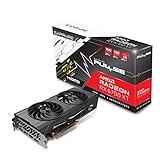
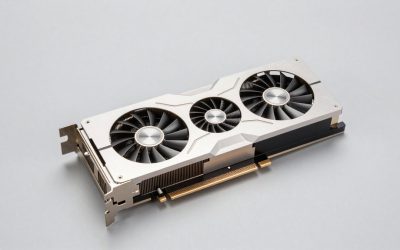
The RTX 4070 launched in April 2023 at $599 as Nvidia’s efficient 1440p card, built on Ada Lovelace with 12 GB of fast GDDR6X. The RX 7900 GRE arrived in July 2023 (initially in China, with wider availability later) at a $549 MSRP, using a cut-down version of AMD’s big RDNA 3 chip with 16 GB of GDDR6 on a 256-bit bus. One is a lean, efficient design; the other is a larger chip with more memory that draws more power.
| Spec | RTX 4070 | RX 7900 GRE |
|---|---|---|
| Architecture | Ada Lovelace | RDNA 3.0 |
| Release date | 12 April 2023 | 27 July 2023 |
| Launch MSRP | $599 | $549 |
| Shaders | 5888 CUDA cores | 5120 stream processors |
| Boost clock | 2475 MHz | 2245 MHz |
| Process | 5 nm | 5 nm |
| TDP | 200 W | 260 W |
| VRAM | 12 GB GDDR6X | 16 GB GDDR6 |
| Bus width | 192-bit | 256-bit |
| Bandwidth | 504.2 GB/s | 576.0 GB/s |
| Cache | 36 MB L2 | 6 MB L2 + 64 MB L3 |
| Interface | PCIe 4.0 x16 | PCIe 4.0 x16 |
| Power connectors | 1x 16-pin | 2x 8-pin |
| Length / width | 240 mm, 2-slot | 276 mm, 2-slot |
| Display outputs | 1x HDMI 2.1, 3x DP 1.4a | 1x HDMI 2.1a, 2x DP 2.1, 1x USB Type-C |
Raster Performance at 1080p and 1440p
Reviewers agree on the direction but not the exact size of the gap. Tom’s Hardware found the two cards close overall across a mixed suite of 19 games, with the 7900 GRE about 4% ahead at 1440p ultra and winning rasterized-only titles by roughly 5-17%. Hardware Times measured a larger lead of around 15% at 1440p, and Digital Trends reported something similar at about 16%. So in games without ray tracing, expect the RX 7900 GRE to be roughly 5-15% faster at 1440p, depending on the game selection.
At 1080p the gap narrows, because both cards often wait on the CPU. If you play at 1080p with a mid-range processor, the difference you actually see on screen will frequently be smaller than the review averages.
Frame rates depend heavily on settings, CPU and game patches, but as a broad guide both cards handle demanding recent games at 1440p high settings somewhere in the 60-100 fps range without upscaling, and competitive shooters run well above 144 fps on either.
Turning On Ray Tracing
With ray tracing enabled, the order generally flips. According to Tom’s Hardware, the RTX 4070 led the GRE by about 10-13% in its ray-traced games. Hardware Times also found the 4070 ahead in most RT titles. Not every review agrees: PCGamesN found the GRE slightly ahead at 1440p in its own selection, which included lighter RT implementations such as F1 23. The pattern is consistent with RDNA 3 generally: light RT effects run fine on the GRE, while heavy RT workloads such as Cyberpunk 2077’s high RT presets favor Nvidia by a wider margin.
In practice, both cards need upscaling to make heavy ray tracing playable at 1440p, which brings us to the bigger difference between them.
DLSS vs FSR on These Two Cards
- RTX 4070: DLSS super resolution, including the improved transformer model introduced with DLSS 4, plus DLSS frame generation. It cannot use the multi frame generation that is limited to RTX 50 cards.
- RX 7900 GRE: FSR 3.1 upscaling and AMD frame generation. FSR 4, AMD’s much better machine-learning upscaler, is officially reserved for RDNA 4 (RX 9000) cards, so the GRE does not get it through official drivers.
This is a real gap. DLSS image quality at the Balanced and Performance settings is visibly better than FSR 3.1, especially in motion and with fine detail like foliage and hair. If you expect to rely on upscaling, the RTX 4070’s effective performance at a given image quality is better than the raw raster numbers suggest.
Memory: Does 16 GB Matter?
The GRE’s 16 GB is its most future-friendly feature. At 1080p and most 1440p settings, 12 GB is still enough in current games. The pressure shows up at 1440p with maximum textures plus ray tracing plus frame generation, and at 4K, where 12 GB cards sometimes need texture settings lowered to avoid stutter. A rough rule:
- 1080p high: about 7-10 GB, both fine.
- 1440p high or ultra: about 9-12 GB, 4070 occasionally tight, GRE comfortable.
- 4K high: about 11-15 GB, GRE clearly better placed.
If you keep cards for four years or more, the extra memory is a genuine advantage, although the GRE’s weaker upscaler partly offsets it at higher resolutions.
Power Draw, PSU Math and Case Space
This is the RTX 4070’s clearest win. It is rated at 200 W compared with 260 W for the GRE, a 60 W difference that means less heat in the case and quieter fans on most models.
PSU sizing using GPU TDP + CPU + about 150 W headroom:
- RTX 4070 + 125 W CPU: 200 + 125 + 150 = 475 W. A good 550 W unit is enough.
- RX 7900 GRE + 125 W CPU: 260 + 125 + 150 = 535 W. Aim for 650 W.
- With a 200 W-class CPU, add about 75 W to each and move to 650 W and 750 W respectively.
Running costs add up slowly. At 60 W extra for 3 hours a day, the GRE uses roughly 65 kWh more per year, which is a modest amount on most electricity bills but not nothing over several years.
Connectors: the GRE uses two ordinary 8-pin cables. The RTX 4070 reference design uses one 16-pin connector with an adapter, though plenty of partner cards use a single 8-pin plug. For size, the reference figures are 240 mm for the 4070 and 276 mm for the GRE, both two slots wide; partner models with large coolers can run longer, so measure if you have a compact case.
Cost Per Frame and the Used Market
Using launch MSRPs and an RTX 4070 raster index of 100, with the GRE at about 105-115:
- RTX 4070: $599 / 100 = about $6.00 per point.
- RX 7900 GRE: $549 / 110 = about $5.00 per point.
At launch, the GRE was the better raster value by around 15-20%. Ray tracing and DLSS shift that back toward Nvidia for anyone who uses those features.
Today, both are mostly used or leftover-stock purchases. Used examples of each usually sell in roughly the $380-$480 range depending on the model, cooler and condition. Look for cards with intact warranty stickers where applicable, ask about past mining or heavy use, and stress the card before finalizing a local sale. Also weigh them against current-generation cards like the RX 9070 and RTX 5070, which add better upscaling (FSR 4 on AMD, multi frame generation on Nvidia) and can be worth a small premium over a used card.
Decision Table
| If you… | Choose |
|---|---|
| Play mostly raster games at 1440p and want max fps per dollar | RX 7900 GRE |
| Want ray tracing in games like Cyberpunk 2077 or Alan Wake 2 | RTX 4070 |
| Rely on upscaling for higher resolutions | RTX 4070 (DLSS quality advantage) |
| Play at 4K with high-resolution textures | RX 7900 GRE (16 GB) |
| Have a 550 W PSU or a small, warm case | RTX 4070 |
| Stream or record with hardware encoding | RTX 4070 has the more widely supported encoder; the GRE also supports AV1 |
| Plan to keep the card 4+ years and mostly play raster | RX 7900 GRE |
Verdict
There is no wrong choice here, only a choice of priorities. The RX 7900 GRE gives you more raw speed and more memory for less money, which suits raster-focused players and anyone running high resolutions without heavy ray tracing. The RTX 4070 trades a bit of raw speed for much better upscaling, stronger ray tracing and lower power draw, which suits modern single-player games with RT and smaller or quieter builds. If prices are close, the RTX 4070’s software advantages make it the easier recommendation for most players; if the GRE is noticeably cheaper, it wins on value.
Frequently Asked Questions
Is the RX 7900 GRE faster than the RTX 4070?
In rasterized games, yes, typically by about 5-15% at 1440p depending on the review and game selection. With ray tracing on, the RTX 4070 is usually ahead by around 10% or more. Overall averages that mix both types of games show the two cards close.
Can the RX 7900 GRE use FSR 4?
FSR 4 is officially supported only on RDNA 4 cards such as the RX 9070 series. The RX 7900 GRE uses FSR 3.1 upscaling and AMD frame generation. That means its upscaled image quality trails DLSS on the RTX 4070.
What PSU do I need for an RX 7900 GRE?
A quality 650 W power supply is a sensible choice with a typical gaming CPU. The GRE is rated at 260 W and uses two 8-pin PCIe connectors. If your CPU draws a lot of power under load, a 750 W unit adds margin.
Is 12 GB on the RTX 4070 a problem in 2026?
Not at 1080p or most 1440p settings. It can become limiting at 1440p with ultra textures, ray tracing and frame generation all enabled, and at 4K. Lowering texture quality one step usually solves it.
Should I buy one of these used or a new RX 9070 or RTX 5070?
If a used RTX 4070 or RX 7900 GRE costs significantly less than a new current-generation card, the used card is good value. If the gap is small, the newer cards are worth it for warranty, better upscaling and slightly higher performance. The RTX 5070 lands at or slightly above this pair in most reviews, and the RX 9070 is clearly faster than both.