Key takeaways
- Sub-$120: AM4 holdovers (Ryzen 5 5600, 5500). Great for reuse of DDR4, but the platform is a dead end.
- $120–$200: AM5 value chips (Ryzen 5 7500F, 7600, 9600X). This is the sweet spot — DDR5 prices have normalized and B650 boards are cheap.
- $200–$300: Older X3D chips like the Ryzen 7 5700X3D for AM4 upgraders, or entry Ryzen 7 7700-class parts on sale.
The Short Answer: Best Budget Gaming AMD CPU in 2026
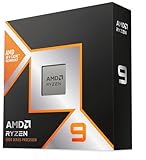
The best budget gaming AMD CPU for most builders in 2026 is the Ryzen 5 7500F — it delivers roughly 90% of the gaming performance of chips costing twice as much, sits on the upgrade-friendly AM5 platform, and typically sells in the $130–$170 range. For ultra-tight budgets, the Ryzen 5 5600 on AM4 remains the cheapest viable entry point, while the Ryzen 5 9600X suits builders who want Zen 5 efficiency and a long upgrade runway.
What “Budget” Actually Buys You in 2026
Budget gaming CPUs now fall into three clear tiers, and the differences matter more than raw core counts. Most games still saturate around 6–8 cores, so spending past 8 cores rarely improves frame rates — money is better spent on the platform, cooler, or GPU.
Our top picks


As an Amazon Associate we earn from qualifying purchases at no extra cost to you. Ratings are shown as listed on Amazon.
- Sub-$120: AM4 holdovers (Ryzen 5 5600, 5500). Great for reuse of DDR4, but the platform is a dead end.
- $120–$200: AM5 value chips (Ryzen 5 7500F, 7600, 9600X). This is the sweet spot — DDR5 prices have normalized and B650 boards are cheap.
- $200–$300: Older X3D chips like the Ryzen 7 5700X3D for AM4 upgraders, or entry Ryzen 7 7700-class parts on sale.
Head-to-Head: The Four Contenders
| CPU | Cores / Threads | Boost Clock | TDP | Platform | Typical Price Range | 1080p Gaming Position |
|---|---|---|---|---|---|---|
| Ryzen 5 5600 | 6 / 12 | 4.4 GHz | 65W | AM4 / DDR4 | $90–$120 | Baseline (1.0x) |
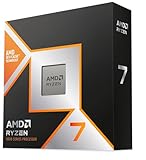
| Ryzen 7 5700X3D | 8 / 16 | 4.1 GHz | 105W | AM4 / DDR4 | $180–$230 | ~1.35x — near AM5 levels |
| Ryzen 5 7500F | 6 / 12 | 5.0 GHz | 65W | AM5 / DDR5 | $130–$170 | ~1.30x |
| Ryzen 5 9600X | 6 / 12 | 5.4 GHz | 65W (default) | AM5 / DDR5 | $180–$230 | ~1.40x |
The percentages above reflect typical 1080p averages in CPU-bound titles (esports, strategy, simulation games). At 1440p or 4K with a mid-range GPU, the gap shrinks to 5–10% because the GPU becomes the limiter — a key point when deciding how much CPU you actually need.
The Real Cost: Platform Math, Not Chip Price
Comparing CPU sticker prices alone is misleading. Here’s a worked example for a complete CPU + motherboard + 32GB RAM bundle in 2026:
- AM4 build: Ryzen 5 5600 (~$100) + B550 board (~$80) + 32GB DDR4-3200 (~$50) ≈ $230 total
- AM5 build: Ryzen 5 7500F (~$150) + B650 board (~$110) + 32GB DDR5-6000 (~$90) ≈ $350 total
The AM5 platform costs roughly $120 more upfront but buys you ~30% more CPU-bound performance and upgrade room through future Ryzen generations on the same socket. If you plan to keep the build 4+ years, that $120 often saves a full platform swap later. If you’re pairing the CPU with a GPU under ~$300 and playing at 1440p, the AM4 savings go further toward the GPU — which matters more for your frame rate.
Power Draw and Cooling: The Hidden Budget Line
All four chips are easy to cool, but there’s a real difference in sustained gaming loads:
- Ryzen 5 5600: ~65–75W in games. The included Wraith Stealth cooler is adequate — zero extra cost.
- Ryzen 5 7500F: ~70–90W in games, no stock cooler included. A $25–$35 tower cooler is enough.
- Ryzen 5 9600X: Defaults to 65W TDP but most boards ship it at 105W mode; expect ~90–110W under gaming loads. A modest tower cooler keeps it quiet.
- Ryzen 7 5700X3D: ~80–100W in games despite the 105W rating — X3D chips can’t draw peak power due to voltage limits on the stacked cache.
Practical implication: a decent 550–650W PSU handles any of these chips paired with a mid-range GPU, and none requires liquid cooling. Don’t let anyone upsell you a 360mm AIO for a 65W CPU.
Decision Matrix: Match Your Situation to a Chip
| Your Situation | Best Pick | Why |
|---|---|---|
| Absolute lowest cost, already own DDR4 or an AM4 board | Ryzen 5 5600 | Reuse existing parts; still handles 1080p/1440p with a mid GPU |
| AM4 owner wanting a final upgrade without new motherboard/RAM | Ryzen 7 5700X3D | Near-AM5 gaming performance on a dead socket — the last meaningful AM4 upgrade |
| New build, $600–$900 total budget | Ryzen 5 7500F | Best price-to-performance on a living platform |
| New build, want longest upgrade path and higher efficiency | Ryzen 5 9600X | Zen 5, lower temps, AM5 socket supported through at least 2027 |
| Pairing with a high-end GPU for 1080p esports | Stretch to a 7800X3D/9800X3D-class chip if possible | CPU-bound at high refresh rates; budget chips will bottleneck |
Settings and Tweaks That Stretch a Budget CPU
- Enable EXPO/XMP in BIOS — running DDR5 at JEDEC 4800 instead of its rated 6000 costs 5–10% frame rate on AM5. This is the single biggest free performance gain.
- Sweet spot memory: DDR5-6000 CL30 for AM5; DDR4-3600 CL16 for AM4. Faster kits show diminishing returns.
- Enable Resizable BAR (Smart Access Memory) — typically a 2–8% lift in supported games, and it’s free.
- Curve Optimizer: A -15 to -20 all-core offset on Zen 4/Zen 5 usually drops temperatures 5–10°C with zero performance loss; verify stability with a stress test afterward.
- In-game: Lower crowd density, draw distance, and physics settings first — these hammer the CPU far more than resolution does.
When a Budget CPU Stops Making Sense
Skip the budget tier if you play CPU-heavy simulation or MMO titles at high refresh rates, stream while gaming, or pair with a top-tier GPU — in those cases an X3D chip pays for itself in usable frame rates. For everyone else, the 7500F’s combination of modern platform, low power draw, and a price that leaves room for a better GPU makes it the safest recommendation in the budget category.
FAQ
Is the Ryzen 5 5600 still worth buying in 2026?
Yes, if total cost is the priority or you already own AM4 parts. For a brand-new build with any upgrade ambition, AM5 is the better long-term bet.
Do I need DDR5-6400 or faster for AM5?
No. DDR5-6000 CL30 hits the 1:1 memory controller sweet spot; faster kits often force a less efficient divider mode.
Will a Ryzen 5 7500F bottleneck a mid-range GPU?
At 1440p or 4K with GPUs in the $300–$500 class, almost never. Bottlenecks only appear at 1080p with very fast GPUs in CPU-limited games.