Key takeaways
- L3 cache: 96MB on the 9800X3D versus 32MB on the 9700X — the single factor responsible for nearly all the gaming separation between them.
- Gaming performance: Expect roughly 15–25% higher average frame rates from the X3D chip in CPU-limited scenarios, with far larger gains in simulation, strategy, and open-world titles with heavy streaming.
- Clock speed: The 9700X boosts slightly higher, which lets it trade blows or edge ahead in lightly-threaded, cache-insensitive workloads.
- Power and thermals: The 9700X is a 65W part (with an optional 105W mode) that runs cool on modest cooling; the 9800X3D is a 120W chip that wants a good air tower or a 240mm+ AIO.
- Overclocking: The 9800X3D is fully unlocked, unlike earlier X3D parts, so PBO and curve optimizer are both fair game. The 9700X is unlocked too, but has less headroom to unlock.
- Value: The 9700X costs substantially less; the 9800X3D commands a premium that only pays off when the GPU isn’t the bottleneck.
What's inside
Eight cores, sixteen threads, the same Zen 5 architecture, the same AM5 socket. On paper, the Ryzen 7 9800X3D and the Ryzen 7 9700X look like the same processor wearing different badges. In practice they behave very differently, and the gap shows up precisely where gamers notice it: 1% lows, frame-time consistency, and how long a build stays comfortable at high refresh rates.
The difference is cache. The 9800X3D carries AMD’s second-generation 3D V-Cache, stacked beneath the compute die rather than on top of it, giving it 96MB of L3 versus the 9700X’s 32MB. That change is why one chip is still the default recommendation for high-frame-rate gaming in 2026, and why the other remains one of the smartest all-round values on AM5. Choosing between them comes down to what you actually run, what GPU sits in the slot, and how much of your budget belongs to the CPU in the first place.
As an Amazon Associate we earn from qualifying purchases.


⚡ Save on Your Next PC — Amazon Prime
Prime members get fast free shipping on the systems above, plus early access to Prime Day & Black Friday PC deals. New members get a 30-day free trial.
Watch: Ryzen 7 9800X3D vs 9700X: 2026 Gaming CPU — Video Review
Quick Verdict
Buy the AMD Ryzen 7 9800X3D if gaming is the primary job and you’re pairing it with a serious GPU at 1080p or 1440p high-refresh — it delivers the largest, most consistent frame-rate uplift available from an eight-core part, and it holds that lead in the CPU-bound titles that punish everything else. Buy the Ryzen 7 9700X if you want the same core count, the same platform longevity, and near-identical productivity throughput for meaningfully less money, especially if you game at 4K, run a mid-range GPU, or would rather put the savings into graphics, storage, or a better monitor.
Key Differences
- L3 cache: 96MB on the 9800X3D versus 32MB on the 9700X — the single factor responsible for nearly all the gaming separation between them.
- Gaming performance: Expect roughly 15–25% higher average frame rates from the X3D chip in CPU-limited scenarios, with far larger gains in simulation, strategy, and open-world titles with heavy streaming.
- Clock speed: The 9700X boosts slightly higher, which lets it trade blows or edge ahead in lightly-threaded, cache-insensitive workloads.
- Power and thermals: The 9700X is a 65W part (with an optional 105W mode) that runs cool on modest cooling; the 9800X3D is a 120W chip that wants a good air tower or a 240mm+ AIO.
- Overclocking: The 9800X3D is fully unlocked, unlike earlier X3D parts, so PBO and curve optimizer are both fair game. The 9700X is unlocked too, but has less headroom to unlock.
- Value: The 9700X costs substantially less; the 9800X3D commands a premium that only pays off when the GPU isn’t the bottleneck.
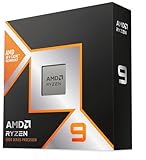
AMD Ryzen 7 9800X3D
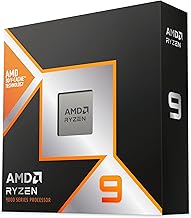
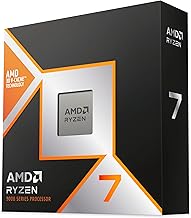
The 9800X3D is the chip that made X3D a no-compromise choice. Moving the cache die below the cores improved thermal transfer enough that AMD could raise clocks and unlock the multiplier, removing the two complaints that dogged the 7800X3D. The result is a processor that wins the gaming charts outright while remaining competitive in productivity, rather than being a specialist you tolerate for frame rates.
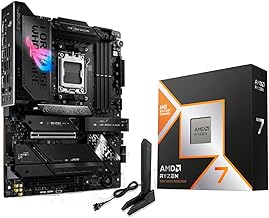
Where it shines is the ugly stuff: dense city centres, large multiplayer lobbies, late-game 4X turns, and heavily modded RPGs. Those workloads thrash memory, and 96MB of L3 keeps far more of the working set on-die. If you’d rather skip the parts-matching, the bundled 9800X3D + TUF Gaming X870-PLUS WiFi kit and the Micro Center combos with the GIGABYTE X870 Gaming WiFi6 or MSI PRO X870E-P boards land you on a PCIe 5.0, DDR5, Wi-Fi 7-class platform in one purchase. Budget for real cooling — this chip rewards it.
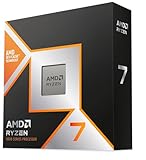
AMD Ryzen 7 9700X
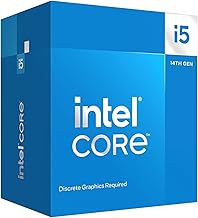
The 9700X is the sensible half of this comparison. Same Zen 5 cores, same IPC, same eight-core layout, and a 65W default envelope that makes it genuinely easy to build around: a mid-range board, a modest cooler, and a quiet case are all it asks for. In rendering, compilation, and content work it lands within a few percent of the 9800X3D, and its higher boost clock occasionally puts it ahead.
It only loses ground when the GPU stops being the limiting factor. At 4K with a mainstream or upper-mid-range card, the two chips are frequently within a handful of frames of each other. Because both use AM5, the 9700X is also a legitimate stepping stone — you can start here and drop in an X3D part later without replacing the board, memory, or cooler. That upgrade path is worth real money.
Which Should You Buy?
- For 1080p/1440p competitive gaming: Pick the 9800X3D. High-refresh esports and shooters are exactly where the cache advantage converts into frames.
- For 4K gaming on a mid-range GPU: Pick the 9700X and redirect the savings to graphics — that’s where your 4K frame rate actually comes from.
- For sims, strategy, and modded worlds: Pick the 9800X3D. No other eight-core chip handles these as gracefully.
- For mixed work and play: The 9700X is the better value; the productivity gap is small, and it runs cooler and quieter.
- For a one-box, no-guesswork build: Take one of the 9800X3D motherboard combos and skip the compatibility research entirely.
Frequently Asked Questions
Is the 9800X3D worth the price premium over the 9700X?
If you’re GPU-rich and gaming below 4K, yes — the uplift is real and consistent, particularly in 1% lows. If your graphics card is the bottleneck, the premium buys you very little today.
Will I notice the difference at 4K?
Less than you’d hope. At 4K the GPU sets the ceiling in most titles, though the X3D still helps in CPU-heavy games and with upscaling or frame generation enabled, both of which shift load back toward the processor.
What about the 7800X3D or the newer 9850X3D?
The 7800X3D remains an excellent value if you find it discounted and don’t need Zen 5’s extra IPC. The Ryzen 7 9850X3D sits above the 9800X3D with higher clocks — worth checking if you want the fastest eight-core gaming part available and the price gap is small.
Do I need a new motherboard or special cooler?
Both are AM5 and run on B650, X670, B850, or X870-class boards with a current BIOS. The 9700X is content with a mid-size air cooler; give the 9800X3D a quality tower or a 240mm+ AIO to hold its boost clocks.
Final Verdict
The Ryzen 7 9800X3D is the better gaming CPU by a clear, measurable margin and the right pick for anyone chasing high frame rates with a capable GPU — the combo bundles make it painless to deploy. The Ryzen 7 9700X is the better-balanced purchase for 4K players, mixed workloads, and tighter budgets, and AM5’s longevity means it never has to be your final answer.