Key takeaways
- Assuming Oval and Round Cushions Are Interchangeable: Do not buy round cushions for an oval headset cup, or vice versa. Even if the outer circumference is similar, the stretching required to fit an incorrect shape will distort the foam, ruin the acoustic seal, and tear the mounting flange.
- Ignoring the Inner Depth: Many buyers focus solely on the outer height and width. However, if a replacement cushion is too thin (under 18mm), your ear will press flat against the hard plastic driver cover inside the headset. This causes severe, throbbing cartilage pain within 30 to 45 minutes of play.
- Neglecting the Mounting Ring Style: Some headsets, such as the PS5 Pulse 3D or specific Astro models, do not use a standard stretch-to-fit groove. They rely on proprietary plastic clips. Purchasing a generic sleeve-style cushion without checking for an integrated plastic mounting bracket will leave you with an unusable product.
- Overlooking Glasses Compatibility: Standard, stiff round cushions compress glasses frames directly against the temples, causing headaches. If you wear glasses, look for cushions that utilize softer relief foam or specialized channels on the inner ring to accommodate eyewear.
What's inside
The Short Answer
For most console gaming headsets, the ideal size for comfortable ear cushions ranges from 90mm to 110mm (3.5 to 4.3 inches) in outer diameter for over-ear (circumaural) models, and 50mm to 70mm (2.0 to 2.8 inches) for on-ear (supra-aural) headsets.
To determine what size ear cushions fit console gaming headsets comfortably, you must look closely at the inner cavity dimensions. A comfortable over-ear cushion requires an inner opening of at least 55mm to 65mm (2.2 to 2.6 inches) in height and 40mm to 50mm (1.6 to 2.0 inches) in width to accommodate the average human ear without pinching. Additionally, a thickness depth of 20mm to 28mm (0.8 to 1.1 inches) is necessary to prevent your ears from pressing painfully against the hard plastic driver cover inside the cup.
As an Amazon Associate we earn from qualifying purchases at no extra cost to you. Product prices and availability are accurate as of the date shown and are subject to change.


Standard Sizes
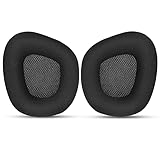
Ear cushions are not one-size-fits-all. They are generally categorized by shape—round, oval, or teardrop—and by their cup style. Below is a comprehensive sizing table detailing the physical dimensions, inner clearances, and typical console compatibility for the most common headset replacement cushions on the market.
| Cushion Shape & Type | Outer Dimensions (Inches) | Outer Dimensions (Metric) | Inner Opening (Inches) | Inner Opening (Metric) | Common Compatibility Examples |
|---|---|---|---|---|---|
| Small Round (On-Ear) | 2.1″ to 2.5″ | 55mm to 64mm | N/A (Sits on top of ear) | N/A | Retro headsets, ultra-lightweight chat headsets |
| Standard Round (Over-Ear) | 3.5″ to 3.7″ | 90mm to 95mm | 2.0″ to 2.2″ | 50mm to 56mm | Sony PlayStation 5 Pulse 3D Wireless Headset |
| Medium Oval (Over-Ear) | 3.9″ x 3.3″ | 100mm x 85mm | 2.4″ x 1.6″ | 60mm x 40mm | NUBWO G06, N16, SteelSeries Arctis Nova series |
| Large Oval / Ergonomic | 4.1″ x 3.5″ | 105mm x 90mm | 2.6″ x 1.8″ | 66mm x 46mm | Turtle Beach Stealth 600 (Gen 2/3) & Stealth 700 |
How to Measure Your Headset for Replacement Cushions
To ensure a perfect, comfortable fit that prevents sound leakage and ear fatigue, you must measure your physical headset chassis before purchasing replacements. Do not rely solely on visual estimation. Follow these steps using a digital caliper or a standard ruler:
- Identify the Attachment Method: Examine how the current cushion is attached. Is it stretched over a plastic lip (groove mount), snapped in via a plastic ring bracket (clip-on), or glued down? If it uses a plastic ring bracket, you will need replacements that specifically include this plastic plate or be prepared to peel the old cushion off the original bracket and glue the new one on.
- Measure the Outer Diameter (Height and Width): Lay the headset flat on a table. Measure from the outermost edge of one side of the cushion to the opposite outer edge. For oval or asymmetrical cushions, take two measurements: the vertical height (top to bottom) and the horizontal width (left to right).
- Measure the Inner Cavity (Ear Opening): Measure the open space inside the cushion where your ear sits. This is the most critical metric for comfort. If the inner opening is smaller than your ear height, the cushion will rest on your ear cartilage, causing soreness after an hour of play.
- Measure the Cushion Depth (Thickness): Measure from the front face of the cushion (the part that touches your head) down to the base where it mounts to the plastic cup. A depth of less than 18mm (0.7 inches) often leads to the ear rubbing against the hard interior mesh of the speaker driver.
By Use Case and Console System
PlayStation 5 Immersive Gaming
The standard Sony PlayStation 5 Pulse 3D wireless headset utilizes a distinct round ear cup design. The stock cushions are approximately 90mm to 93mm (3.5 to 3.6 inches) in diameter. For long, immersive gaming campaigns, many players find the factory leatherette cushions trap heat and lack sufficient depth, causing ears to touch the driver housing.
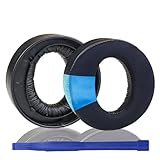
Upgrading to specialized cooling-gel replacement cushions—which typically range in price from $8.00 to $14.00—maintains the factory 90mm circular footprint but increases the depth to a plush 25mm (1.0 inch). These cushions utilize a combination of heat-dispersing gel, breathable ice-silk fabric on the face, and high-density memory foam. This ensures your ears remain cool and isolated from background room noise during multi-hour raids.
Xbox Series X/S and High-End Comfort
For Xbox gamers utilizing premium headsets like the Turtle Beach Stealth series (including the Stealth 600 Gen 2, Gen 3, and 500 XB), the mounting shape is a large, contoured oval. These headsets require larger, ergonomically shaped cushions measuring roughly 105mm x 90mm (4.1″ x 3.5″).
Upgraded cushions in this class, which generally retail between $12.00 and $18.00, feature specialized cutouts or softer foam sections designed specifically for gamers who wear glasses. The extra width and height accommodate larger ears comfortably without pinching, while the dual-material design (breathable fabric on the face and noise-isolating leatherette on the sides) provides an excellent acoustic seal to maximize spatial audio performance on Xbox consoles.
Competitive Esports & Lightweight Play
In competitive multiplayer environments where rapid head movements and constant communication are necessary, lightweight headsets like the NUBWO G06 or N16 are highly popular. These headsets use medium-sized oval ear cushions measuring roughly 100mm x 85mm (3.9″ x 3.3″).
Replacement cushions for these models focus heavily on weight reduction and heat dissipation. Priced affordably between $7.00 and $11.00, they often feature high-density, highly flexible memory foam wrapped in soft, sweat-wicking mesh fabrics. This configuration minimizes the clamping force on the sides of the skull, preventing tension headaches during intense ranked matches.
Retro, Budget, & Multi-Device Setups
If you are maintaining a retro gaming setup, using older lightweight chat headsets, or managing a fleet of headsets for a gaming lounge, standard on-ear foam pads are the ideal solution. These small circular cushions, typically measuring 50mm to 55mm (1.9 to 2.1 inches) in diameter, sit directly on the ear rather than surrounding it.
Replacement sets for these retro models are incredibly cost-effective, often sold in bulk packs of 10 to 24 cushions for only $5.00 to $8.00. While they do not offer passive noise isolation, their open-cell foam construction keeps the weight extremely low and allows ambient sounds in the room to remain audible.
Common Sizing Mistakes
- Assuming Oval and Round Cushions Are Interchangeable: Do not buy round cushions for an oval headset cup, or vice versa. Even if the outer circumference is similar, the stretching required to fit an incorrect shape will distort the foam, ruin the acoustic seal, and tear the mounting flange.
- Ignoring the Inner Depth: Many buyers focus solely on the outer height and width. However, if a replacement cushion is too thin (under 18mm), your ear will press flat against the hard plastic driver cover inside the headset. This causes severe, throbbing cartilage pain within 30 to 45 minutes of play.
- Neglecting the Mounting Ring Style: Some headsets, such as the PS5 Pulse 3D or specific Astro models, do not use a standard stretch-to-fit groove. They rely on proprietary plastic clips. Purchasing a generic sleeve-style cushion without checking for an integrated plastic mounting bracket will leave you with an unusable product.
- Overlooking Glasses Compatibility: Standard, stiff round cushions compress glasses frames directly against the temples, causing headaches. If you wear glasses, look for cushions that utilize softer relief foam or specialized channels on the inner ring to accommodate eyewear.
FAQ
How do I know if my gaming headset uses oval or round cushions?
The easiest way is a visual inspection, but you can verify this by measuring the vertical height and horizontal width of the ear cup. If the two measurements are identical, your headset uses round cushions. If the vertical height is at least 10mm to 15mm longer than the horizontal width, your headset requires oval or teardrop-shaped cushions.
What is the difference between cooling gel, leatherette, and fabric ear cushions?
In 2026, the material you choose dictates both comfort and sound profile. Leatherette (PU leather) offers the best passive noise isolation and deepest bass response, but it traps heat and sweat. Mesh fabric is highly breathable and keeps ears cool, but it lets in ambient room noise and slightly reduces bass impact. Cooling gel cushions offer a hybrid solution, featuring a layer of thermal gel underneath breathable fabric on the contact face, with leatherette on the outer ring to preserve bass and noise isolation.
Can I use universal ear cushions on brand-specific headsets?
Yes, but only if your headset uses a standard “lip-and-groove” mounting system. If your headset requires a proprietary plastic clip-in ring, universal stretch-fit cushions will not mount securely. Always check the mounting mechanism of your headset before purchasing a universal model.
How often should I replace my console gaming headset ear cushions?
For daily gamers, ear cushions should be replaced every 12 to 18 months. Over time, the internal memory foam degrades and loses its elasticity, causing the cups to flatten. Additionally, leatherette surfaces will eventually crack and flake, while fabric surfaces collect sweat, skin oils, and bacteria, which can lead to skin irritation.