Key takeaways
-
Step 1: Measure Your Ear Clearance
Use a soft measuring tape to measure the height and width of your outer ear. Compare this to the inner earcup dimensions of the headset. For a true over-ear (circumaural) fit, the inner opening of the cushion should be at least 0.2 inches (0.5 cm) larger than your ear to prevent painful pressure points on your cartilage. -
Step 2: Determine Your Headband Arc
Measure from the top of one ear, over the crown of your head, to the top of the other ear. Most standard headsets accommodate an arc length of 12 to 15 inches (30.5 to 38.1 cm). If you wear glasses or have a wider head shape, look for headsets with suspension bands or flexible steel headbands to distribute clamping force evenly. -
Step 3: Calculate Desk and Stand Clearance
If you plan to hang your headset on a desk stand or under-desk hook, measure the vertical clearance. A standard PlayStation wireless headset hangs down approximately 8.5 to 9.5 inches (21.6 to 24.1 cm) from the top band to the bottom of the earcups. Ensure your stand is at least 10 inches tall to keep the earcups from dragging on your desk surface. -
Step 4: Map Your Charging Cable Radius
Measure the distance from your nearest power outlet or PS5 console to your preferred resting spot (like a side table or media console shelf). If you choose a headset with a shorter battery life, you will need a USB-C charging cable long enough (typically 4 to 6 feet) to comfortably reach your seating area if you ever need to charge while playing.
What's inside
As a home and interior design editor, I often evaluate gaming gear through a dual lens: how it performs ergonomically for the user, and how it integrates aesthetically into a curated living space. A wireless gaming headset is no longer just a piece of plastic stuffed into a drawer; it is an everyday object that sits on your media console, hangs from a sleek desk stand, or rests on a side table.
When curating your entertainment center or home office, balancing physical dimensions with technical longevity is crucial. After all, a headset with a weak battery requires constant cable clutter, defeating the purpose of a clean, wireless aesthetic. In this comprehensive guide, we will explore physical measurements, spatial requirements, and the crucial question of battery endurance to help you select the perfect model for your home setup.
As an Amazon Associate we earn from qualifying purchases at no extra cost to you. Product prices and availability are accurate as of the date shown and are subject to change.


The Short Answer
At a minimum, a modern PlayStation wireless headset should have 20 to 30 hours of battery life on a single charge. This window ensures you can get through a full week of casual evening gaming—or a marathon weekend session—without leaving unsightly charging cables draped across your media console or desk.
Premium options equipped with planar magnetic drivers (such as the PlayStation Pulse Elite, priced at $149) or dual-wireless architectures (like the RIG R8 Spectre PRO HS, priced at $179.99) regularly achieve 30 to 50 hours of playback. High-end, audiophile-grade wireless headsets can even push past 80 hours. Ultimately, the sweet spot for a clutter-free home setup is 30 hours; this capacity provides the perfect equilibrium between a lightweight physical footprint (under 13 ounces) and enough power to keep charging cables tucked away in drawers where they belong.
Standard Sizes
To integrate a headset seamlessly into your home, you must understand its physical dimensions. A headset that is too bulky will look cluttered on a small floating shelf, while one with shallow earcups will cause physical discomfort during long sessions. Below is a breakdown of standard PlayStation wireless headset sizes, weights, and battery capacities based on current market standards.
| Headset Class & Style | Earcup Diameter (Outer) | Earcup Depth (Inner Cushion) | Average Weight | Typical Battery Life | Price Range |
|---|---|---|---|---|---|
| Ultra-Lightweight / Slim (e.g., Entry-level / Mobile Hybrid) |
3.1 in / 7.8 cm | 1.6 in / 4.0 cm | 8.5 oz / 240 g | 15 – 20 Hours | $80 – $130 |
| Standard Ergonomic Over-Ear (e.g., Pulse Elite / Mid-Range) |
3.5 in / 8.9 cm | 2.0 in / 5.0 cm | 12.2 oz / 347 g | 30 Hours | $140 – $180 |
| Rugged Dual-Wireless (e.g., RIG R8 Spectre Style) |
3.6 in / 9.1 cm | 2.1 in / 5.3 cm | 11.5 oz / 326 g | 30 – 50 Hours | $160 – $210 |
| Premium Studio / Legacy (e.g., PS4 Platinum Style) |
3.8 in / 9.6 cm | 2.2 in / 5.6 cm | 14.0 oz / 396 g | 10 – 15 Hours (Legacy) 50+ Hours (Modern) |
$200 – $250 |
How to Measure Your Space
Fitting a wireless headset into your life requires measuring two distinct spaces: your personal anatomy (ergonomics) and your physical room layout (storage and charging). Follow these steps to ensure a perfect fit.
-
Step 1: Measure Your Ear Clearance
Use a soft measuring tape to measure the height and width of your outer ear. Compare this to the inner earcup dimensions of the headset. For a true over-ear (circumaural) fit, the inner opening of the cushion should be at least 0.2 inches (0.5 cm) larger than your ear to prevent painful pressure points on your cartilage. -
Step 2: Determine Your Headband Arc
Measure from the top of one ear, over the crown of your head, to the top of the other ear. Most standard headsets accommodate an arc length of 12 to 15 inches (30.5 to 38.1 cm). If you wear glasses or have a wider head shape, look for headsets with suspension bands or flexible steel headbands to distribute clamping force evenly. -
Step 3: Calculate Desk and Stand Clearance
If you plan to hang your headset on a desk stand or under-desk hook, measure the vertical clearance. A standard PlayStation wireless headset hangs down approximately 8.5 to 9.5 inches (21.6 to 24.1 cm) from the top band to the bottom of the earcups. Ensure your stand is at least 10 inches tall to keep the earcups from dragging on your desk surface. -
Step 4: Map Your Charging Cable Radius
Measure the distance from your nearest power outlet or PS5 console to your preferred resting spot (like a side table or media console shelf). If you choose a headset with a shorter battery life, you will need a USB-C charging cable long enough (typically 4 to 6 feet) to comfortably reach your seating area if you ever need to charge while playing.
By Room or Use Case
How you use your home directly dictates the physical size and battery specifications you should prioritize. Let’s look at how different rooms and lifestyles shape your headset needs.
The Minimalist Living Room (Casual Gaming)
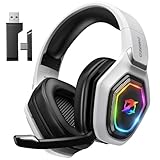
If your gaming setup is integrated into a clean, modern living room, visual clutter is your main enemy. For this environment, prioritize a headset with a 30-hour battery life and an elegant, low-profile design. This allows you to store the headset inside a closed media console drawer, pulling it out only when needed without worrying about it being dead. Look for models that match the white-and-black aesthetic of the PS5 console to keep your space looking cohesive.
The Dedicated Home Office & Gaming Station (Marathon Sessions)
For dedicated gaming zones, ergonomics and absolute battery life take center stage. Because you may be jumping from work Zoom calls directly into evening gaming, look for dual-wireless models with 40 to 50 hours of battery life. In this setup, a dedicated headphone stand with integrated cable routing is a must. A heavier headset (around 12 to 14 ounces) is acceptable here, as you likely have an ergonomic task chair with headrest support to mitigate neck strain.
The Shared Family Room or Bedroom (Late-Night Play)
If you share your gaming space with a partner or family members, sound isolation is paramount. You need deep, dense earcup cushions (at least 2.1 inches of depth) to physically seal out external noise and prevent your game audio from leaking into the room. Because these thicker ear cushions add physical bulk, look for a headset that can sit flat on a media shelf when not in use, taking up less vertical space.
The Compact Multi-Purpose Setup (Travel & Hybrid Use)
If you frequently move between a college dorm, a small apartment, and travel, look for a lightweight headset (under 10 ounces) with folding earcups. For hybrid use, battery life is incredibly important because you do not want to pack extra charging bricks. A headset with 50+ hours of battery life ensures you can leave the charging cables at home for weekend trips, keeping your travel bag light and organized.
Common Sizing Mistakes
When shopping for a wireless headset, it is easy to get caught up in audio specs and overlook the physical reality of how the device fits into your home. Avoid these common pitfalls:
- Sacrificing Weight for Excessive Battery Life: While a 100-hour battery sounds appealing, the extra lithium-ion cells add significant weight. A headset weighing over 14 ounces (400 grams) can cause neck fatigue and headaches after just an hour of play. For most home users, a 30-hour battery at a lighter weight is the far more comfortable choice.
- Ignoring Earcup Depth: Shallow earcups (under 1.8 inches) allow your ears to press directly against the hard plastic driver cover. No matter how great the battery life is, you won’t want to wear the headset if your ears are sore after thirty minutes.
- Overlooking Dock Footprints: Some premium wireless headsets come with bulky charging base stations. Before buying, measure your media console or desk surface to ensure you have the 5×5-inch flat footprint required for the dock without crowding your keyboard or TV stand.
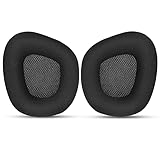
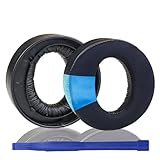
- Neglecting the “Glasses Tax”: If you wear glasses, thick, stiff earcup cushions will pinch your frames against your temples. Look for headsets featuring memory foam cushions covered in soft fabric or cooling gel, which conform to your glasses frames without breaking the acoustic seal.
FAQ
How much battery life should a playstation wireless headset have for daily gaming?
For daily gaming, your headset should have a minimum of 20 to 30 hours of battery life. This capacity allows you to play for 3 to 4 hours every night for an entire week without needing to plug the unit in, keeping your gaming area free of unsightly cords.
Does a larger battery make a headset heavier to wear?
Yes, battery capacity directly correlates with weight. Headsets with massive batteries (50 to 80+ hours) often weigh between 13 and 15 ounces. In contrast, headsets optimized for comfort with 30-hour batteries typically weigh a more manageable 11 to 12.5 ounces, which is ideal for long-term neck comfort.
What are the standard physical measurements of a PS5 headset?
A standard PlayStation wireless headset measures approximately 7.5 to 8.5 inches (19 to 21.6 cm) in width, 7.8 to 8.8 inches (19.8 to 22.4 cm) in height, and has an earcup depth of about 2 inches (5 cm). They generally weigh between 10.5 and 13 ounces (298 to 368 grams).
How do I store and charge my headset to keep my living room looking clean?
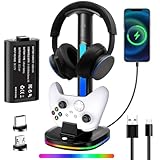
As we look ahead to design trends in 2026, the best way to maintain a clean aesthetic is to use an under-desk magnetic mount or a sleek, weighted headphone stand with an integrated, hidden wireless charging dock. This keeps the headset off your horizontal surfaces and ensures it is always charged and ready for your next session.