Key takeaways
- Raster performance: roughly a tie on average, with game-to-game swings in both directions.
- Ray tracing and upscaling: a clear RTX 5060 win thanks to newer RT hardware, DLSS 4 and Multi Frame Generation.
- VRAM: a clear RX 6700 XT win, 12 GB versus 8 GB.
- Power and size: RTX 5060 draws 145 W against 230 W and is shorter.
Buy the RTX 5060 if you play mostly at 1080p and want DLSS 4, stronger ray tracing and lower power draw in a new card with a warranty. Pick the RX 6700 XT if you can find it used at a clearly lower price and you want 12 GB of VRAM for 1440p and texture-heavy games. In plain rasterized gaming the two land surprisingly close, so the deciding factors are memory, features and what you actually pay.
The Short Version
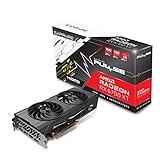
These cards come from very different eras. The RX 6700 XT launched in March 2021 as a $479 RDNA 2 card aimed at 1440p. The RTX 5060 arrived in May 2025 at $299 as NVIDIA’s entry Blackwell card. Four years of progress let the cheaper, smaller, lower-power card catch the older upper-midrange part, but not overtake it everywhere.
- Raster performance: roughly a tie on average, with game-to-game swings in both directions.
- Ray tracing and upscaling: a clear RTX 5060 win thanks to newer RT hardware, DLSS 4 and Multi Frame Generation.
- VRAM: a clear RX 6700 XT win, 12 GB versus 8 GB.
- Power and size: RTX 5060 draws 145 W against 230 W and is shorter.
Spec Sheet Side by Side
| Spec | RX 6700 XT | RTX 5060 |
|---|---|---|
| Architecture | RDNA 2.0 | Blackwell 2.0 |
| Release date | 3 March 2021 | 19 May 2025 |
| Launch MSRP | $479 | $299 |
| Shaders / CUDA cores | 2560 | 3840 |
| Boost clock | 2581 MHz | 2497 MHz |
| Process | 7 nm | 5 nm |
| TDP | 230 W | 145 W |
| Memory | 12 GB GDDR6 | 8 GB GDDR7 |
| Bus width | 192-bit | 128-bit |
| Bandwidth | 384.0 GB/s | 448.0 GB/s |
| Cache | 3 MB L2 + 96 MB L3 (Infinity Cache) | 32 MB L2 |
| Interface | PCIe 4.0 x16 | PCIe 5.0 x8 |
| Power connectors | 1x 6-pin + 1x 8-pin | 1x 8-pin |
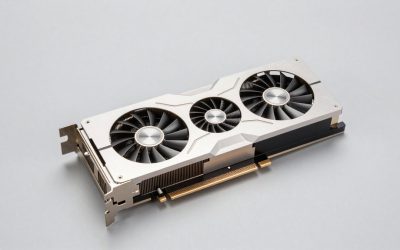
| Length / width | 267 mm, 2-slot | 241 mm, 2-slot |
| Outputs | 1x HDMI, 3x DisplayPort | 1x HDMI 2.1b, 3x DisplayPort 2.1b |
One spec deserves attention: the RTX 5060 runs on a PCIe 5.0 x8 link. On a PCIe 5.0 or 4.0 board that is fine. On an older PCIe 3.0 platform the link drops to 3.0 x8, which can cost performance when the 8 GB buffer overflows and the card has to pull data over the bus. The RX 6700 XT uses a full x16 link, so it is less sensitive to older motherboards.
How They Trade Blows in Games
Rasterized games at 1080p and 1440p
In GamersNexus’ RTX 5060 review, the two-generation-old RX 6700 XT landed roughly level with the RTX 5060, with the newer card ahead by around 10 to 13 percent in some titles and the Radeon slightly ahead in others. Aggregated benchmark data tells a similar story: the RTX 5060 tends to hold a small edge at 1080p, while the RX 6700 XT tends to pull ahead at 1440p, where its larger memory pool and Infinity Cache matter more. A fair summary is that the two are within about 5 to 10 percent of each other on average, with the winner depending on the game and resolution.
As a rough guide, both cards typically deliver somewhere around 60 to 100 FPS at 1080p high settings in demanding modern titles and around 45 to 75 FPS at 1440p, but those ranges move a lot with settings, CPU and game patches.
Where 8 GB starts to hurt
Newer releases are where the cards split. Community benchmark compilations of recent games show the RX 6700 XT winning by a wide margin in some VRAM-hungry titles at higher resolutions and texture settings, while the RTX 5060 leads strongly in other engines that favor NVIDIA’s architecture. When an 8 GB card runs out of memory, the symptom is not just a lower average; it is stutter, texture pop-in and poor 1% lows. Lowering texture quality one notch usually fixes it on the RTX 5060, but that is a compromise the 12 GB card rarely needs to make.
Ray tracing
RDNA 2 was AMD’s first ray tracing generation and it shows. In games with meaningful RT effects, the RTX 5060’s fourth-generation RT cores give it a clear lead, and with path tracing the gap becomes large enough that the RX 6700 XT is not a realistic option. If ray-traced lighting is something you want to turn on, this is the RTX 5060’s strongest argument.
Upscaling and Frame Generation
This is the biggest practical difference. The RTX 5060 supports the full DLSS 4 feature set, including the transformer-based Super Resolution model and Multi Frame Generation, which can insert up to three generated frames per rendered frame in supported games. Frame generation raises smoothness but adds some latency, so it works best when the base frame rate is already around 50 to 60 FPS.
The RX 6700 XT relies on FSR. It does not officially support FSR 4, which AMD has limited to RDNA 4 cards, so it uses FSR 3.x upscaling and frame generation. FSR 3 works on any GPU and is useful, but its image quality at lower internal resolutions generally trails DLSS 4. XeSS also runs on the Radeon and is sometimes the better-looking option in games that offer it.
There is also a driver consideration. AMD moved RDNA 1 and RDNA 2 cards to a separate driver branch in late 2025 that focuses on maintenance and fixes, so the RX 6700 XT should not be expected to get the same pace of new-game optimization as current Radeon cards.
Cost per Frame: A Worked Example
Because average raster performance is close to equal, cost per performance comes down almost entirely to price. Treat both cards as 100 points of performance:
- At launch MSRP, the RX 6700 XT cost $479 for 100 points, or about $4.79 per point. The RTX 5060 cost $299, about $2.99 per point, roughly 38 percent cheaper per unit of performance.
- In today’s market the RX 6700 XT is mostly a used purchase. It usually sells for about $200 to $260 used, depending on the cooler and condition. At $230 it works out to about $2.30 per point, better value than a new RTX 5060 at MSRP.
So the used Radeon wins on pure cost per frame, while the new GeForce charges a premium for warranty, features and efficiency. Whether that premium is worth it depends on how much you value DLSS and ray tracing.
Power, PSU and Case Fit
A simple sizing rule: add the GPU’s rated power, the CPU’s typical gaming draw, and about 150 W of headroom for the rest of the system and transient spikes.
- RX 6700 XT: 230 W + about 120 W for a mainstream 6-core or 8-core CPU + 150 W = roughly 500 W. A quality 550 W to 650 W unit is the comfortable choice, and you need both a 6-pin and an 8-pin PCIe cable.
- RTX 5060: 145 W + 120 W + 150 W = roughly 415 W. A good 450 W to 550 W power supply is enough, with a single 8-pin connector.
The RTX 5060 reference length of 241 mm fits most compact and mid-tower cases, and many partner models are even shorter. The RX 6700 XT at 267 mm is still a standard 2-slot card, but some partner designs with triple fans run longer, so measure your case before buying used. Over a year of regular gaming, the roughly 85 W difference in board power also shows up modestly on the electricity bill and in case temperatures.
Which One Fits Your Setup
| Your situation | Better pick | Why |
|---|---|---|
| 1080p, esports and popular online games | RTX 5060 | High frame rates, Reflex, low power, new warranty |
| 1080p, single-player with ray tracing | RTX 5060 | Much stronger RT plus DLSS 4 |
| 1440p, raster-focused, tight budget | RX 6700 XT (used) | 12 GB and better 1440p scaling at a lower used price |
| Modding or high-resolution texture packs | RX 6700 XT | Extra 4 GB of VRAM avoids stutter |
| Small case or 450 W to 500 W PSU | RTX 5060 | 145 W and one 8-pin connector |
| Older PCIe 3.0 motherboard | RX 6700 XT | Full x16 link is less affected by older platforms |
Buying an RX 6700 XT Used
Most RX 6700 XT cards on the market today are second-hand. Check that fans spin quietly, look for discoloration near the power connectors, and ask whether the card was used for cryptocurrency mining, which was common in 2021. Running a stress test for 15 to 20 minutes before handing over money reveals overheating or artifacting. Prices in the $200 to $260 range are reasonable; anything near the price of a new RTX 5060 removes the main reason to choose it.
Frequently Asked Questions
Is the RTX 5060 faster than the RX 6700 XT?
On average the two are very close in rasterized games. Published reviews show the RTX 5060 with a small lead at 1080p in many titles and the RX 6700 XT doing relatively better at 1440p. With ray tracing or DLSS frame generation enabled, the RTX 5060 is clearly ahead.
Is 8 GB of VRAM enough on the RTX 5060?
For 1080p with sensible texture settings, 8 GB still works in most games. Some recent titles exceed it at high or ultra textures, causing stutter rather than just lower averages. If you play at 1440p or like maxed-out textures, the 12 GB RX 6700 XT has more headroom.
Can the RX 6700 XT use FSR 4?
Not officially. AMD restricts FSR 4 to its RDNA 4 cards, so the RX 6700 XT uses FSR 3.x upscaling and frame generation. XeSS is also available in many games and often looks good on Radeon hardware.
What power supply do I need for each card?
A quality 550 W to 650 W unit with a 6-pin and an 8-pin connector suits the RX 6700 XT. The RTX 5060 runs comfortably on a good 450 W to 550 W unit with one 8-pin. Both figures assume a mainstream gaming CPU rather than a high-end, power-hungry model.
Should I upgrade from an RX 6700 XT to an RTX 5060?
Generally no. Raster performance is similar, and you would lose 4 GB of VRAM. The only reasons to switch are DLSS 4, much better ray tracing, or lower power draw, and a bigger step up such as an RTX 5060 Ti 16 GB or RX 9060 XT 16 GB makes more sense.