Key takeaways
- 80 Plus Bronze: Entry level, found on budget units like the ARESGAME AGV 500W. Fine for basic builds but less efficient.
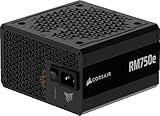
- 80 Plus Gold: The mainstream sweet spot. Units like the CORSAIR RM750e and ASUS TUF Gaming 1000W Gold balance efficiency, heat, and price well.
- 80 Plus Platinum: Top tier, as on the ASUS ROG Strix 1000W Platinum. Runs cooler and wastes less power, at a premium cost.
What's inside
- Watch: What PSU Do I Need for Gaming? (2026 Guide) — Video Review
- How Much Wattage You Actually Need
- Efficiency Ratings Explained
- Why ATX 3.1 and PCIe 5.1 Matter
- Modular vs Non-Modular
- Quality, Warranty, and What to Avoid
- Tips
- Related Guides
- Frequently Asked Questions
- Conclusion
- Related Articles
- Related Guides
The power supply is the least glamorous part of a gaming PC and the one people cut corners on most often, which is exactly why it causes so many problems. A weak or low-quality PSU can trigger random shutdowns under load, damage other components, or simply fail to deliver the clean power a modern graphics card demands. It is the one part where saving a little money can put everything else at risk.
- Watch: What PSU Do I Need for Gaming? (2026 Guide) — Video Review
- How Much Wattage You Actually Need
- Efficiency Ratings Explained
- Why ATX 3.1 and PCIe 5.1 Matter
- Modular vs Non-Modular
- Quality, Warranty, and What to Avoid
- Tips
- Related Guides
- Frequently Asked Questions
- Conclusion
- Related Articles
- Related Guides
This guide explains how to choose the right power supply for a gaming PC in 2026: how much wattage you actually need, what efficiency ratings mean, why modularity and the new ATX 3.1 standard matter, and how to avoid the pitfalls that catch first-time builders. You will finish able to pick a PSU with confidence.
As an Amazon Associate we earn from qualifying purchases.




⚡ Save on Your Next PC — Amazon Prime
Prime members get fast free shipping on the systems above, plus early access to Prime Day & Black Friday PC deals. New members get a 30-day free trial.
Watch: What PSU Do I Need for Gaming? (2026 Guide) — Video Review
How Much Wattage You Actually Need
Wattage should match your components with sensible headroom. A mainstream build with a mid-range GPU is comfortable on a quality 650W to 750W unit like the MSI MAG A750GL or CORSAIR RM750e. A high-end system with a power-hungry graphics card is better served by 850W to 1000W, such as the MSI MAG A850GL or be quiet! Pure Power 13 M 1000W. Aim for roughly 30 percent headroom above your expected peak draw. That keeps the PSU running in its efficient range and leaves room for future upgrades.
Efficiency Ratings Explained
- 80 Plus Bronze: Entry level, found on budget units like the ARESGAME AGV 500W. Fine for basic builds but less efficient.
- 80 Plus Gold: The mainstream sweet spot. Units like the CORSAIR RM750e and ASUS TUF Gaming 1000W Gold balance efficiency, heat, and price well.
- 80 Plus Platinum: Top tier, as on the ASUS ROG Strix 1000W Platinum. Runs cooler and wastes less power, at a premium cost.
Why ATX 3.1 and PCIe 5.1 Matter
Modern graphics cards can draw sudden, sharp power spikes that older supplies struggle with. The ATX 3.1 and PCIe 5.1 standards, along with the native 12V-2×6 connector found on units like the MSI MAG series and CORSAIR RM850e, are designed to handle these transient spikes cleanly and to power current GPUs without adapters. If you are buying new for a modern card, choosing an ATX 3.1 unit avoids messy adapter cables and gives you a supply built for the way today’s hardware actually behaves.
Modular vs Non-Modular
Modularity refers to whether the PSU cables detach. A fully modular unit lets you connect only the cables you need, which makes building cleaner, improves airflow, and simplifies cable management. Non-modular supplies have all cables permanently attached, leaving you to tuck unused ones out of the way. For most builders the extra cost of a fully modular unit like the be quiet! Pure Power 13 M is worth it for the tidiness alone, though a solid non-modular unit is perfectly functional in a budget build.
Quality, Warranty, and What to Avoid
A power supply is a long-term investment that often outlives the rest of the build, so favor reputable units with long warranties. A 10-year warranty, common on the MSI, ASUS, and CORSAIR gaming lines, signals confidence in the components and gives you protection. Avoid unbranded ultra-cheap supplies with vague specifications, since these are where dangerous corners get cut. Also check that the unit uses quality capacitors rated for high temperatures, which helps it hold up during long, hot gaming sessions.
Tips
- Use an online PSU calculator with your exact parts, then add about 30 percent headroom to the result.
- For a modern GPU, choose an ATX 3.1 unit with a native 12V-2×6 cable to skip adapters and handle power spikes cleanly.
- Prioritize an 80 Plus Gold rating for the best balance of efficiency, heat, and price in most builds.
- Never buy the cheapest no-name PSU. It is the one component whose failure can take other parts with it.
Frequently Asked Questions
How many watts do I need for a gaming PC?
Most mainstream builds are happy on 650W to 750W, while high-end systems with powerful GPUs benefit from 850W to 1000W. Match the wattage to your components and add around 30 percent headroom for efficiency and upgrades.
Does PSU efficiency rating really matter?
Yes. A higher rating like 80 Plus Gold wastes less power as heat, runs cooler and quieter, and can lower your electricity use over time. Gold is the practical sweet spot for most gaming builds.
Do I need an ATX 3.1 power supply?
For a modern graphics card, it is strongly recommended. ATX 3.1 and the 12V-2×6 connector handle the sharp power spikes new GPUs produce and remove the need for messy adapter cables.
Is a modular power supply worth it?
For most people, yes. Fully modular units let you use only the cables you need, improving airflow and making the build cleaner. Non-modular supplies work fine but leave you managing extra unused cables.
Conclusion
The power supply is not the place to cut corners. Choose enough wattage with sensible headroom, favor an 80 Plus Gold ATX 3.1 unit from a reputable brand, and lean toward fully modular for a cleaner build. Get the PSU right and it will quietly power your system reliably for years, protecting everything connected to it.