
Key takeaways
- 60Hz: fine for casual and single-player gaming.
- 144Hz to 180Hz: the sweet spot for most gamers, balancing smoothness and price.
- 240Hz and up: for competitive esports where reaction time is everything.
What's inside
The monitor is the single component you stare at every second you play, yet it is often the last thing gamers upgrade. In 2026 the choices are richer than ever, spanning fast 1080p esports panels, sharp QHD all-rounders, and immersive ultrawide curves, and picking well transforms how your games look and feel.
This guide breaks down the specifications that actually affect your experience, from refresh rate to panel type, and points to real monitors that illustrate each tier. By the end you will know exactly which numbers to prioritize for the way you play.
As an Amazon Associate we earn from qualifying purchases.


⚡ Save on Your Next PC — Amazon Prime
Prime members get fast free shipping on the systems above, plus early access to Prime Day & Black Friday PC deals. New members get a 30-day free trial.
Watch: How To Choose A Gaming Monitor — Video Review
Refresh Rate: Smoothness You Can Feel
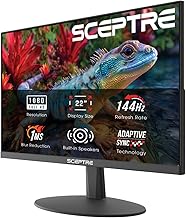
Refresh rate, measured in hertz, determines how many frames your monitor shows per second, and it is the upgrade most players notice first. A 144Hz panel like the Sceptre 22-inch feels dramatically smoother than 60Hz, while competitive shooter fans chasing every advantage should look at 240Hz options such as the Sceptre Curved 24.5-inch Prime.
- 60Hz: fine for casual and single-player gaming.
- 144Hz to 180Hz: the sweet spot for most gamers, balancing smoothness and price.
- 240Hz and up: for competitive esports where reaction time is everything.
Resolution and Screen Size
Higher resolution means sharper detail but demands more from your GPU. 1080p keeps frame rates high on modest hardware, while QHD (1440p) panels like the ASUS TUF Gaming 27-inch or Dell 27 Plus deliver a crisp step up that modern mid-range cards handle well. Ultrawide UWQHD options such as the SANSUI 34-inch wrap the action around you for immersive single-player games.
Panel Type and Color
Panel technology shapes color and viewing angles. Fast IPS panels, found in monitors like the ASUS TUF and Acer Nitro 27-inch, offer vivid color and wide angles ideal for mixed gaming and creative work. If you crave deep contrast and immersion, a curved VA panel like the Samsung Odyssey G55C bends the image to fill your vision.
Adaptive Sync and Response Time
Screen tearing ruins fast scenes, so look for AMD FreeSync or G-SYNC compatibility, both common on panels like the Samsung Odyssey G5 and Acer Nitro. Pair that with a low response time, ideally 1ms, to keep motion crisp. Together they eliminate tearing and smearing during frantic gameplay.
Connections and Extras
Check that the monitor has the right ports for your setup, such as HDMI 2.1 or DisplayPort 1.4 for high refresh rates at higher resolutions. Built-in speakers, height and pivot adjustment like the Dell 27 Plus offers, and features such as a black equalizer or blue-light filter add convenience and comfort over long sessions.
Frequently Asked Questions
Is 1080p or 1440p better for gaming?
It depends on your GPU. 1080p lets weaker hardware hit high frame rates, ideal for competitive play, while 1440p offers a noticeably sharper picture that modern mid-range cards drive comfortably. For most gamers upgrading in 2026, QHD is the sweet spot.
How many hertz do I actually need?
144Hz to 180Hz satisfies the vast majority of players and is affordable today. Only dedicated competitive gamers chasing the lowest input lag truly benefit from 240Hz or higher, and only if their PC can push those frame rates.
Do I need FreeSync or G-SYNC?
Adaptive sync is worth having. It matches the monitor’s refresh to your GPU’s output, eliminating tearing without the input lag of V-Sync. Many panels now support both standards, so you are covered whether you run AMD or NVIDIA.
Is a curved or ultrawide monitor worth it?
For immersive single-player and racing or flight games, a curved ultrawide is fantastic and pulls you into the scene. For competitive shooters, a flat, fast panel is often preferable so nothing distorts at the edges. Choose by the games you play most.
Conclusion
Choosing a gaming monitor comes down to matching refresh rate, resolution, and panel type to your GPU and your favorite genres. Competitive players should prioritize high refresh at 1080p, while most gamers will love a 1440p, 144Hz-plus IPS panel, and immersion seekers should embrace an ultrawide curve. Nail those numbers and every game you own will look and feel better.


