Key takeaways
- Extremely space-saving and easy to mount or transport
- Full desktop Windows with real storage and connectivity
- Multi-display support across most models
- Silent or near-silent operation for home and office
What's inside
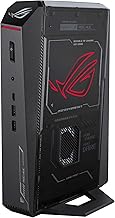
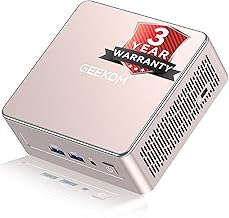
The idea of a “portable desktop computer” sounds like a contradiction, but mini PCs have made it real. These palm-sized machines pack full desktop operating systems, real storage, and enough performance for browsing, office work, media, and even light editing, all in a box you can slip into a bag or mount behind a monitor. If you want the flexibility of a desktop without a bulky tower, this category is exactly what you’re after.
Below we look at a spread of compact desktops, from tiny business-grade HP units to affordable KAMRUI and GMKtec models. They differ in processor power, memory, and display support, so we’ll help you understand which fits your desk, your travel bag, or your home entertainment setup.
As an Amazon Associate we earn from qualifying purchases.




🎮 Get More From Your Setup — Free
Prime Gaming gives you free PC games every month, in-game loot, and a free Twitch channel sub — plus fast free shipping on all the gear above. New members get a 30-day free trial.
Watch: Portable Desktop Computer: Review & Buyer’s Guide — Video Review
Design & Build
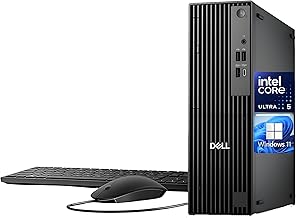
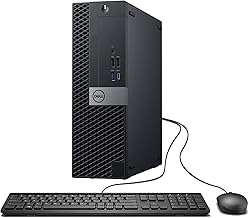
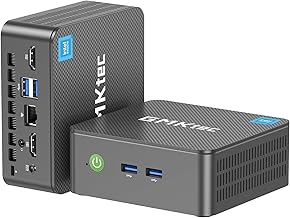
What unites these machines is their remarkably small footprint. The HP Mini PC and ProDesk models are built to business standards, with sturdy metal-and-plastic housings that vanish behind a monitor via VESA mounts. The KAMRUI and GMKtec units are lighter and often even smaller, designed to sit unobtrusively on a shelf or travel between locations. Despite their size, most include a genuinely useful port array: multiple USB ports, HDMI and DisplayPort, Ethernet, and Wi-Fi with Bluetooth. Several, like the KAMRUI AK1PLUS, even support internal 2.5-inch SSD expansion, so you’re not locked into the storage you buy on day one.
Performance
Performance scales with the chip inside. The HP Mini PC with a Core i5-9500T and 16GB of RAM is comfortable with web browsing, video, and moderate multitasking, while the ProDesk 400 G9 with an i5-14500 steps into serious productivity territory and can drive up to three displays. Budget-focused models built on Intel N95 or Celeron N5095 processors, like the GMKtec Nucbox G3S and KAMRUI AK1PLUS, handle everyday tasks, streaming, and dual 4K output well, but aren’t intended for heavy workloads. The Ryzen-based KAMRUI Pinova P2 sits in between, offering more headroom for multitasking thanks to its 8-thread design and triple 4K display support.
Pros & Cons
- Extremely space-saving and easy to mount or transport
- Full desktop Windows with real storage and connectivity
- Multi-display support across most models
- Silent or near-silent operation for home and office
- No discrete graphics, so gaming is limited
- Budget chips can bottleneck heavier multitasking
- Limited internal expansion on the smallest units
- You supply the monitor, keyboard, and mouse in some cases
Alternatives to Consider
If you need the most performance in a compact box, the HP ProDesk 400 G9 with a 14th-gen i5 is the standout for demanding office work and triple-monitor setups. For value, the KAMRUI AK1PLUS and GMKtec Nucbox G3S deliver capable everyday computing at a fraction of a tower’s cost. Buyers who want a balance of price and multitasking muscle should look at the Ryzen-powered KAMRUI Pinova P2. And if you’d rather have upgradable internals, prioritize models that explicitly support SSD expansion.
Frequently Asked Questions
Can a mini PC replace a full desktop tower?
For most home and office tasks, yes. Browsing, documents, streaming, and video calls all run smoothly. The main exception is demanding gaming or heavy 3D work, which needs a discrete graphics card that these compact units lack.
How many monitors can these support?
Many support two or three displays. Models like the ProDesk 400 G9 and several triple-4K-capable units are ideal for productivity setups with multiple screens.
Are mini PCs good for travel?
They’re excellent. Their small size and low weight make them easy to pack, and you can plug into any available monitor or TV at your destination via HDMI or USB-C.
Can I add more storage later?
Often, yes. Several models, including the KAMRUI AK1PLUS, accept an additional 2.5-inch SSD, and many allow RAM or drive upgrades. Check the specific unit’s expansion options before buying.
Verdict
A portable desktop computer is one of the smartest ways to reclaim desk space without giving up real computing power. For heavier productivity, the HP ProDesk 400 G9 is the clear leader; for everyday value, the KAMRUI and GMKtec models are hard to beat; and the Ryzen-based Pinova P2 splits the difference nicely. Decide how much processing muscle you truly need, confirm the display and expansion support, and you’ll have a tiny machine that works like a full-size desktop.