Key takeaways
- Packaging and memory are the bottleneck, not logic. HBM and advanced packaging capacity have been the binding constraint on AI accelerator output, per repeated commentary from the companies that supply them. A Broadcom–Intel design combination does not add HBM lines or interposer capacity.
- Client silicon gets the leftovers. When wafer starts and packaging slots are rationed, the 100–200 mm² consumer die is the least profitable thing on the line. That is the mechanism by which AI demand reaches a $300 gaming CPU.
No deal has been confirmed, and even if Broadcom does end up buying Intel’s chip design business, it will not cut the price of your next CPU or GPU in 2026 — the near-term effect runs through wafer allocation and custom-ASIC supply, where hyperscaler contracts already outbid consumer silicon for leading-edge capacity. The reason Broadcom eyes Intel’s chip design business in a potential blockbuster deal is not gaming: it is x86 server share and a second source of AI accelerator silicon. For a PC builder watching component costs, the question that actually matters is narrower — would a Broadcom-run design unit keep buying wafer starts from Intel Foundry, and at what internal transfer price?
What a design-unit deal would and would not cover
Intel is two businesses wearing one logo. Intel Products designs and sells CPUs (client and datacenter). Intel Foundry runs the fabs and, since 2024, has been reported as a separate reporting segment with its own external customers, including Microsoft and AWS on the 18A node, plus a UMC collaboration on 12 nm capacity. A Broadcom transaction aimed at the “chip design business” would most plausibly target Intel Products — the x86 client and datacenter design teams — while leaving the fabs to stand or fall on external foundry contracts.
That distinction is the whole story. Broadcom is a fab-light company. Its custom accelerator business (the XPU programs it builds for hyperscalers, along with its Tomahawk and Jericho switching silicon) is designed in-house and manufactured almost entirely at TSMC. Broadcom has publicly said it evaluates multiple foundries and would use additional capacity where it makes commercial sense. Trade-press reporting in late 2024 said Broadcom’s early test wafers on Intel 18A fell short of its internal targets; neither company confirmed the specifics, and Intel has since said 18A yields are progressing on its own client ramp. Treat any “Broadcom will fill Intel’s fabs” claim as unproven.
The allocation math that decides your component prices
Here is the part spec sheets never show you. Leading-edge capacity is sold by the wafer, not by the chip, and the number of good dies you get per wafer collapses as die size grows. Using the standard dies-per-wafer approximation for a 300 mm wafer, and an assumed wafer cost of roughly $18,000 (industry estimates for leading-edge 300 mm wafers cluster in the $17,000–$20,000 range), the picture looks like this:
| Die size | Gross dies per 300 mm wafer | Good dies at 60% yield | Cost per good die | Typical product class |
|---|---|---|---|---|
| 100 mm² | ~640 | ~384 | ~$47 | Mainstream client CPU, mid-range GPU |
| 200 mm² | ~306 | ~184 | ~$98 | Performance desktop CPU |
| 400 mm² | ~143 | ~86 | ~$209 | Large gaming GPU |
| 800 mm² | ~65 | ~39 | ~$462 | Hyperscaler AI ASIC package |
Run the numbers on a mainstream 100 mm² client die and a 60% yield: 640 gross dies become 384 good ones, so each good die carries about $47 of silicon cost before packaging, test and binning. Push yield to 90% and the same die costs roughly $31. That single yield swing is worth more than most process-node jumps, which is why Intel’s 18A ramp matters far more to CPU pricing than any ownership change at the top.
Now scale it up. An 800 mm² accelerator die yields only about 65 gross dies per wafer and roughly 39 good ones at 60% — around $462 each before the expensive parts even start: HBM stacks, a silicon interposer or advanced packaging, and test. A hyperscaler ordering hundreds of thousands of those is competing for the same wafer starts, the same packaging lines and the same substrate supply as a gaming GPU. That competition, not a Broadcom press release, is what moves your bill of materials.
Custom ASIC supply: the real transmission channel
Broadcom’s XPU programs are large-die, packaging-heavy designs. Adding design capacity or winning more hyperscaler sockets does not create new fab capacity — it redirects existing capacity toward bigger, higher-margin dies. Two consequences follow for anyone pricing a build:
- Packaging and memory are the bottleneck, not logic. HBM and advanced packaging capacity have been the binding constraint on AI accelerator output, per repeated commentary from the companies that supply them. A Broadcom–Intel design combination does not add HBM lines or interposer capacity.
- Client silicon gets the leftovers. When wafer starts and packaging slots are rationed, the 100–200 mm² consumer die is the least profitable thing on the line. That is the mechanism by which AI demand reaches a $300 gaming CPU.
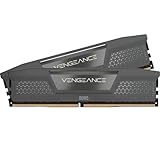
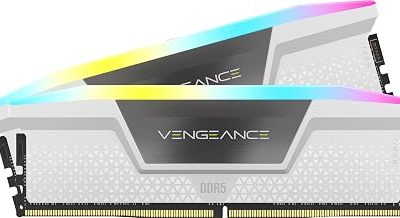
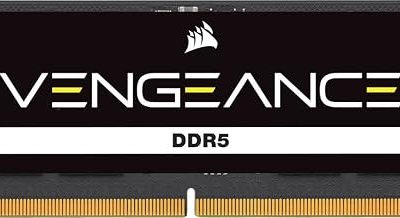
Memory is already the loudest signal here. DRAM contract pricing rose sharply through 2025 and into 2026 on datacenter demand, and a 32 GB DDR5-6000 kit that typically sold for $80–$110 in early 2025 has been trading far above that. No Intel ownership change reverses that; it is a supply-side story.
Decision matrix: what should you actually do
Map your situation to a move rather than to a headline.
| Your situation | Likely exposure to a Broadcom–Intel design deal | What to do |
|---|---|---|
| Building a gaming PC in the next 1–3 months | Near zero — parts are already in the channel at set prices | Buy to budget; a deal announcement would not change shelves |
| Holding a build for a big Intel CPU price cut | Low — client roadmaps and pricing are set 18–24 months ahead | Don’t wait; the roadmap is already committed |
| Workstation or heavily multithreaded build | Moderate — server/AI allocation can squeeze client wafer starts | Lock platform and CPU now rather than after a rumour cycle |
| Buying a discrete GPU | Low direct, high indirect via memory and packaging | Budget for memory-driven GPU price ranges, not for a discount |
| Buying DDR5 now | None from this deal; already repriced by AI demand | Buy the capacity you need when you need it, in one kit |
| Running a 4–5 year old platform | Low either way | Upgrade only when a game or workload forces it |
Five steps to insulate a 2026 build
- Set a total platform budget, not a per-part budget. Reason: memory and GPU prices are the volatile lines, so fixing the total lets you shift money between them instead of cancelling the build.
- Buy the memory kit at the capacity you actually need, in one purchase. Reason: mixing kits later is the most common cause of instability at rated speeds, and re-buying into a rising market costs more than buying once.
- Pick a CPU socket with a committed upgrade path. Reason: if client wafer allocation tightens, generation-over-generation price-per-core improvements can stall, and a socket that takes one more generation protects you.
- Size the PSU for the GPU tier you might buy next, not the one you have. Reason: a 750 W unit covers most single-GPU builds comfortably; stepping to 1000 W costs little now and avoids a second purchase.
- Ignore ownership rumours for timing, track yields and memory contract prices instead. Reason: those two numbers are what actually set component cost, and both are reported publicly each quarter.
What it would change for CPU and GPU pricing
For CPUs, the plausible outcome is not cheaper silicon. Broadcom runs a high-margin, fab-light model, and if it owned Intel’s design teams it would likely negotiate with Intel Foundry as an external customer — or dual-source to TSMC. Either path raises the question of who absorbs fab underutilisation. Intel’s foundry segment has carried heavy operating losses, and a design business separated from the fabs loses the internal volume that subsidises them. In that world, client CPU prices hold or drift up, and Intel’s client line competes on architecture rather than on being the cheap option.
For GPUs, the direct effect is close to nil. Neither Broadcom nor Intel designs the gaming GPUs most builders buy. The indirect effect is real: every wafer start and packaging slot consumed by a large AI ASIC is one not available to a 400 mm² gaming die, and every HBM stack allocated to an accelerator is memory capacity not going into consumer products. General market ranges have reflected that — mainstream gaming cards have typically sat around $300–$500, upper-midrange around $600–$900, and halo cards well above $1,500.
Frequently Asked Questions
Is Broadcom actually buying Intel’s chip design business?
No transaction has been confirmed. The scenario being discussed in trade coverage is a Broadcom interest in Intel’s design operations, which are a separate business from Intel Foundry. Until there is a filed agreement or an official joint statement, treat it as speculation. Nothing in the current market has been repriced around it.
Would a deal make Intel CPUs cheaper?
Unlikely in the short term. Client CPU pricing follows roadmaps committed 18–24 months ahead, and the bigger variable is wafer cost and yield on Intel’s own nodes, not who owns the design team. A separated design business could actually face higher silicon costs if it loses internal foundry pricing.
Should I delay a PC build because of this?
No. Parts on shelves today are already priced. The factors that would change your cost — memory contract pricing, packaging capacity, GPU allocation — are supply-side and independent of any ownership change. Delay only if a specific part you need is out of stock.
Does this affect AMD or Nvidia pricing?
Only indirectly. AMD and Nvidia buy capacity from the same foundries and packaging suppliers, so anything that increases AI-accelerator demand raises the opportunity cost of building consumer chips. That pressure already exists and is not created by a Broadcom–Intel deal.
What would a combined Broadcom–Intel design unit actually build?
The plausible portfolio is x86 server and client CPUs alongside Broadcom’s existing custom XPU and networking silicon. The strategic logic is bundling x86 compute with Broadcom’s accelerator and switch platforms for datacenter customers, not entering the consumer gaming market.
What should I watch to know if this is real?
Three signals: a filed transaction agreement or joint announcement, Intel’s foundry segment reporting external customer volume, and leading-edge wafer and memory contract pricing in quarterly earnings commentary. If none of those move, the rumour has no effect on what you pay.