Key takeaways
- Level your screens: Use a monitor arm’s adjustment to align the tops of multiple panels for a seamless visual line.
- Reduce glare: Position screens perpendicular to windows and use bias lighting behind them to ease eye strain.
- Calibrate once: Spend a few minutes matching brightness and color across panels so your eyes are not adjusting constantly.
- Leave breathing room: Keep enough desk depth to sit back at a comfortable viewing distance rather than hunching forward.
What's inside
- Watch: Best Gaming Monitor Setup — Video Review
- Choosing Your Monitor Configuration
- Positioning for Ergonomics
- Mounting and Desk Space
- Cable Management and Connectivity
- Matching Panels and Refresh Rates
- Tips for the Perfect Setup
- Related Guides
- Frequently Asked Questions
- Conclusion
- Related Articles
- Related Guides
A great gaming monitor setup is about more than just the panel you buy. The way you arrange your screens, mount them, and position them relative to your eyes has an enormous impact on both your comfort during marathon sessions and your competitive edge in the heat of a match.
- Watch: Best Gaming Monitor Setup — Video Review
- Choosing Your Monitor Configuration
- Positioning for Ergonomics
- Mounting and Desk Space
- Cable Management and Connectivity
- Matching Panels and Refresh Rates
- Tips for the Perfect Setup
- Related Guides
- Frequently Asked Questions
- Conclusion
- Related Articles
- Related Guides
Whether you are running a single ultrawide, a dual-monitor productivity powerhouse, or an immersive triple-screen wall, this guide walks through the principles and gear that turn a pile of hardware into an ergonomic, high-performance command center. Get these fundamentals right and everything else falls into place.
As an Amazon Associate we earn from qualifying purchases.


🎮 Get More From Your Setup — Free
Prime Gaming gives you free PC games every month, in-game loot, and a free Twitch channel sub — plus fast free shipping on all the gear above. New members get a 30-day free trial.
Watch: Best Gaming Monitor Setup — Video Review
Choosing Your Monitor Configuration
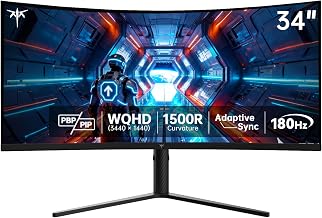
The first decision is how many screens you want and why. A single high-quality panel keeps your focus centered and simplifies cable management, while a dual setup like the Kado 24-inch or 27-inch two-packs adds a dedicated space for chat, guides, or streaming tools. For maximum immersion without bezels, a 49-inch ultrawide such as the INNOCN 49C1G effectively delivers two screens in one seamless surface.
Positioning for Ergonomics
Your primary screen should sit with the top edge at or just below eye level, roughly an arm’s length away. This keeps your neck neutral and reduces strain over long sessions. In a multi-monitor layout, angle the secondary screens slightly inward so you can glance across without twisting your body.
Mounting and Desk Space
Monitor arms transform a setup by freeing desk space and unlocking precise adjustment. A dual arm like the HUANUO FlowLift handles 13 to 32-inch screens with full motion, while a HUANUO triple mount adds swivel, tilt, and rotation for three-panel walls. Both offer C-clamp and grommet mounting to keep your desk clean and your screens floating exactly where you want them.
Cable Management and Connectivity
Plan your inputs before mounting. Confirm each monitor has the right DisplayPort or HDMI version for its refresh rate, route cables through the arm channels, and use a single hub or the monitor’s built-in ports to reduce clutter. Clean cabling is not just cosmetic; it makes future adjustments far easier.
Matching Panels and Refresh Rates
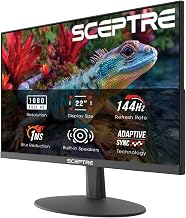
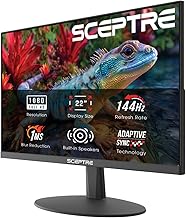
If you run multiple screens, try to match refresh rates or at least keep your primary gaming panel the fastest. A budget secondary like the Sceptre 22-inch 144Hz pairs well as a chat and browser screen beside a faster main display, keeping your setup balanced without overspending.
Tips for the Perfect Setup
- Level your screens: Use a monitor arm’s adjustment to align the tops of multiple panels for a seamless visual line.
- Reduce glare: Position screens perpendicular to windows and use bias lighting behind them to ease eye strain.
- Calibrate once: Spend a few minutes matching brightness and color across panels so your eyes are not adjusting constantly.
- Leave breathing room: Keep enough desk depth to sit back at a comfortable viewing distance rather than hunching forward.
Frequently Asked Questions
How far should my monitor be from my eyes?
Roughly an arm’s length, or about 20 to 30 inches for most screen sizes. Larger and ultrawide panels benefit from sitting slightly farther back.
Are monitor arms worth it?
Yes. They free up desk space, allow precise ergonomic positioning, and make multi-monitor alignment dramatically easier than standard stands.
Do my monitors need matching refresh rates?
Not strictly, but it helps. Keep your primary gaming screen the fastest, and be aware that mismatched refresh rates can occasionally cause minor stutter when moving windows between them.
Single ultrawide or dual monitors?
An ultrawide offers seamless immersion with no bezel gap, while dual monitors give more flexibility for separate tasks. Choose based on whether you value immersion or multitasking more.
Conclusion
The best gaming monitor setup blends the right panels with thoughtful positioning, solid mounting, and clean cable management. Invest in a quality monitor arm, dial in your ergonomics, and match your screens sensibly, and you will have a command center that keeps you comfortable and competitive for years.