Key takeaways
- Four desktop processors whose listings state integrated Radeon graphics, compared on cores, boost clocks and platform: two AM5 chips and two AM4 chips.
The real decision here is which graphics tier you can live with while you skip a separate graphics card. AMD’s desktop APUs carry Radeon graphics of very different strengths, and the strongest integrated chip in this group plays a different class of game from the entry ones. Platform matters just as much: the AM5 chips start a newer build, while the AM4 chips slot into a mature, widely supported socket.
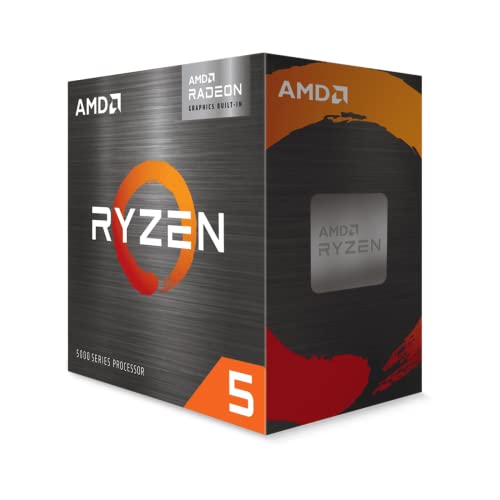
This guide is for first-time builders who want a PC that games today without a graphics card, upgraders keeping an AM4 system alive, and compact-build fans who value a single-chip design. Every pick was chosen from the processor names and specifications stated on its Amazon page, and every one lists integrated Radeon graphics.
Quick Picks
As an Amazon Associate we earn from qualifying purchases.
| Product | Best for | Key spec from title |
|---|---|---|
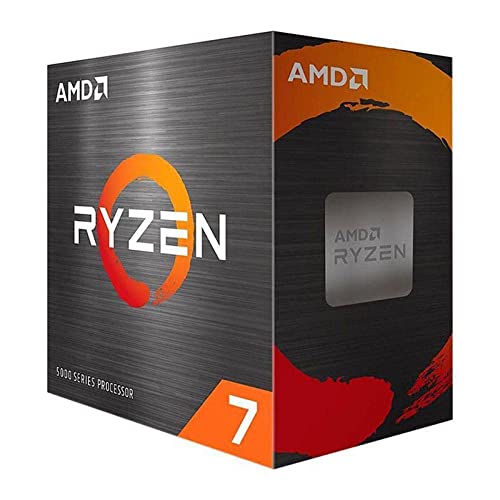
| AMD Ryzen 7 8700G | Strongest integrated graphics | 8-core, 16-thread with Radeon 780M-class graphics |
| AMD Ryzen 5 8600G | AM5 value all-rounder | 6-core, 12-thread with Radeon 760M graphics |
| AMD Ryzen 7 5700G | Eight cores on AM4 | 8-core, 16-thread with Radeon Graphics |
| AMD Ryzen 5 5600G | Entry AM4 gaming chip | 6-core, 12-thread with Radeon Graphics |
How to Choose
Integrated Graphics Tier Comes First
Not all integrated graphics are equal, and the gap between tiers decides which games are realistic. The Ryzen 7 8700G carries Radeon 780M-class graphics, the strongest integrated offering in this group, while the Ryzen 5 8600G steps down to Radeon 760M graphics. The two AM4 chips, the 5700G and 5600G, list Radeon Graphics without a model-tier name in their titles, reflecting their older generation. Esports titles and older games forgive a weaker tier; demanding modern releases do not. Choose the graphics tier by the games you actually play, not by core count, because the graphics do the visible work.
Socket and Platform: AM5 Versus AM4
The 8700G and 8600G sit on socket AM5, AMD’s current desktop platform, which means a newer motherboard and memory standard for a fresh build. The 5700G and 5600G use socket AM4, the mature platform with a huge installed base of boards. If you already own an AM4 motherboard, an AM4 APU can be a drop-in upgrade path, subject to BIOS support. If you are building from scratch, AM5 offers the longer runway. Never assume a chip fits your board: match the socket named in the listing to your motherboard before ordering.
Cores and Threads for More Than Gaming
Core counts split this group cleanly: the 8700G and 5700G list 8 cores and 16 threads, while the 8600G and 5600G list 6 cores and 12 threads. For pure gaming on integrated graphics, the graphics tier usually limits you before the cores do. The extra cores earn their place when you stream, record, edit video or keep heavy applications open alongside a game. Boost clocks also differ, from up to 4.4 GHz on the 5600G to up to 5.1 GHz on the 8700G as their listings state, which helps single-threaded responsiveness in everyday use.
Cooling and the Later Graphics Card Upgrade
Two practical checks save trouble later. First, cooling: the 8600G and 5700G listings state that a Wraith Stealth cooler is included, so those builds need no separate cooler purchase, while you should confirm the box contents on the other listings. Second, the upgrade path: an APU build can accept a discrete graphics card later, at which point the processor’s cores take over the heavy lifting. That makes the stronger-core chips a reasonable foundation. Also confirm your motherboard has the display outputs you need, because the monitor plugs into the board, not the processor.
The 4 Best Options
AMD Ryzen 7 8700G
The 8700G is the flagship APU in this group and the one to pick when integrated graphics must do serious work. Its listing names 8 cores and 16 threads on socket AM5, with a 4.2 GHz base clock, boost up to 5.1 GHz and 24MB of cache, and AMD’s listing copy positions its Radeon 780M-class graphics as the top integrated tier here. That combination suits esports at smooth settings and lighter big-name games without any graphics card installed. It is also the strongest foundation if a discrete card joins the build later.
Specs
- 8 cores, 16 threads
- Socket AM5
- 4.2 GHz base, up to 5.1 GHz boost
- 24MB cache
- Radeon 780M-class integrated graphics
Best for: Builders who want the strongest integrated graphics and a current-platform foundation.
Watch out for: Tracker records show third-party offers current while the Amazon-direct offer row was blank in the latest record, so check who is selling the chip on the live page before ordering.
ASIN: B0CQ4JBKW3
AMD Ryzen 5 8600G
The 8600G is the balanced AM5 option: 6 cores and 12 threads, a 4.3 GHz base clock with boost up to 5.0 GHz, 22MB of cache and Radeon 760M integrated graphics. That graphics tier sits one step below the 8700G’s, which is fine for esports and older titles, and the listing states a Wraith Stealth cooler is included, removing one more purchase from a first build. For a new AM5 system that games respectably today and leaves every upgrade door open, this is the sensible middle of the range.
Specs
- 6 cores, 12 threads
- Socket AM5
- 4.3 GHz base, up to 5.0 GHz boost
- 22MB cache
- Radeon 760M integrated graphics
- Wraith Stealth cooler included
Best for: New AM5 builders who want capable integrated graphics and an included cooler.
Watch out for: The 760M graphics are a tier below the 8700G’s 780M-class graphics, so set game expectations accordingly rather than assuming all G-series chips perform alike.
ASIN: B0CQ4GYTTX
AMD Ryzen 7 5700G
The 5700G brings 8 cores and 16 threads to the AM4 platform, with boost up to 4.6 GHz, Zen 3 architecture and Radeon Graphics integrated, plus a Wraith Stealth cooler included as its listing states. It is the pick for owners of AM4 systems who want a meaningful processor and graphics lift in one swap, and for compact builds that pair multitasking strength with no graphics card. Its graphics are an older generation than the AM5 chips’, so treat it as an esports and everyday-gaming solution rather than a match for the 8700G.
Specs
- 8 cores, 16 threads
- Socket AM4, Zen 3
- Up to 4.6 GHz boost
- Radeon Graphics integrated
- Wraith Stealth cooler included
Best for: AM4 owners who want eight cores and integrated graphics in one upgrade.
Watch out for: Some listings bundle this processor with a motherboard under different product codes; make sure the page you order from is the processor alone, and confirm your board’s BIOS supports it.
ASIN: B091J3NYVF
AMD Ryzen 5 5600G
The 5600G is the entry point of this group: 6 cores, 12 threads, 19MB of cache and boost up to 4.4 GHz on socket AM4, with Radeon Graphics handling display and gaming duties. It suits a first PC for esports, indie games and family use, and it keeps an AM4 build cheap to complete because the platform around it is mature. As with its AM4 sibling, the integrated graphics are an older design than the AM5 pair’s, so this chip is about playable, enjoyable gaming at sensible settings rather than chasing high frame rates.
Specs
- 6 cores, 12 threads
- Socket AM4
- Up to 4.4 GHz max boost
- 19MB cache
- Radeon Graphics integrated
Best for: First-time and family builds on AM4 that game without a graphics card.
Watch out for: Some marketplace copy for this chip claims a 4.6 GHz boost, but the listing title states up to 4.4 GHz; trust the title figure and the code below when comparing offers.
ASIN: B092L9GF5N
Which One Fits Your Situation
You Play Esports and Skip the Graphics Card
Start with the Ryzen 7 8700G if the budget for the build allows its tier, because its Radeon 780M-class graphics are the strongest here and its eight cores keep the system responsive. On AM4, the 5700G is the equivalent play. Either way, integrated graphics reward sensible settings: competitive titles at reduced detail are the realistic target, not maximum quality in demanding releases.
You Are Upgrading an AM4 System
The 5700G and 5600G are your candidates, since both sit on socket AM4 like your existing board. Choose the 5700G for its eight cores if you multitask or stream, and the 5600G for a straightforward six-core lift. Check your motherboard’s processor support list and BIOS version first, because an older board may need a firmware update before it recognises the newer APU.
You Are Building New and Want Room to Grow
Build on AM5 with the 8600G or 8700G. The platform is current, the included cooler on the 8600G trims the parts list, and both chips have the cores to stay useful when a discrete graphics card arrives later. Pick the 8700G if you expect a longer spell on integrated graphics; pick the 8600G if a graphics card is already in your near-term plan.
You Want a Small, Quiet Living-Room PC
A single-chip APU build keeps the parts count, heat and noise down, which suits a compact case under a television. The 8600G is the balanced choice, with a cooler included in its listing. The 5600G works for a lighter-duty box built around AM4 parts you may already own. Either drives the display from the motherboard’s outputs, so confirm the board offers the ports your screen needs.
Common Mistakes
- Assuming every processor can drive a display, when many desktop chips have no integrated graphics at all and need a graphics card.
- Mixing sockets: ordering an AM5 chip for an AM4 motherboard, or the reverse, because the names look similar.
- Comparing APUs by core count alone while ignoring the integrated graphics tier, which decides game performance.
- Buying a processor-and-motherboard bundle listing by accident when you only wanted the processor.
- Forgetting that the monitor connects to the motherboard, so its display outputs limit an APU build.
Frequently Asked Questions
Can these processors really game without a graphics card?
Yes, within limits their listings support. Each chip here names integrated Radeon graphics, and the 8700G’s 780M-class graphics are the strongest tier in the group. Esports titles, indie games and older releases are the realistic territory, with settings adjusted to suit. Demanding modern games at high settings remain the job of a discrete graphics card, which any of these builds can accept later.
Do I still need a graphics card to get a picture on screen?
No. Integrated graphics exist precisely so the processor can drive a display on its own. Your monitor cable plugs into the motherboard’s display outputs, so check that your chosen board offers the HDMI or DisplayPort connection your screen uses. If a motherboard lacks display outputs entirely, an APU cannot help you, which is why the board choice matters as much as the chip.
Should I choose AM5 or AM4 for a new build?
For a new build, AM5 with the 8600G or 8700G is the forward-looking route: it is AMD’s current socket and both chips carry the newer Radeon graphics tiers. AM4 with the 5700G or 5600G makes sense when you already own AM4 parts or find the mature platform simpler to complete. The chips are not interchangeable between sockets, so decide the platform before choosing the processor.
When does it make sense to add a graphics card later?
When the games you want outgrow integrated graphics: higher resolutions, high settings or the newest releases. An APU build is a sensible first stage because the processor keeps working as the system’s engine after the card arrives. The eight-core 8700G and 5700G give that second stage the most headroom, while the six-core chips still pair comfortably with a mid-range card.
FAQ
Can these processors really game without a graphics card?
Do I still need a graphics card to get a picture on screen?
Should I choose AM5 or AM4 for a new build?
When does it make sense to add a graphics card later?
More from Amazon
Programs that pair well with the guide above. Offers and eligibility are set by Amazon and may change.
Free shipping on eligible items, Prime Video and more. Eligible new members can start with a free trial.
Start a Prime free trialAd-free music streaming. Eligible new subscribers can start with a free trial.
Try Music Unlimited freeA Prime membership for ages 18-24 with a trial period. Eligibility is set by Amazon.
See Prime for Young AdultsAudiobooks and podcasts to listen to on the go. Eligible new members can start with a free trial.
Try Audible freeAs an Amazon Associate we earn from qualifying purchases.