Key takeaways
- 6GHz band and MLO deliver low latency and congestion-free gaming.
- Tri-band flexibility covers range and speed across all three bands.
- High-gain antennas improve signal in larger or multi-wall homes.
- PCIe cards add Bluetooth and the most stable performance.
What's inside
If your gaming PC still connects over aging Wi-Fi, you’re leaving speed, stability, and latency on the table. Wi-Fi 7 changes the game with tri-band operation, 6GHz access, Multi-Link Operation (MLO), and 4K-QAM—translating to faster downloads, lower ping, and rock-solid connections even in congested households. A Wi-Fi 7 adapter is the cheapest way to bring a desktop up to the latest standard without running Ethernet across the house.
Adapters split into two camps: convenient USB dongles and higher-performance PCIe cards. We tested the leading Wi-Fi 7 options to see which deliver the speed and reliability gamers actually notice.
As an Amazon Associate we earn from qualifying purchases.


🎮 Get More From Your Setup — Free
Prime Gaming gives you free PC games every month, in-game loot, and a free Twitch channel sub — plus fast free shipping on all the gear above. New members get a 30-day free trial.
Watch: Wifi 7 Adapter For Pc: Review & Buyer’s Guide — Video Review
Design & Build
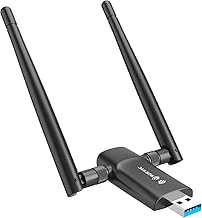
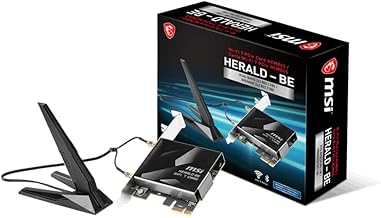
USB adapters are the plug-and-play route, and models like the TP-Link BE6200 (Archer TBE401UH) and NETGEAR Nighthawk A9000 use USB 3.0 with high-gain antennas that fold or stand upright for better positioning. The WAVLINK BE6500 pushes this further with four 5dBi antennas for maximum reach. For the best possible performance, the TP-Link BE9300 PCIe card (Archer TBE550E) installs directly into a motherboard slot, adds Bluetooth 5.4, and mounts external antennas for a cleaner, more stable signal than any dongle. Convertible designs like the TP-Link BE6500 2-in-1 USB-C&A adapter add flexibility for different ports.
Performance
Wi-Fi 7’s headline features genuinely matter for gaming and 4K streaming. The 6GHz band offers a clean, high-bandwidth lane free of legacy device congestion, while MLO lets the adapter use multiple bands simultaneously for lower latency and better reliability—exactly what online gaming benefits from. Tri-band adapters like the BE6500 and BE6200 balance 2.4GHz range, 5GHz throughput, and 6GHz speed. The PCIe BE9300 card generally delivers the most consistent performance thanks to its internal placement and dedicated antennas, whereas USB adapters trade a little stability for easy installation. Note that most of these are Windows 11/10 focused, and the newest PCIe cards may not support older Windows or Linux—check compatibility first.
Pros & Cons
- 6GHz band and MLO deliver low latency and congestion-free gaming.
- Tri-band flexibility covers range and speed across all three bands.
- High-gain antennas improve signal in larger or multi-wall homes.
- PCIe cards add Bluetooth and the most stable performance.
- Requires a Wi-Fi 7 router to unlock the full benefit.
- USB dongles are less stable than internal PCIe cards under heavy load.
- OS limits—some cards drop Windows 10 or Linux support.
Alternatives to Consider
If you want maximum stability and don’t mind opening your case, the TP-Link BE9300 PCIe card is the enthusiast’s choice, with added Bluetooth. For the easiest upgrade, a USB dongle like the TP-Link BE6200 or NETGEAR Nighthawk A9000 installs in seconds. And if your router isn’t Wi-Fi 7 yet, a Wi-Fi 6E adapter delivers most of the 6GHz benefit for less until you upgrade the router.
Frequently Asked Questions
Do I need a Wi-Fi 7 router to use a Wi-Fi 7 adapter?
To get Wi-Fi 7 speeds and MLO, yes—both ends must support the standard. The adapter will still work on older routers, but you’ll only get that router’s maximum performance.
USB or PCIe—which is better for gaming?
PCIe cards generally offer more stable, lower-latency connections thanks to internal placement and dedicated antennas. USB dongles are more convenient and still a big upgrade, with a slight trade in peak stability.
Will it work on Windows 10?
Many USB adapters support Windows 11 and 10, but some newer PCIe cards are Windows 11 only and may not support Linux. Always check the listing’s OS compatibility before buying.
Does the 6GHz band really help?
Yes—it’s a wide, uncongested band that legacy devices can’t use, giving your PC a clean high-speed lane. Combined with MLO, it noticeably lowers latency for gaming.
Verdict
For the most reliable, lowest-latency connection, the TP-Link BE9300 PCIe card is the top pick, adding Bluetooth 5.4 as a bonus. If you’d rather avoid opening your PC, a high-gain USB dongle like the TP-Link BE6200 or NETGEAR Nighthawk A9000 is a fast, easy upgrade. Just pair it with a Wi-Fi 7 router to unlock the full 6GHz and MLO advantage, and confirm your OS is supported.