Key takeaways
- Whole-home coverage: Eliminates dead zones across large floor plans.
- Seamless roaming: One network name; devices switch nodes automatically.
- Easy setup: App-guided installation and management.
- Scalable: Add units later to extend coverage further.
What's inside
Dead zones, buffering, and dropped video calls are almost always a coverage problem, not a speed problem, and that is exactly what a mesh router system fixes. By spreading multiple units around your home, mesh WiFi blankets every room in a seamless network so your devices roam freely without losing signal.
This review covers a strong lineup of mesh systems in 2026, from affordable WiFi 6 kits that cover large homes to cutting-edge WiFi 7 setups built for gigabit connections and dozens of devices. We will look at design, real-world performance, the pros and cons, and which system suits your home size and budget.
As an Amazon Associate we earn from qualifying purchases.


🎮 Get More From Your Setup — Free
Prime Gaming gives you free PC games every month, in-game loot, and a free Twitch channel sub — plus fast free shipping on all the gear above. New members get a 30-day free trial.
Watch: Mesh Router Systems: Review & Buyer’s Guide — Video Review
Design & Build
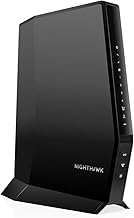
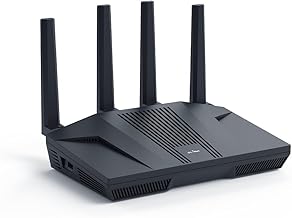
Mesh units are designed to sit out in the open rather than hidden in a closet, and most of these look the part. TP-Link’s Deco range keeps a clean, cylindrical footprint that blends into a bookshelf, while NETGEAR’s Orbi 770 and 370 systems use larger, more powerful nodes aimed at maximum coverage. The number of units matters: three-packs like the Deco X55, Deco S4, and Tenda Nova MX12 cover sprawling homes, while router-plus-satellite kits from NETGEAR pair one main unit with extenders. Every system here supports app-based setup, so getting online takes minutes rather than an evening of frustration.
Performance
Performance splits along WiFi generations. The WiFi 6 systems, such as the Deco X55 (AX3000) and Tenda Nova MX12 (AX3000), deliver fast, reliable speeds for streaming, browsing, and video calls across thousands of square feet. Step up to WiFi 7 with the Deco 7 BE23, NETGEAR Orbi 770, or Orbi 370, and you gain higher throughput, features like MLO and AI-roaming, and 2.5-gigabit ports for wired backhaul that keeps the network fast under heavy load. The older Deco S4 (AC1900) is a budget entry point for smaller homes. Coverage claims range from 5,500 up to 8,000 square feet, and Ethernet backhaul options help larger homes maintain speed.
Pros & Cons
- Whole-home coverage: Eliminates dead zones across large floor plans.
- Seamless roaming: One network name; devices switch nodes automatically.
- Easy setup: App-guided installation and management.
- Scalable: Add units later to extend coverage further.
- WiFi 7 costs more: The newest systems carry a premium.
- Wired backhaul ideal: Best speeds need Ethernet between nodes.
- Overkill for small spaces: A single router may suffice in apartments.
Alternatives to Consider
If you live in a small apartment or a single-story home, a good standalone WiFi 6 router may cover you for less money. Gamers chasing the lowest latency on one machine could hardwire directly to the modem. But for multi-story houses, thick walls, or homes packed with smart devices, mesh is the clear answer. Choose the Deco X55 or Tenda MX12 for value, or the Orbi 770 and Deco 7 for future-proof WiFi 7 speed.
Frequently Asked Questions
Do I need WiFi 7 or is WiFi 6 enough?
WiFi 6 is plenty for most homes with gigabit or slower internet. WiFi 7 pays off if you have multi-gig service, many simultaneous devices, or want to future-proof.
How many mesh units do I need?
A rough rule is one unit per 1,500 to 2,000 square feet. Three-packs suit larger homes; a two-piece router-plus-satellite kit covers medium spaces.
What is Ethernet backhaul and why does it matter?
It uses a wired connection between nodes instead of WiFi, freeing wireless bandwidth for your devices. It delivers the fastest, most stable mesh performance when your home is wired.
Will mesh work with my existing modem?
Yes. These systems replace your router but connect to your existing modem. If you have a modem-router combo, put it into bridge mode for best results.
Verdict
A mesh system is the most effective upgrade for a home plagued by weak WiFi. For dependable, affordable coverage, the TP-Link Deco X55 and Tenda Nova MX12 are excellent WiFi 6 choices. If you want the latest speeds and features, the NETGEAR Orbi 770 and TP-Link Deco 7 lead the WiFi 7 pack. Size your kit to your square footage, wire the backhaul where you can, and enjoy fast, uninterrupted internet everywhere.