Key takeaways
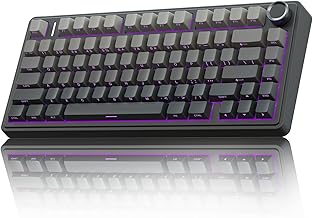
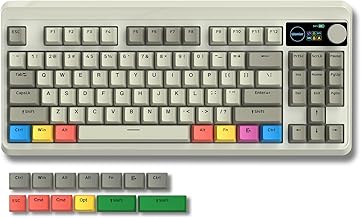
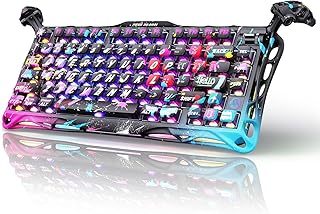
- For competitive gamers: magnetic wins, with adjustable actuation and rapid trigger like the GravaStar Mercury V75 PRO.
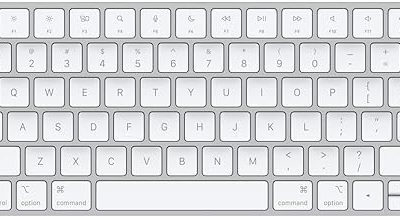
- For typists and all-rounders: mechanical offers proven feel and switch variety at lower cost.
- For customization lovers: mechanical’s hot-swap ecosystem is unmatched, though HE boards like the K10 HE are catching up.
- For budget buyers: mechanical is more affordable and widely available.
- For future-proofing: magnetic represents the cutting edge if you want the newest tech.
What's inside
For years, “mechanical keyboard” was the answer to any serious typing or gaming question. Then Hall Effect magnetic switches went mainstream, and suddenly the enthusiast conversation split in two. Both use satisfying physical switches under each key, but they sense your presses in fundamentally different ways, and that difference reshapes how the keyboard feels and what it can do.
Traditional mechanical switches use a metal contact leaf that closes at a fixed point. Magnetic (Hall Effect) switches instead measure the position of a magnet as the key travels, enabling adjustable actuation and rapid-trigger resets. If you’re deciding between them, the choice comes down to whether you want proven tactile variety or cutting-edge adjustability. Let’s break it down.
As an Amazon Associate we earn from qualifying purchases.




🎮 Get More From Your Setup — Free
Prime Gaming gives you free PC games every month, in-game loot, and a free Twitch channel sub — plus fast free shipping on all the gear above. New members get a 30-day free trial.
Watch: Mechanical Vs Magnetic Keyboard: Full Comparison — Video Review
Quick Verdict
Choose a classic mechanical keyboard if you value switch variety, hot-swappable customization, and a proven, reliable typing feel at a friendlier price. Choose a magnetic Hall Effect board like the Keychron K10 HE or GravaStar Mercury V75 PRO if you’re a competitive gamer who wants adjustable actuation and rapid trigger for the fastest possible response. Both are excellent; your use case decides.
Mechanical Keyboards
The mechanical world is defined by choice. Linear, tactile, and clicky switches each feel distinct, and hot-swappable boards let you change that feel without soldering. Decades of refinement mean the ecosystem of keycaps, switches, and cases is enormous, and the typing experience is beloved for good reason.
What mechanical switches can’t do is change their actuation point. A press registers at a fixed depth, full stop. For most typists and even many gamers that’s completely fine, and the tradeoff buys you lower prices and unmatched customization variety. If you type all day and game casually, a great mechanical board remains the sensible default.
The other advantage is maturity: mechanical switches are cheap, widely available, and thoroughly proven for longevity. You’re buying into a stable, well-understood standard rather than a rapidly evolving one.
Magnetic (Hall Effect) Keyboards
Magnetic switches read the exact position of the key, and that unlocks features mechanical boards simply can’t offer. Boards like the Keychron K2 HE, AULA WIN68 HE, and Redragon K707 HE let you set the actuation point anywhere from a feather-light tap to a deliberate deep press, and rapid-trigger mode resets the key the instant you lift, enabling machine-gun-fast repeated inputs.
For competitive gaming, this is genuinely transformative. High polling rates up to 8000Hz on boards like the Aula WIN60 HE and precise, adjustable actuation give players a real edge in fast shooters. The magnets also mean no physical contact wears out, improving durability.
The downsides are cost and, sometimes, software dependency. You’ll pay more, and unlocking the best features often requires configuration software. Switch variety is also narrower than the mechanical universe, though it’s growing fast.
Head-to-Head: Which Should You Buy?
- For competitive gamers: magnetic wins, with adjustable actuation and rapid trigger like the GravaStar Mercury V75 PRO.
- For typists and all-rounders: mechanical offers proven feel and switch variety at lower cost.
- For customization lovers: mechanical’s hot-swap ecosystem is unmatched, though HE boards like the K10 HE are catching up.
- For budget buyers: mechanical is more affordable and widely available.
- For future-proofing: magnetic represents the cutting edge if you want the newest tech.
Frequently Asked Questions
Do magnetic keyboards feel different to type on?
They feel similar to linear mechanical switches, smooth and quiet, but the adjustable actuation means you can tune how deep a press registers. Many users find them excellent for both typing and gaming.
Are Hall Effect switches worth the extra money?
For competitive gamers chasing every millisecond, yes. For general typing and casual play, a good mechanical board delivers most of the satisfaction for less. It depends on how much rapid trigger matters to you.
Can I hot-swap magnetic switches?
Some HE boards like the K10 HE support hot-swapping magnetic switches, but you must use magnetic switches, not standard mechanical ones. Always check compatibility before swapping.
Which lasts longer?
Magnetic switches have no physical contact to wear out, giving them a theoretical durability edge. That said, quality mechanical switches are rated for tens of millions of presses and last for years.
Final Verdict
There’s no universal winner here, only the right tool for your priorities. Competitive gamers should embrace magnetic boards like the Keychron K10 HE or GravaStar Mercury V75 PRO for their adjustable, lightning-fast response. Everyone else, from writers to casual players, will be delighted by a well-built mechanical keyboard with the switch flavor they love, at a friendlier price. Buy for how you actually use it, not for the spec sheet.