Key takeaways
- Pro: Hall effect switches with rapid trigger drastically improve repeated-tap speed.
- Pro: High polling rates up to 8000Hz reduce input latency.
- Pro: Dedicated pads remove clutter and focus on essential keys.
- Pro: Adjustable actuation lets you tune feel to your playstyle.
What's inside
Rhythm games live and die by timing, and the keyboard you play them on has an outsized impact on your scores. Whether you main osu!, mania-style titles, or note-chart challenges, a mechanical keyboard built for rhythm games can shave milliseconds off your response time and deliver the consistency that separates a full combo from a heartbreaking miss.
In this review we look at what makes a keyboard genuinely great for rhythm play, from Hall effect switches with rapid trigger to purpose-built two-key and left-hand pads. The right board turns frantic streams into clean, repeatable inputs, so here is what to prioritize and which options stand out.
As an Amazon Associate we earn from qualifying purchases.




🎮 Get More From Your Setup — Free
Prime Gaming gives you free PC games every month, in-game loot, and a free Twitch channel sub — plus fast free shipping on all the gear above. New members get a 30-day free trial.
Watch: Mechanical Keyboard For Rhythm Games — Video Review
Design & Build
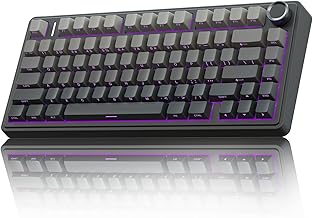
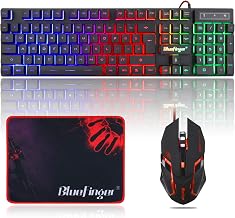
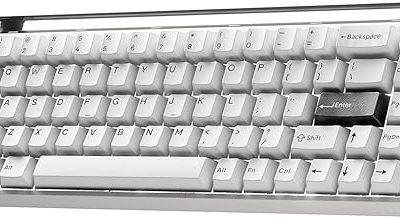
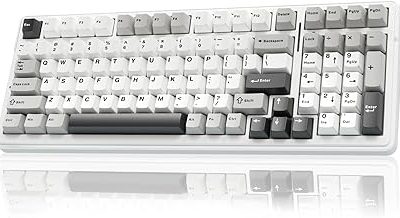
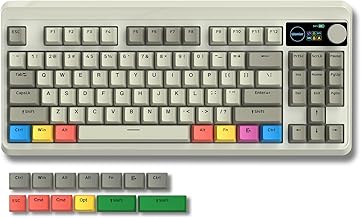
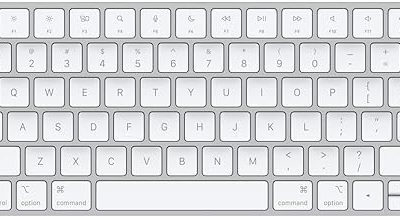
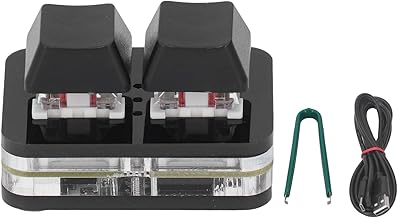
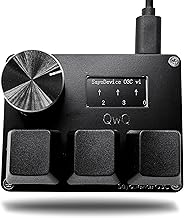
Rhythm-focused keyboards range from tiny dedicated pads to full-featured compact boards. Specialized options like the 2-key red switch keypad and the KEEBMONKEY DOIO Sayo OSU pad strip everything down to the essential keys, often with CNC aluminum frames, RGB, and even joysticks or screens. On the fuller end, the AULA WIN68 HE and AULA F75 Pro deliver 60% and 75% layouts with premium builds, hot-swap sockets, and PBT keycaps. There is even a customizable pink music-rhythm keyboard for players who want aesthetics to match their setup. Build quality across these leans surprisingly premium given their niche focus.
Performance
Performance is all about latency and actuation. The best rhythm boards use Hall effect magnetic switches with adjustable rapid trigger, meaning keys reset the instant you lift, enabling blisteringly fast repeated taps. The AULA WIN68 HE offers fast trigger mode with adjustable actuation and an 8000Hz polling rate, while the left-hand magnetic keypad advertises 0.01mm adjustable rapid trigger and 8K polling for precise, near-instant inputs. Dedicated pads like the DOIO Sayo focus purely on the two or four keys that matter, minimizing distraction. For serious rhythm players, this combination of low latency, high polling, and tunable actuation is transformative.
Pros & Cons
- Pro: Hall effect switches with rapid trigger drastically improve repeated-tap speed.
- Pro: High polling rates up to 8000Hz reduce input latency.
- Pro: Dedicated pads remove clutter and focus on essential keys.
- Pro: Adjustable actuation lets you tune feel to your playstyle.
- Con: Tiny dedicated pads lack general-purpose usefulness.
- Con: Hall effect boards cost more than basic mechanical keyboards.
- Con: Some niche pads require configuration software to unlock features.
Alternatives to Consider
If you also want a keyboard for everyday typing and general gaming, a full-featured Hall effect board like the AULA F75 Pro or WIN68 HE is more versatile than a two-key pad. Conversely, if you only play osu! or similar, a dedicated pad like the DOIO Sayo or the 2-key keypad maximizes focus and portability. Players wanting a stylish all-rounder might enjoy the customizable pink rhythm keyboard. Match the form factor to how much you play beyond rhythm titles.
Frequently Asked Questions
Why are Hall effect switches better for rhythm games?
They allow adjustable actuation and rapid trigger, so keys register and reset almost instantly, enabling faster and more consistent repeated presses.
Do I need a high polling rate?
Higher polling rates like 8000Hz reduce input latency, which matters in timing-critical rhythm games where every millisecond counts.
Is a two-key pad enough?
For osu! and similar two-button gameplay, yes. For mania-style games with more lanes, a fuller keyboard or a four-key pad is a better fit.
Can I use these for regular gaming and typing?
Full-size Hall effect boards like the AULA F75 Pro work well for everything, while tiny dedicated pads are best reserved for rhythm play.
Verdict
For rhythm-game excellence, a Hall effect keyboard with rapid trigger is the clear winner, and the AULA WIN68 HE is a superb versatile choice. If you want a laser-focused tool, the KEEBMONKEY DOIO Sayo OSU pad or a dedicated two-key keypad delivers pure, low-latency performance; pick the form factor that matches how you play.