Key takeaways
- Proximity: Choose a public resolver with servers physically near you so lookups return quickly.
- Anycast network: Major public resolvers use anycast routing that automatically sends your query to the closest node.
- Privacy features: Look for resolvers that support encrypted DNS (DNS over HTTPS or TLS) to stop your ISP from seeing and shaping your lookups.
- Filtering options: Some resolvers offer malware or ad blocking, which can also cut background traffic during gaming sessions.
What's inside
DNS is the internet’s quiet control plane, translating the domain names you type into the IP addresses your games and matchmaking servers actually connect to. Most players never think about it, yet a slow or poorly located DNS resolver can add unnecessary milliseconds to every connection, delay matchmaking, and even expose you to filtering that blocks game servers. In 2026, choosing the right DNS is one of the easiest free upgrades a gamer can make.
This guide explains what DNS does for gaming, how to pick and configure a faster resolver, and where a capable gaming router fits in. You will not just get a list of addresses; you will understand why the change matters and how to make it stick across your whole network.
As an Amazon Associate we earn from qualifying purchases.


⚡ Save on Your Next PC — Amazon Prime
Prime members get fast free shipping on the systems above, plus early access to Prime Day & Black Friday PC deals. New members get a 30-day free trial.
Watch: Best DNS For Gaming 2026 — Video Review
What DNS Actually Does for Your Games
Every time you launch a title, your device asks a DNS resolver to look up the addresses of login servers, patch servers, and matchmaking endpoints. A fast, nearby resolver returns those answers in a few milliseconds; a slow or overloaded one can take ten times as long. DNS does not change your raw ping to a game server once connected, but it speeds up the connection setup, reduces stutter when new resources load, and can route you to better regional endpoints.
How to Choose a Faster DNS Resolver
The goal is low lookup latency and reliability. Keep these factors in mind:
- Proximity: Choose a public resolver with servers physically near you so lookups return quickly.
- Anycast network: Major public resolvers use anycast routing that automatically sends your query to the closest node.
- Privacy features: Look for resolvers that support encrypted DNS (DNS over HTTPS or TLS) to stop your ISP from seeing and shaping your lookups.
- Filtering options: Some resolvers offer malware or ad blocking, which can also cut background traffic during gaming sessions.
Configuring DNS at the Router Level
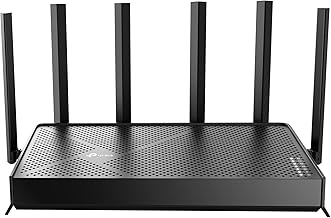
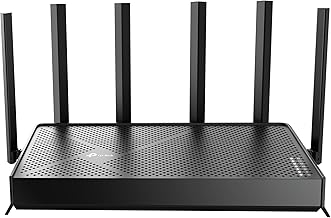
Changing DNS on a single PC helps that device, but setting it on your router applies the improvement to every console, phone, and handheld in the house. A capable gaming router makes this simple and adds quality-of-service features that prioritize game traffic. The GL.iNet GL-MT6000 Flint 2, for example, runs OpenWrt and lets you set custom DNS and encrypted resolvers network-wide, while the ASUS TUF Gaming BE6500 pairs Wi-Fi 7 with a built-in game accelerator. Setting DNS once on hardware like this means new devices inherit the faster lookups automatically.
Pairing DNS With the Right Hardware
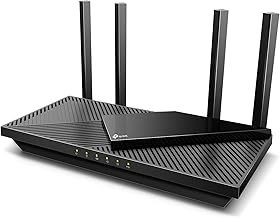
DNS tuning delivers the most benefit when your network is not the bottleneck. A modern router with multi-gig ports and low-latency handling ensures those fast lookups translate into a snappy experience. Options such as the TP-Link Archer AXE75 with its 2.5Gbps WAN port and 6GHz band, or the WiFi 7 GL.iNet Flint 3 with tri-band throughput, give DNS improvements room to shine by keeping the rest of the pipeline fast. If you are on a wired desktop, plugging directly into one of these routers removes Wi-Fi variability entirely.
Testing and Verifying Your Setup
After switching resolvers, verify the improvement rather than assuming it. Use a DNS benchmark tool to compare lookup times from your location, then confirm your encrypted DNS is active. Re-test at your usual gaming hours, since a resolver that is fast at midday may behave differently under evening congestion. If matchmaking or launch times feel snappier and benchmarks confirm lower lookup latency, the change is doing its job.
Frequently Asked Questions
Does changing DNS lower my ping?
Not your in-game ping to a server you are already connected to. It speeds up the lookups that happen before and during connection setup, reducing stutter and matchmaking delays, and occasionally routing you to a better regional server.
Is it better to set DNS on my device or my router?
The router, if you want every device covered. A router like the GL.iNet Flint 2 applies your chosen resolver to consoles and handhelds that make DNS hard to change individually.
Should I use encrypted DNS for gaming?
Yes. Encrypted DNS over HTTPS or TLS stops your ISP from seeing or throttling your lookups, with negligible performance cost on a modern router or PC.
Will a gaming router improve DNS performance on its own?
A gaming router does not replace a fast resolver, but it complements one by prioritizing game traffic and letting you set custom encrypted DNS network-wide, so the two work best together.
Conclusion
Optimizing DNS is a rare gaming upgrade that costs nothing yet touches every connection you make. Pick a fast, nearby resolver, enable encryption, and apply it at the router level with capable hardware like the GL.iNet Flint 2 or TP-Link Archer AXE75 so the whole household benefits. Test to confirm the gain, and you will enjoy quicker matchmaking, fewer hitches, and a network that stays out of your way.