Key takeaways
- The best chocolate tempering machines for chocolatiers depend on how much chocolate you turn over in a typical shift: a small, manually controlled unit suits occasional batches, while continuous production calls for a larger machine with dependable temperature control and…
The best chocolate tempering machines for chocolatiers depend on how much chocolate you turn over in a typical shift: a small, manually controlled unit suits occasional batches, while continuous production calls for a larger machine with dependable temperature control and an easy-to-clean bowl and auger. For most working chocolatiers, prioritize usable batch capacity, stable heating and cooling, and whether the parts that contact chocolate can be removed without a long teardown.
Our top picks


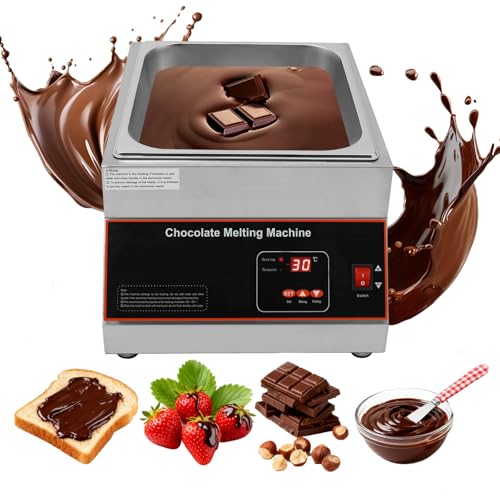

As an Amazon Associate we earn from qualifying purchases at no extra cost to you. Ratings are shown as listed on Amazon.
Quick decision guide
| Production situation | Suitable machine class | Useful working capacity | What to prioritize |
|---|---|---|---|
| Occasional bonbons, testing, or small custom orders | Compact tabletop tempering machine | About 3–6 kg (7–13 lb) | Simple controls, a removable bowl, and low minimum batch size |
| Daily small-batch production | Professional tabletop batch machine | About 6–12 kg (13–26 lb) | Repeatable temperature control, usable working capacity, and accessible cleaning |
| Several production runs per day | Mid-size batch or continuous tempering machine | About 12–30 kg (26–66 lb) or a rated hourly output | Recovery rate, continuous feed, and matching the machine to the enrobing workload |
| High-volume molding or enrobing | Continuous tempering line | Typically specified by kilograms per hour, not just bowl volume | Output under real operating conditions, cleaning access, and service support |
These are planning ranges, not promises of output. A machine’s listed bowl capacity is not necessarily the amount it can temper reliably: minimum load, working fill level, chocolate type, room temperature, and how often you draw chocolate all matter.
What to compare before choosing
Batch capacity: distinguish holding volume from usable output
For batch machines, check both the stated capacity and the minimum load. A bowl that holds 10 kg may be awkward for a 2 kg recipe if the chocolate does not circulate or mix evenly at a low fill. Conversely, a small unit may need frequent top-ups during molding, interrupting work while fresh chocolate melts and tempers.
Estimate your requirement from the work, rather than choosing by the biggest number on the brochure. For example, if a production run uses 4 kg of chocolate and you expect to complete three runs before cleaning, plan for roughly 12 kg of chocolate handled in that period. A 6 kg machine could manage that as two cycles, but only if each cycle’s tempering and recovery time fits your schedule. If the machine takes 45 minutes to temper a new load and you need uninterrupted output, a larger or continuous machine may be more valuable than extra nominal bowl capacity.
Temperature control: look for repeatability, not just a digital display
Chocolate tempering depends on a controlled sequence of melting, cooling, and reheating. A display that shows temperature is useful, but it does not by itself prove that the chocolate is evenly tempered. Ask whether the machine controls the chocolate directly or relies on a sensor in the bowl or heating surface, and whether the mixing or agitation system keeps the batch uniform.
For dark chocolate, a common working range is around 31–32°C (88–90°F); milk is often worked around 29–30°C (84–86°F), and white around 28–29°C (82–84°F). These are starting points, not universal settings: couverture formulation and manufacturer guidance can shift the ideal range. Confirm temper with a test smear or a small molded sample before committing a full batch.
Check whether the machine has separate settings or a clear process for different chocolate types. A unit that is easy to adjust and returns to the working range after chocolate is added can reduce the need to stop and correct a batch. Ask how closely the displayed temperature tracks the chocolate during draw-off, especially if your production involves frequent dipping or enrobing.
Heating and cooling: understand the full tempering cycle
Machines may use heated bowls, heated surfaces, or other controlled heating systems, paired with internal cooling or a cooling circuit. The important comparison is not simply “fast heating”: a machine must also remove heat in a controlled way and bring the chocolate back to working temperature without creating hot or cold spots.
For a small shop, a straightforward batch machine can be easier to operate and maintain than a complex continuous system. At higher volumes, recovery speed and stable output become critical. Ask for tempering time and continuous output under stated conditions, and whether those figures assume a particular chocolate, room temperature, or feed rate. A quoted maximum output is less useful if it cannot be maintained during your actual molding or enrobing work.
Cleaning: check the parts you will actually have to wash
Chocolate residue hardens as it cools, so the shape of the bowl and the access to the mixing parts make a practical difference. Before buying, find out which chocolate-contact components are removable, whether the auger or agitator can be reached without tools, and how the manufacturer instructs you to clean the machine. Electrical components and many machine bodies should not be immersed or washed with water; follow the model’s manual.
For a shop that changes chocolate types or recipes often, removable food-contact parts can save time and reduce cross-flavor residue. For a long production run using one chocolate, a continuous machine may require less frequent interruption but involve a more involved end-of-day cleaning routine. Include cleanup time in the capacity calculation: nominal output does not help if disassembly and residue removal consume the time saved.
Match the machine to your workflow
| Your workflow | Best fit | Likely trade-off |
|---|---|---|
| Small, varied orders with frequent flavor changes | Compact batch unit with removable contact parts | Lower output and more time spent between batches |
| Daily production of one or two couvertures | Professional tabletop batch machine sized to the usual load | Requires planning around batch and recovery times |
| Regular enrobing or sustained molding | Mid-size batch machine or continuous unit | Higher purchase cost, space needs, and cleaning complexity |
| Growing output with limited staff | Machine with simple controls, clear cleaning access, and local service support | May cost more than a basic machine with similar stated capacity |
Product types worth considering
For a compact, recognizable option, the ChocoVision Revolation Delta is a tabletop batch tempering machine intended for smaller production runs. It is a candidate for chocolatiers who value a compact footprint and guided batch operation; verify its current capacity, minimum load, and cleaning instructions against your recipes before purchasing.
For a larger professional batch setup, the Selmi Plus EX is a tempering machine in Selmi’s professional range. It is more appropriate to compare with other production equipment than with small countertop units. Confirm the exact configuration, capacity, power requirements, and included accessories with the manufacturer or dealer, as specifications can vary by version and market.
These examples represent different machine classes, not a universal ranking. A model’s suitability depends on actual batch size, chocolate type, installation requirements, and access to maintenance. If neither fits your workflow, compare machines by the criteria above rather than assuming that a larger bowl or more elaborate display guarantees better results.
Costs and ownership
Prices vary substantially by capacity, automation, and whether a machine is a compact batch unit or a production-scale system. As a broad market guide, smaller tabletop tempering machines can cost several hundred to a few thousand dollars; professional batch equipment commonly reaches several thousand to well over $10,000; and continuous production systems can cost considerably more. Treat these as general ranges, not quotes, and budget for electrical installation, accessories, service, and cleaning supplies where applicable.
Before ordering, confirm the machine’s voltage and power draw against your workspace, whether it needs a dedicated circuit, what parts are included, and how service and replacement parts are handled. A machine that matches your available power and is maintainable locally can be a better production choice than a higher-capacity model that requires costly installation or long service delays.
Bottom line
Choose a compact batch machine for occasional, varied work; a professional batch model for repeat daily runs; and a continuous system when sustained output—not simply a bigger bowl—is the bottleneck. Compare usable load, temperature stability through the full tempering cycle, recovery during draw-off, and cleaning time. Those details determine whether a machine fits a chocolatier’s day as well as it fits the specification sheet.