Key takeaways
- Sessions 1–2: low pressure for 10 minutes.
- Sessions 3–4: low-to-moderate pressure for 15–20 minutes.
- After that: moderate pressure for 20–30 minutes if comfortable.
The best leg compression massagers in 2026 are the Hyperice Normatec 3 Legs for adjustable recovery programs, Therabody RecoveryAir JetBoots for cordless portability, and Air Relax AR-4 for buyers who want broad coverage at a lower typical market price.
These devices use sequential pneumatic compression: air chambers inflate and deflate around the legs to create a moving pressure pattern. They are useful after long gaming sessions, desk work, travel, exercise, or standing, but they are not a substitute for medical treatment. Anyone with suspected or diagnosed blood clots, significant circulation problems, uncontrolled hypertension, heart failure, open wounds, or recent surgery should ask a clinician before using one.
Our top picks


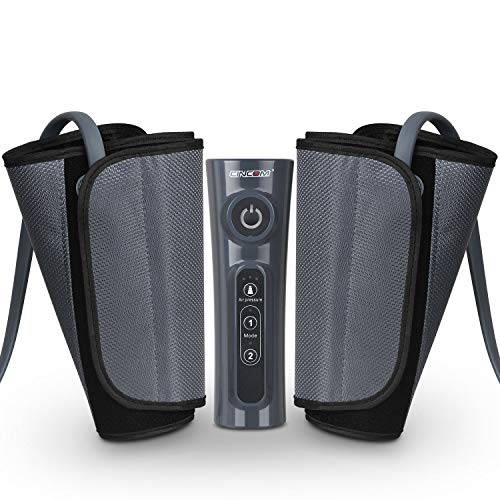
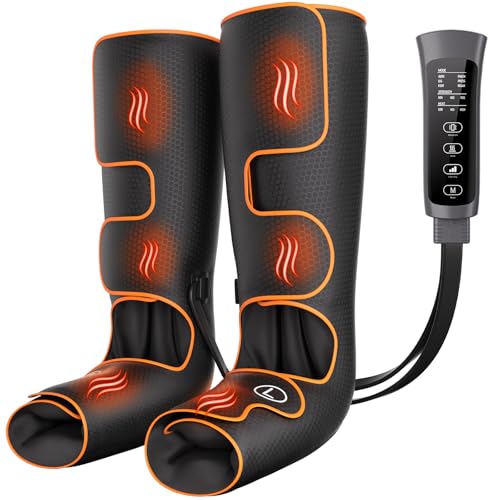
As an Amazon Associate we earn from qualifying purchases at no extra cost to you. Ratings are shown as listed on Amazon.
Best leg compression massagers compared
| Model | Chamber coverage | Pressure range or levels | Modes and controls | Portability | Typical market position |
|---|---|---|---|---|---|
| Hyperice Normatec 3 Legs | Five overlapping zones per leg, foot to upper thigh | Seven intensity levels | Zone control, sequential program, Bluetooth app support | Controller and sleeves are portable; requires charging or power depending on configuration | Usually $600–$900 |
| Therabody RecoveryAir JetBoots | Full-leg boot with multiple air chambers | Four pressure settings | Simple boot controls, timed sessions, wireless operation | Among the easiest to use away from a wall outlet | Usually $700–$900 |
| Air Relax AR-4 | Four zones per leg, including foot and calf/thigh sections | Several selectable pressure levels, commonly up to about 200 mmHg | Sequential compression and time controls on a wired controller | Good for home use; less convenient for travel | Usually $300–$500 |
| Two-zone compression sleeves | Usually foot-to-calf or calf-only coverage | Often three to five levels | Basic wired remote, limited zone adjustment | Lightest and simplest category | Usually $100–$250 |
Specifications vary by package, sleeve size, and regional version, so confirm the supplied boot dimensions and controller features before buying. Pressure numbers are not directly comparable when one manufacturer publishes a maximum value and another publishes selectable levels.
Head-to-head: which model fits your situation?
| Your priority | Best fit | Why | Trade-off |
|---|---|---|---|
| Most precise adjustment | Hyperice Normatec 3 Legs | Seven levels and individually adjustable zones let you reduce pressure around sensitive areas while keeping stronger compression elsewhere. | Higher cost and more hardware than a basic sleeve. |
| Cordless use in a hotel, office, or gaming room | Therabody RecoveryAir JetBoots | The integrated design avoids a separate pneumatic controller and is designed around wireless sessions. | Fewer pressure choices than the Normatec system. |
| Full-leg coverage on a tighter budget | Air Relax AR-4 | It covers the feet, calves, knees, and thighs while retaining a conventional controller. | The controller, hoses, and wall power make setup less travel-friendly. |
| Lowest weight and simplest storage | Two-zone sleeves | There are fewer chambers, fewer cables, and less fabric to pack. | They cannot target the upper thigh or create as nuanced a pressure wave. |
What matters more than the pressure headline
Chamber coverage
Five-zone boots usually provide the smoothest progression because the chambers overlap from the foot toward the thigh. That matters if your goal is a full-leg sensation after sitting for several hours. Four-zone designs can still cover the whole leg effectively, but the transitions may feel more noticeable. Two-zone sleeves are adequate for calf-focused use, yet they are not equivalent to a full-leg boot even if both advertise a high maximum pressure.
For post-gaming stiffness, full-leg coverage is not automatically better. If your discomfort is limited to the calves, a shorter sleeve can be faster to put on and easier to position correctly. Choose the coverage you will use consistently rather than paying for unused thigh chambers.
Pressure levels and control
More pressure is not necessarily more effective. A practical starting setting is the lowest or second-lowest level for 10–15 minutes. If the session feels comfortable and leaves no numbness, tingling, sharp pain, or unusual discoloration, increase duration before increasing pressure. A useful home progression is:
- Sessions 1–2: low pressure for 10 minutes.
- Sessions 3–4: low-to-moderate pressure for 15–20 minutes.
- After that: moderate pressure for 20–30 minutes if comfortable.
Use the device while seated or reclined, keep both boots aligned, and stop if symptoms worsen. The best controller is the one that lets you make small adjustments without removing the boots. Zone control is particularly valuable when the feet tolerate less pressure than the calves.
Massage modes
Sequential mode is the standard: the lowest chamber inflates first, followed by the chambers above it. Some systems add a wave or pulsing option, while others allow a zone to be skipped. For general recovery, sequential mode is the sensible default. A pulsing mode may feel more active, but it is not automatically preferable for long sedentary sessions.
Sleeve fit and sizing
Measure according to the manufacturer’s instructions, usually around the widest thigh or calf and from the heel to the upper-leg point shown on the sizing chart. Do not assume your clothing size predicts boot size. A sleeve that is too small can create uncomfortable pressure points; one that is too large may inflate unevenly and leave gaps.
Look for adjustable zippers or hook-and-loop panels, especially if two people may use the device. Check whether the package includes one universal pair or separate short and tall options. If your legs are between sizes, prioritize the thigh and calf measurements over height alone.
Controls and app dependence
A physical controller is preferable when you want to begin a session quickly or use the boots away from a phone. Bluetooth and app controls can add saved routines and zone adjustment, but they introduce another battery and pairing step. Before choosing an app-dependent system, check whether basic pressure and duration controls still work when the phone is unavailable.
Portability and power
Wireless boots are convenient, but their battery adds weight to each leg. A controller-based system is often lighter on the legs but needs a separate unit and cable. To estimate travel practicality, add the mass of both boots, the controller, charger, and carrying case—not just the advertised boot weight.
For example, a 30-minute session at 25 watts uses only:
25 W × 0.5 hours = 12.5 Wh.
That is a small amount of energy, but the battery must also power the pump during pressure peaks and account for conversion losses. A claimed 40 Wh battery might deliver roughly 28–34 Wh to the pump after reserve and efficiency losses, or approximately two 30-minute sessions at that load. Treat runtime claims as estimates because higher pressure and larger legs can increase pump demand.
Cleaning and maintenance
Choose boots with smooth, wipeable outer fabric and removable liners if possible. After each session, wipe sweat-prone areas with a lightly damp cloth and let the boots dry completely before folding them. Do not soak pneumatic boots, put them in a washing machine, or spray cleaner into air ports and hose connectors unless the manual explicitly allows it.
For shared use, place a thin, clean layer of clothing between skin and sleeve, but avoid thick seams that create pressure ridges. Inspect zippers, hoses, and connectors monthly. A slow leak usually appears as a boot that takes longer to inflate, loses pressure early, or sounds like the pump is running continuously.
How to choose the right leg compression massager
- Choose five-zone coverage if you want the most adjustable full-leg session and regularly feel discomfort from the feet through the thighs.
- Choose wireless boots if you move between rooms, travel frequently, or dislike a hose-and-controller setup.
- Choose a four-zone controller system if full-leg coverage matters more than compact packing and you want a lower purchase range.
- Choose two-zone sleeves if calf relief, low weight, and easy storage are more important than thigh coverage.
- Prioritize sizing and pressure adjustment over the highest advertised pressure number.
Bottom line
The Hyperice Normatec 3 Legs is the strongest all-round choice for people who value chamber-by-chamber adjustment and multiple intensity levels. The Therabody RecoveryAir JetBoots makes the most sense for cordless convenience and quick setup. The Air Relax AR-4 is a practical full-leg alternative when the budget is closer to the midrange. If you only need occasional calf compression, a simpler two-zone sleeve avoids unnecessary cost, bulk, and setup time.