Key takeaways
- Monovarietal Koroneiki with PDO certification for full traceability
- Multi-awarded with high polyphenol content reported on the label
- Higher upfront cost than budget jug alternatives
Buying Greek olive oil online is surprisingly risky. Bottles that claim to be extra virgin may be blended with cheaper seed oils, mislabeled regarding origin, or oxidized by the time they reach your shelf. The problem is that most shoppers cannot taste the oil before purchasing, so they rely on published specifications, certifications, and owner reviews to make a decision.
We compared eight widely available Greek olive oils on their certification status, extraction method, packaging format, polyphenol claims, and per-liter pricing, alongside recurring feedback from owners who use them daily. What separates a worthwhile bottle from a mediocre one comes down to traceability, harvest-to-bottle handling, and whether the producer actually controls the full chain from grove to packaging.
Our top picks


As an Amazon Associate we earn from qualifying purchases at no extra cost to you. Ratings are shown as listed on Amazon.
Quick Picks
| Product | Best for | Price |
|---|---|---|
| Iliada Kalamata PDO | Chefs and flavor purists | $59.49 |
| Lyrakis Family Olive Oil | Premium taste in small volume | $25.90 |
| Mr. Papou’s Family Owned | Authentic everyday cooking | $65.95 |
| Horio Greek Olive Oil Organic | Organic-certified versatility | $51.98 |
| Mythology Greek Olive Oil | PDO-certified Cretan oil at volume | $54.99 |
| Colavita 100% Greek | Lowest per-liter entry price | $23.99 |
| Terra Creta Kolymvari Estates | Single-estate premium oil | $67.99 |
| GAEA Classic Extra Virgin | Small-quantity trial or dipping | $14.95 |
How We Picked
We evaluated each oil on four criteria: certification authenticity (PDO or organic designations tied to a specific Greek region), extraction and handling claims (cold pressed versus cold extracted, first press vs. later), packaging protection (dark glass or tin versus clear plastic), and owner-reported flavor consistency. We also calculated a rough per-liter cost to contextualize whether each bottle’s quality justified its price tag.
The 8 Best Greek Olive Oil in 2026
Iliada Kalamata PDO Extra Virgin Olive Oil
Iliada is the choice for cooks who want a single-varietal Koroneiki oil with a defined regional identity. The PDO Kalamata stamp guarantees the olives were grown, pressed, and bottled within a recognized zone, and owners consistently describe a peppery, fruit-forward profile suited to finishing dishes. The three-liter bag-in-box format keeps the oil protected from light and air for weeks after opening.
- Monovarietal Koroneiki with PDO certification for full traceability
- Multi-awarded with high polyphenol content reported on the label
- Higher upfront cost than budget jug alternatives
Skip this one if you primarily need a neutral oil for high-heat frying and do not care about peppery finishing notes.
Lyrakis Family Olive Oil
Lyrakis targets buyers who want a handpicked, first-cold-pressed Cretan oil but only need a liter at a time. Owners describe it as fresh and grassy with a clean finish, and the family-operated story since 1975 adds credibility for shoppers who value provenance over brand marketing. The smaller volume means you are more likely to use it within its peak window.
- First cold pressed with high polyphenol claims from a family grove in Crete
- Lower entry price than the three-liter competitors
- Requires more frequent repurchasing for households that go through oil quickly
Skip this one if your family consumes olive oil in large volume for cooking and you prefer a single bulk container.
Mr. Papou’s Family Owned Authentic Greek Extra Virgin Olive Oil
Mr. Papou’s is positioned as an honest everyday oil for households that want the three-liter format without paying a premium brand markup. Owner reviews highlight a balanced, mildly fruity character that works across salads, sautés, and bread dipping. The family-owned identity resonates with shoppers who distrust large-scale blending operations.
- Three-liter format at a mid-range per-liter cost
- Consistently positive owner feedback on everyday versatility
- Does not carry a PDO designation, so origin specificity is lower than certified competitors
Skip this one if regional certification and single-varietal expression matter more to you than value and versatility.
Horio Greek Olive Oil Extra Virgin Cold Pressed Organic
Horio fills a niche for buyers who want organic certification alongside a cold-pressed label in a generous three-liter container. The description explicitly calls out frying and marinades, suggesting a slightly higher smoke tolerance than finishing-only oils. Owners who use it as their single all-purpose bottle report no complaints about flavor at moderate heat.
- Organic certified and cold pressed in one product
- Suitable for cooking applications that demand more than a finishing oil
- Owner feedback is thinner compared to the more established PDO brands
Skip this one if you want a strongly peppery or herbaceous character and prefer oils marketed specifically for raw use.
Mythology Greek Olive Oil From Greece
Mythology offers PDO-certified Kolymvari oil from Chania, Crete in a full three-liter tin at a price that sits below comparable certified products. Owners describe it as smooth with a gentle bitterness, leaning more toward approachability than aggressive pepper. The tin packaging provides solid light protection for a product that will last weeks in active use.
- PDO Kolymvari certification with estate-level origin in Crete
- Three-liter tin at a competitive price for certified oils
- Flavor profile is milder, which may disappoint peppy-olive-oil enthusiasts
Skip this one if you want the sharp, throat-catching kick that signals high polyphenol content and prefer intensity over balance.
Colavita 100% Greek Extra Virgin Olive Oil
Colavita is the most affordable entry point on this list at $23.99 for two liters, making it practical for high-volume users or anyone testing whether Greek oil suits their palate. The plastic jug is lighter and cheaper to ship, but it offers less protection from light and heat over time. Owners describe the flavor as clean but less complex than single-estate alternatives.
- Lowest total price among the three products closest to the two-liter range
- Widely available with consistent supply
- Plastic jug packaging is the weakest protection format on this list
Skip this one if you store oil for more than a month in a warm kitchen or care about estate-specific flavor nuance.
Terra Creta Kolymvari Estates
Terra Creta represents the single-estate, award-winning tier for buyers who want to taste oil from a specific Cretan grove rather than a regional blend. The Kolymvari Protected Designation of Origin guarantees geographic integrity, and cold extraction (a term the producer favors over cold pressing) preserves delicate aromatic compounds. At $67.99 for three liters, it commands the highest price here.
- Award-winning single-estate oil with PDO Kolymvari certification
- Tin packaging with a protective design that extends shelf life after opening
- Highest per-liter cost on this list
Skip this one if you primarily need a cooking oil and do not plan to use it as a finishing element where its complexity shines.
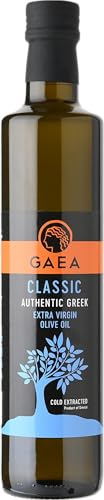
GAEA Classic Authentic Greek Extra Virgin Olive Oil
GAEA’s sixteen-ounce bottle is the smallest format here and the best option for someone wanting to sample quality Greek EVOO before committing to a liter or three. Owners describe it as balanced and approachable for dipping, drizzling, and light cooking. Non-GMO and all-natural labeling appeals to shoppers who screen for additives or processing aids before buying.
- Lowest absolute price for trying extra virgin Greek oil without a bulk commitment
- Non-GMO verified with a balanced flavor suited to multiple uses
- Small volume means a poor per-liter value for regular cooks
Skip this one if your household uses olive oil daily for cooking and you would consume a full bottle within two weeks.
Buying Guide
Certification: PDO, Organic, and Why They Matter
PDO (Protected Designation of Origin) certification ties an oil to a specific Greek growing region and processing method, enforced by EU regulations. An oil labeled PDO Kolymvari or PDO Kalamata has been audited from grove to bottle. Organic certification addresses pesticide and chemical residue. Neither guarantees taste, but both reduce the risk of receiving a blended or mislabeled product.
Extraction Method and Polyphenol Content
Cold pressed and cold extracted both mean no heat above roughly 27 degrees Celsius during processing, though “extracted” refers to modern centrifugal methods. Polyphenols are antioxidants that create the peppery throat catch and contribute to shelf stability. Oils that report a high polyphenol range on the label are generally fresher and more robust than those that omit the figure entirely.
Packaging and Storage
Light and oxygen degrade olive oil faster than heat alone. Dark glass, opaque tins, and bag-in-box formats protect quality far better than clear plastic jugs. If you buy a large volume and store it in a bright kitchen for months, the oil will lose its fruity character and develop flatness regardless of how premium the harvest was.
Our Verdict
For most buyers who want certified origin, complex flavor, and practical volume, Iliada Kalamata PDO is the top pick in 2026: it combines a monovarietal Koroneiki profile with the protection of a bag-in-box format at a reasonable per-liter cost. For the budget-conscious, Colavita’s two-liter jug is the cheapest credible Greek EVOO here, provided you keep it away from sunlight. However, if your priority is a single-estate oil with award credentials and you want Cretan Kolymvari character in a shelf-stable tin, Terra Creta Kolymvari Estates wins that specific scenario.
FAQ
Is Greek olive oil better than Italian?
Not inherently. Greece has the highest share of extra virgin oil in total production and many PDO-designated regions. Italian brands often blend oils from multiple countries, so a label saying “product of Italy” does not guarantee Italian olives. Quality depends on the individual estate and processing, not the country of bottling.
How do I know if an olive oil is fake?
Look for a PDO designation tied to a named Greek region, a harvest date on the label, and packaging that blocks light. Oils without a traceable origin, bottled in clear plastic at a suspiciously low price, are the most likely candidates for blending or adulteration.
Can I fry with extra virgin olive oil?
Yes, within reason. EVOO has a smoke point around 190-210 degrees Celsius depending on free fatty acid content. For shallow pan frying and sautéing, oils like Horio that explicitly mention frying suitability work well. Deep frying at very high temperatures may push the oil past its comfort zone regardless of quality.
How long does Greek olive oil last after opening?
Most producers suggest consuming within one to three months after opening for best flavor, though properly stored oil in a dark tin or bag-in-box can hold acceptable quality for longer. Oils higher in polyphenols degrade more slowly than mild, low-polyphenol ones.