Key takeaways
- Pro: Lowest entry price for a full multivitamin at $9.89 for 75 days.
- Pro: Flavored gummies improve compliance for capsule-averse users.
- Con: Sugar and gelatin base add non-nutrient calories and limit precision.
Buying vitamins is one of those categories where the gap between a good purchase and a wasted dollar is wide. The shelves are stocked with products that look nearly identical on the front label but differ enormously in form of the active nutrient, absorption chemistry, added fillers, and the presence or absence of third-party verification on the back. A buyer comparing a multivitamin gummy against a targeted softgel or capsule is often making the wrong comparison entirely, because the delivery formats solve different problems.
The eight best vitamin brands on this list were compared on published specifications, per-supplement pricing, and aggregated owner feedback across retail platforms. What separates the standouts from the rest is whether the formulation matches a specific health goal, whether the serving count and price per day make long-term use realistic, and whether the ingredient list avoids unnecessary additives that can compromise absorption or trigger sensitivities.
Our top picks




As an Amazon Associate we earn from qualifying purchases at no extra cost to you. Ratings are shown as listed on Amazon.
Quick Picks
| Product | Best for | Price |
|---|---|---|
| Amazon Basics Multivitamin Gummies | Budget-friendly daily multivitamin coverage | $9.89 |
| Pure Encapsulations Vitamin D3 & K2 | Hypoallergenic, additive-free D3/K2 pairing | $19.50 |
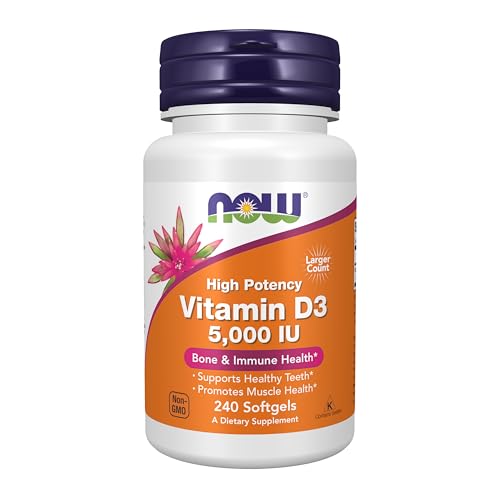
| NOW Foods Vitamin D-3 5,000 IU | High-potency single-nutrient D3 supplementation | $11.97 |
| Nature’s Bounty Hair, Skin & Nails | Beauty-focused multivitamin routine | $11.40 |
| NOW Supplements Vitamin D-3 & K-2 | Entry-level D3/K2 combo at low cost | $8.92 |
| Nature Made Multivitamin with Iron | Affordable daily multivitamin with iron | $7.49 |
| PreserVision AREDS 2 | Clinically studied eye health support | $30.99 |
| Sports Research Vegan D3 + K2 | Plant-based softgel with coconut oil carrier | $23.95 |
How We Picked
We prioritized four criteria: form and bioavailability of the primary nutrients, cost per serving over the full container life, transparency of the ingredient list (fewer unnecessary additives ranked higher), and the breadth of owner feedback confirming whether the product delivers on its stated purpose. Products that serve a broad daily-need niche were weighed against targeted formulations differently, because a multivitamin should not be judged on the same metrics as a specialized supplement like PreserVision AREDS 2.
The 8 Best Vitamin Brands in 2026
Amazon Basics Multivitamin Gummies
This 150-count gummy pack gives you a 75-day supply at $9.89, which makes the per-day cost hard to argue with. It is positioned for people who want baseline multivitamin coverage without committing to a premium price or swallowing capsules. Owner feedback frequently highlights the mixed berry and cherry flavors as genuinely pleasant for a budget gummy, which matters for consistency. The downside is the sugar content inherent to gummy formats and the limited transparency around exact nutrient dosages compared to tablet alternatives. Skip this if you need precise micronutrient ratios, are managing blood sugar, or prefer a capsule you can open and mix.
- Pro: Lowest entry price for a full multivitamin at $9.89 for 75 days.
- Pro: Flavored gummies improve compliance for capsule-averse users.
- Con: Sugar and gelatin base add non-nutrient calories and limit precision.
Pure Encapsulations Vitamin D3 & K2
Pure Encapsulations has built its reputation on a hypoallergenic philosophy, and this 60-capsule D3 and K2 pairing is a clear example. The formula avoids common allergens, artificial colors, and unnecessary excipients, which appeals to people with sensitivities or those who want the cleanest possible label. At $19.50 for 60 capsules the cost per day is modest for a two-nutrient combo. The primary criticism is serving size relative to the high-potency single-ingredient alternatives from NOW. Skip this if you are on a tight budget or if you already get sufficient K2 from your diet and only need D3.
- Pro: Minimal additive list makes it suitable for sensitive individuals.
- Pro: K2 paired with D3 supports proper calcium routing.
- Con: Fewer capsules per container than many competitors at a similar price tier.
NOW Foods Vitamin D-3 5,000 IU
At $11.97 for 240 softgels, this is the most cost-efficient high-potency D3 option on the list. It targets people who have confirmed low vitamin D through a blood panel and need a substantial daily dose without paying a premium. The softgel format dissolves reliably and the ingredient list is short. The main limitation is that 5,000 IU may exceed what some healthcare providers recommend for maintenance, so it is best suited for short-to-medium repletion cycles rather than indefinite year-round use. Skip this if your doctor has recommended a lower dose or if you already take a multivitamin containing D3.
- Pro: 240 softgels at $11.97 is among the best per-serving values available.
- Pro: Single-ingredient format lets you control total D3 intake precisely.
- Con: High potency requires medical awareness; not a casual daily pick for everyone.
Nature’s Bounty Hair, Skin & Nails
This 150-softgel bottle at $11.40 is aimed squarely at people whose primary goal is cosmetic rather than systemic. Biotin and vitamin C dominate the formula, which matches the stated purpose. Owner reviews are polarized in a way that is typical for beauty supplements: many report visible nail strength improvements over several months, while others see no change at all. That variability makes it a lower-risk purchase given the price, but it is not a substitute for a comprehensive multivitamin. Skip this if you need broad micronutrient coverage or if you have not ruled out a biotin interference issue with lab work.
- Pro: Targeted formulation addresses a specific and common consumer concern.
- Pro: Low price point makes long-term trial affordable.
- Con: Results vary widely among users, and biotin can skew lab test readings.
NOW Supplements Vitamin D-3 & K-2
At $8.92 for 120 veg capsules, this is the cheapest combined D3 and K2 option on the list and a strong value entry point. The 1,000 IU D-3 paired with 45 mcg K-2 is a conservative dose suited for maintenance rather than aggressive repletion. The vegan capsule is a practical advantage for plant-based users who want to avoid gelatin softgels. The limitation is potency: if you need therapeutic doses of D3, you will be taking multiple capsules daily, which erodes the cost advantage quickly. Skip this if your bloodwork calls for higher D3 or if you want a single-capsule-per-day routine.
- Pro: Lowest absolute price for a D3/K2 combo at $8.92.
- Pro: Veg capsule format suits plant-based diets.
- Con: Conservative dosing means multiple capsules per day for higher needs.
Nature Made Multivitamin with Iron
This 130-tablet bottle at $7.49 is the most economical broad-spectrum multivitamin on the list. The added iron makes it particularly relevant for menstruating women or anyone advised to increase iron intake through supplementation. The tablet format means no sugar, no gelatin, and a straightforward label. Owner feedback consistently praises the low cost, though some note the tablets are large and can be uncomfortable to swallow. Skip this if you struggle with tablets, already take a separate iron supplement, or have been told to limit iron intake.
- Pro: Cheapest multivitamin here at $7.49, and iron is included at no premium.
- Pro: Tablet format avoids sugar and gelatin entirely.
- Con: Tablet size and texture draw complaints from some users.
PreserVision AREDS 2
PreserVision is not a general multivitamin. This is a targeted eye-health formula at $30.99 for 120 softgels, built around the AREDS2 clinical study formulation used to slow age-related macular degeneration progression. That specificity is both its greatest strength and its clearest limitation. If you have a diagnosis of intermediate or advanced AMD, this product has a direct medical rationale that no other item on this list matches. If you do not, you are paying premium pricing for nutrients you likely already get elsewhere. Skip this unless an eye-care professional has recommended AREDS2-level supplementation.
- Pro: Clinically studied formulation for a specific degenerative eye condition.
- Pro: Trusted brand with ophthalmologist recognition.
- Con: Highest price on the list and unnecessary for people without AMD.
Sports Research Vegan D3 + K2
At $23.95 for 60 plantgels, this product earns its place by combining vegan sourcing with a coconut oil carrier, which improves fat-soluble vitamin absorption. The target user is someone who wants the D3/K2 synergy, follows a plant-based diet, and values the coconut oil base as a delivery mechanism rather than an afterthought. The per-serving cost is notably higher than NOW’s equivalent, so you are paying a premium for the format and carrier choice. Skip this if budget is your primary constraint or if you already tolerate gelatin softgels without issue.
- Pro: Coconut oil carrier supports absorption of fat-soluble nutrients.
- Pro: Fully vegan plantgel with no animal-derived ingredients.
- Con: Price per capsule is roughly 2.5 times higher than the NOW D3/K2 alternative.
Buying Guide
Match the Format to Your Swallowing Preference and Routine
Gummies are the easiest to take consistently but introduce sugar, gelatin, and less precise dosing. Tablets are the cheapest per serving but can be large and chalky. Softgels and capsules offer a middle ground with better taste control and often a shorter ingredient list. If you know you will skip a product that tastes bad or is hard to swallow, that preference matters more than a marginal cost difference.
Check Dose Against Need, Not Against the Label
A 1,000 IU vitamin D softgel and a 5,000 IU softgel both list “Vitamin D3” prominently, but they are different products for different situations. Repletion phases often call for higher doses under guidance, while maintenance requires less. The same logic applies to multivitamins: an iron-containing formula is a strength for one person and a contraindication for another. Decide what your body needs before you decide what brand to buy.
Calculate Cost Per Day, Not Cost Per Bottle
A $30.99 bottle of PreserVision with 120 softgels at two per day lasts 60 days. An $8.92 NOW D3/K2 bottle with 120 capsules at two per day also lasts 60 days but at a completely different nutrient purpose. Normalizing to cost-per-day and cost-per-serving makes cross-brand comparisons meaningful, especially when serving sizes differ between brands.
Our Verdict
The top pick across the full list is NOW Foods Vitamin D-3 5,000 IU. It delivers the best combination of potency, container size, ingredient transparency, and per-day cost for the single most common supplementation need among adults. For a budget pick, Nature Made Multivitamin Tablets with Iron at $7.49 is the most affordable complete daily formula available here. If your primary concern is eye health under medical guidance, PreserVision AREDS 2 wins decisively despite the highest price, because no other product on this list is formulated for that purpose.
FAQ
Is a gummy multivitamin as effective as a tablet?
Gummies dissolve in the mouth and are absorbed through the digestive tract the same way tablets are, so bioavailability is comparable for the vitamins they contain. The practical difference is that gummies typically hold fewer micronutrients per serving and include sugar, so a tablet or capsule often delivers broader coverage in one dose.
Do I need vitamin K2 every time I take vitamin D3?
K2 helps direct calcium to bones and away from arterial walls, so pairing it with D3 is considered prudent by many practitioners, particularly at higher D3 doses. At lower maintenance doses the risk of calcium misdirection is small, so the pairing is optional depending on your intake level.
Are vegan softgels less effective than gelatin ones?
The capsule shell dissolves at the same rate in the stomach regardless of whether it is derived from animal gelatin or plant cellulose. What matters is the oil or carrier inside, not the outer shell material.
What should I look for on a label to judge quality?
A short ingredient list with minimal artificial colors, fillers, and unnecessary sweeteners is a good indicator. Third-party certifications such as USP, NSF, or ConsumerLab on the bottle signal that independent labs have verified potency and purity claims.