Key takeaways
- Pro: Ultra-lightweight build reduces strain during extended watering sessions.
- Pro: Competitive price for a standard-length traditional hose pipe.
- Con: Less premium fitting hardware than pricier competitors, raising long-term corrosion concerns.
A garden hose pipe is one of those purchases that either quietly serves you for years or becomes a source of weekly frustration. The difference usually comes down to a few core realities: how well the material resists kinking at a tight bend, whether the fittings survive being dragged across gravel, and how the hose behaves when you coil it for storage. A cheap hose pipe that tangles in the garage is not saving you money—it is costing you patience and eventually water pressure.
We compared the eight most popular hose pipe options currently available, looking at published specifications, price tiers, and recurring themes in owner feedback. The gap between a $19 product and a $60 product is not always about performance. Sometimes you are paying for convenience features like a bundled nozzle or a specific fitting type. Sometimes the cheaper option genuinely delivers everything you need. This guide breaks down exactly where each model earns its place and where it falls short.
Our top picks




As an Amazon Associate we earn from qualifying purchases at no extra cost to you. Ratings are shown as listed on Amazon.
Quick Picks
| Product | Best For | Price |
|---|---|---|
| Relxitl Ultra Lightweight | General outdoor watering | $28.43 |
| Torioweg Triple-Layer Aluminum | Value durability | $19.99 |
| Flexi Hose with 8-Function Nozzle | Versatile spray patterns | $42.49 |
| Flexzilla All-Weather | Year-round reliability | $39.97 |
| Heavy Duty Non-Expandable 25ft | Small yards and tight budgets | $19.79 |
| Garden Hose 50 Ft with Nozzle | Basic full-length watering | $18.99 |
| Pocket Hose Ballistic 50 FT | Compact storage and brand trust | $59.99 |
| Torioweg 10-Sprayer Green | Budget multi-function use | $19.99 |
How We Picked
Three criteria carried the most weight in this roundup. First, hose pipe construction quality relative to price—whether the material choices (latex core, triple-layer wall, hybrid polymer) meaningfully address the kinking and abrasion problems that destroy cheaper models. Second, fitting reliability, since rust, stripping, or leaking connections at the spigot or nozzle end are the most common failure point reported by owners. Third, real-world handling: how the hose pipe stores, whether expandable or traditional design matters for your specific yard size, and whether bundled accessories add genuine value or inflate the price without improving the watering experience.
The 8 Best Hose Pipe in 2026
Relxitl Garden Hose, Ultra Lightweight Water Hose 50FT
This 50-foot hose pipe targets gardeners who want a no-fuss traditional design without paying Flexzilla-tier prices. At $28.43, it sits in a reasonable middle ground—expensive enough to avoid the thinnest budget tubing but accessible enough for someone who does not want to spend forty dollars on a hose. Owner feedback consistently highlights the light weight as the standout feature, making it manageable for older users or anyone hauling water to raised beds. The 50-foot length covers a full yard width in most suburban lots.
- Pro: Ultra-lightweight build reduces strain during extended watering sessions.
- Pro: Competitive price for a standard-length traditional hose pipe.
- Con: Less premium fitting hardware than pricier competitors, raising long-term corrosion concerns.
Skip this if your water source is more than 50 feet from your garden beds or if you need a hose pipe that survives freezing winters without cracking.
Torioweg Garden Hose 50 FT – Triple-Layer with Aluminum Fittings
At $19.99, this is one of the most aggressive value plays in the category. The triple-layer pipe construction is the headline feature—more wall layers generally mean better resistance to punctures and kinks. Solid aluminum fittings are a meaningful upgrade over zinc or plastic connectors found at this price point, and they resist rust where brass alternatives may not always be affordable. For anyone replacing a hose pipe that died from a cracked coupling, this is a compelling reset.
- Pro: Aluminum fittings at this price point are uncommon and rust-resistant.
- Pro: Triple-layer construction provides abrasion resistance for dragging over rough ground.
- Con: Brand name carries less recognition, which can mean harder-to-find replacement parts or support.
Consider skipping this if you prefer established brand warranty support or need a hose pipe with a bundled nozzle for immediate use.
Flexi Hose with 8-Function Nozzle, 50FT – Expandable
The $42.49 price tag positions this as a mid-premium expandable option, and it justifies much of that cost with a double latex core and 3/4-inch solid brass fittings. The included 8-function nozzle makes this the best single-purchase solution in the roundup—no separate sprayer shopping required. Expandable hose pipe designs compress to roughly one-third of their working length, which solves the storage problem that plagues traditional 50-foot models. The no-kink claim is supported by the lightweight latex construction that simply does not hold a bend the way vinyl does.
- Pro: Double latex core and brass fittings signal serious durability for the price.
- Pro: Bundled 8-function nozzle adds $10-15 of standalone value.
- Con: Expandable designs universally shrink over time as latex loses elasticity.
Skip this if you need a hose pipe you can leave outside year-round—expandable models do not handle prolonged sun or cold well.
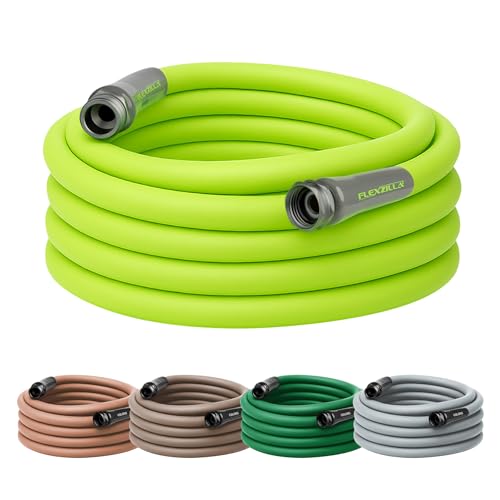
Flexzilla Garden Hose 5/8 in. x 50 ft.
Flexzilla has built a reputation for one specific claim: it stays flexible in cold weather when everything else stiffens. The 5/8-inch diameter is slightly narrower than the 3/4-inch models here, which reduces weight and water volume but maintains adequate flow for typical garden tasks. At $39.97, you are paying for the hybrid polymer material that resists kinking without resorting to expandable construction. The all-weather designation is not marketing fluff—it reflects owner reports of usable flexibility at temperatures where vinyl hose pipe turns rigid.
- Pro: Retains flexibility in cold conditions better than any vinyl alternative.
- Pro: Leak-free connections are a documented strength across owner reviews.
- Con: At $39.97 for a 5/8-inch hose, you pay a premium over similarly priced 3/4-inch models.
Skip this if your priority is maximum water volume for filling a pool or running soakers—go wider or shorter.
Heavy Duty Garden Hose 25ft – Non-Expandable
At $19.79 for 25 feet, this hose pipe delivers the best cost-per-foot in the entire roundup. The non-expandable hybrid construction means no shrinking, no latex degradation, and a straightforward layout-and-store experience. Male-to-female fittings make it compatible with standard sprinkler accessories and quick-connect systems. For apartment patios, small townhouse gardens, or anyone who just needs a short run from faucet to flower bed, length is overrated and this compact option makes total sense.
- Pro: Lowest price-per-foot ratio; 25 feet covers most small-space needs.
- Pro: Non-expandable design eliminates the shrink-over-time failure mode entirely.
- Con: 25 feet is genuinely limiting if your yard extends beyond that radius.
Skip this if you need to reach anything more than twenty paces from your water spigot—two hoses joined together never work as well as one adequate length.
Garden Hose 50 Ft with Nozzle – Durable & Leak-Free
This is the absolute lowest-priced 50-foot option at $18.99, and it includes a nozzle, which at that price represents meaningful added value. The 3/4-inch diameter delivers solid water volume for the length. The durability and leak-free claims are standard for any decent hose pipe, but at under nineteen dollars, expectations should be realistic: this is a functional replacement for a hose you would not trust with a five-year plan. For rental properties, seasonal use, or anyone who has lost track of how many budget hoses they have replaced, this is the easiest yes in the category.
- Pro: Cheapest 50-foot option with a bundled nozzle included.
- Pro: 3/4-inch diameter provides full water volume for the length.
- Con: At this price point, fitting quality and material thickness will inevitably trail premium competitors.
Skip this if you plan to drag the hose pipe across rocky terrain or leave it exposed to direct sun for extended periods.
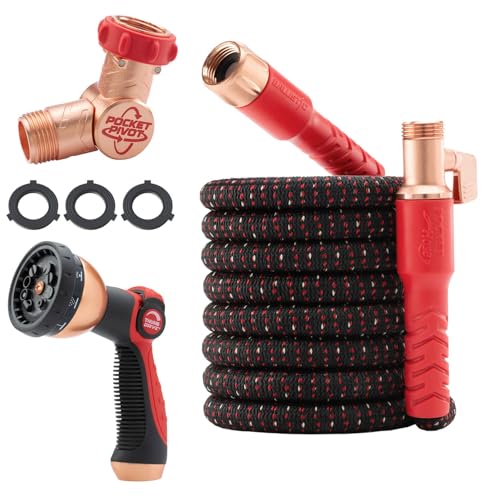
Pocket Hose Ballistic 50 FT Expandable Garden Hose
At $59.99, this is the premium option in the roundup and the name carries weight from years of television exposure and brand investment. The Ballistic line specifically targets abrasion resistance with a tougher outer shell than standard expandable hose pipe designs. No-kink is the core promise, and the compact storage when deflated is genuinely impressive—this coils into a space that a traditional 50-foot hose could not match. You are paying for a recognized brand, refined expandable technology, and the convenience of storing a full-length hose pipe in minimal space.
- Pro: Ballistic outer layer provides top-tier abrasion resistance for an expandable design.
- Pro: Best-in-class storage footprint for a full 50-foot length.
- Con: The $59.99 price is nearly triple the budget options; not all of it buys functional differences.
Skip this if you are sensitive to expandable design longevity—if latex shrinkage concerns you, a traditional hose pipe delivers more consistent performance over years.
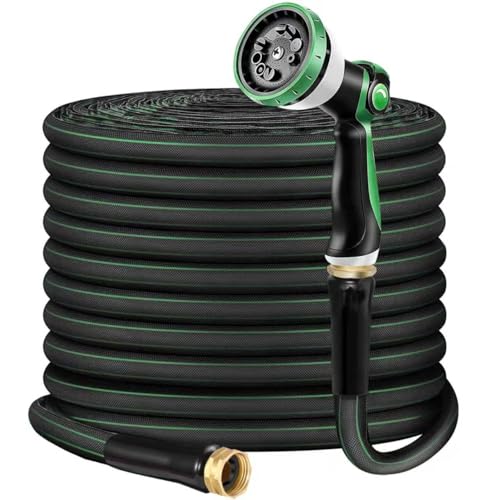
Torioweg Garden Hose 50FT – Lightweight with 10-Sprayer (Green)
Another $19.99 entry from Torioweg, this model pairs the same value positioning with a 10-sprayer nozzle and a distinctive green color that matches garden aesthetics. The burst-resistant and anti-kink claims target the two failure modes that destroy budget hose pipe purchases most frequently. The 3/4-inch specification matches the Flexi Hose at double the price, which is a notable spec alignment. For anyone wanting a complete watering solution under twenty dollars, this checks more boxes than its pricier siblings.
- Pro: 10-sprayer nozzle at $19.99 makes this the best complete-kit value available.
- Pro: Burst-resistant construction addresses a common low-price failure point.
- Con: The 10-function sprayer is unlikely to match a dedicated $10 nozzle for spray precision.
Skip this if you are particular about spray pattern quality or prefer a separate, replaceable nozzle that you can upgrade independently.
Buying Guide
Expandable vs. Traditional Hose Pipe
Expandable hose pipe designs use a latex inner tube that inflates with water pressure, compressing to a fraction of their working length for storage. The convenience is real—you can hang a 50-foot unit on a small hook. The tradeoff is lifespan: latex degrades with heat, UV, and freeze cycles. Traditional vinyl or polymer hose pipe does not shrink or grow, stores in a coil, and generally lasts longer under constant outdoor exposure. Choose expandable for storage-constrained situations; choose traditional for longevity and all-season reliability.
Fittings: Brass, Aluminum, and Why They Matter
The connection points on a hose pipe fail before the tube itself in most cases. Solid brass fittings are the industry standard for durability and corrosion resistance, though they carry weight and cost penalties. Aluminum fittings offer a lighter rust-resistant middle ground that appears at budget price points—worth noting because they are not as universally available at lower tiers. Plastic or zinc alloy connectors strip easily under wrench pressure and corrode within seasons. Whatever hose pipe you choose, check whether the fittings match your spigot thread and whether they are solid metal.
Diameter and Length: Matching Flow to Distance
Most residential hose pipe options come in 5/8-inch or 3/4-inch diameters. The 3/4-inch model moves noticeably more water, which matters if you are running soakers, filling containers, or watering large areas. The 5/8-inch trades volume for weight savings and lower cost. Length directly affects water pressure at the far end—a 50-foot hose will deliver lower flow than a 25-foot from the same spigot. If your garden extends beyond 50 feet, stacking two hoses costs fittings and pressure. Measure the actual distance from faucet to furthest watering point and buy that length, not longer.
Our Verdict
The Flexzilla Garden Hose earns the top-pick position for most buyers. The all-weather flexibility, leak-free connections, and proven kink resistance make it the hose pipe that requires the least maintenance and delivers the most consistent year-round performance. At $39.97, it is not the cheapest, but it is the one least likely to leave you frustrated mid-spring when your budget option cracks in a late frost.
The Torioweg Triple-Layer with Aluminum Fittings is the best budget pick at $19.99. You get a 50-foot triple-layer pipe with rust-resistant aluminum hardware—specifications that cost $10 or more extra elsewhere.
One condition under which another product wins: if storage space is your primary constraint, the Pocket Hose Ballistic justifies its premium price. No traditional hose pipe compresses the way a full-length expandable does, and the Ballistic shell mitigates the abrasion weakness that plagues lesser expandable models.
FAQ
What is the ideal hose pipe length for an average backyard?
Fifty feet covers the majority of suburban yard layouts from a side-mounted spigot. Measure the distance from your water source to your furthest planting area before purchasing—buying shorter saves money and preserves water pressure, while buying longer wastes both.
How long does an expandable hose pipe typically last?
With moderate use and indoor storage, expect two to four growing seasons before latex degradation causes reduced expansion or slow leaks. Leaving an expandable hose pipe outdoors in sun or cold accelerates failure significantly.
Does hose pipe diameter actually affect water pressure?
Diameter affects flow rate more than pressure itself. A 3/4-inch hose delivers more water volume at the same pressure than a 5/8-inch model, which matters for tasks requiring volume rather than spray force. Length is the bigger pressure thief.
Is it worth spending more on brass fittings for a hose pipe?
Yes, if you tighten connections regularly or live in a climate with hard water. Brass resists corrosion and thread stripping far better than zinc or aluminum at the same price, and replacing stripped fittings on a new hose defeats the purpose of buying quality hardware initially.