Key takeaways
- Pro: Flame Broiler adds true direct-heat searing that many budget pellet grills skip.
- Pro: The 5-pound hopper is adequate for typical cook durations under six hours.
- Con: No meat probe, so you are managing internal temperatures by hand.
A pellet grill and smoker is one of the most forgiving ways to bring real smoke flavor into your kitchen without the temperamental fire management of an offset stick burner. But that forgiving nature only holds if the machine underneath the hood delivers consistent temperatures, feeds pellets reliably, and stays within a useful range for the kinds of food you actually cook. Too many buyers lock onto raw square inches or a Wi-Fi badge and end up with a unit that swings twenty degrees on a cold night or starves mid-braise because the hopper was an afterthought.
The eight products lined up here span the full realistic decision tree: entry-level backyard units around the three-hundred-dollar mark, mid-range grills with meat probes and flame broilers, large-format smokers with serious hopper capacity, a flagship with over sixteen hundred square inches, and two pellet flavors that matter more to final taste than any controller upgrade. What separates a good pick from a mediocre one in this category comes down to temperature stability, build thickness, and whether the feature set matches how often you cook for crowds. This roundup compares published specs and aggregate owner feedback to help you narrow the field without second-guessing a three-figure purchase.
Our top picks




As an Amazon Associate we earn from qualifying purchases at no extra cost to you. Ratings are shown as listed on Amazon.
Quick Picks
| Product | Best for | Price |
|---|---|---|
| Pit Boss 440 Mahogany Series | First-time pellet grill buyers | $327.31 |
| Pit Boss 500 FB2 Series | Value seekers who want a meat probe | $339 |
| Traeger Woodridge | Large-format cooking with Wi-Fi control | $799 |
| Pit Boss 850 Navigator Series | Backyard cooks who cater events | $731.18 |
| Camp Chef Competition Blend Pellets | Complementing any pellet grill | $18.99 |
| recteq Flagship 1600 | Serious smokers and competition prep | $1349.99 |
| Brisk It Zelos-450 | Tech-forward cooks on a tight budget | $339.99 |
| Traeger Signature Blend Pellets | Everyday versatile smoke flavor | $19.99 |
How We Picked
We filtered this category on four criteria that consistently predict long-term owner satisfaction: temperature range and reported stability across it, usable cooking space relative to the unit’s footprint, pellet hopper capacity as a function of expected cook duration, and whether the controller features (meat probe, Wi-Fi, flame broiler) match a realistic use case rather than padding a spec sheet. Build quality signals like gauge thickness and lid seal design were weighed through recurring themes in owner feedback, and we flagged models whose strengths cluster in areas that matter only for niche cooking styles.
The 8 Best Pellet Grills/Smoker in 2026
Pit Boss 440 Mahogany Series Wood Pellet Grill & Smoker
This is the sensible starting point for someone upgrading from a gas grill who wants smoke flavor without learning a new discipline. The Flame Broiler lets you sear directly over an open flame, a feature that older Pit Boss entries lacked, and the LED controller keeps the learning curve shallow for a unit at this price. The 518 square inches of cooking space handles a full rack of ribs or a dozen burgers without crowding.
- Pro: Flame Broiler adds true direct-heat searing that many budget pellet grills skip.
- Pro: The 5-pound hopper is adequate for typical cook durations under six hours.
- Con: No meat probe, so you are managing internal temperatures by hand.
Skip it if you regularly cook for more than twelve people or need set-and-forget monitoring from your phone.
Pit Boss 500 FB2 Series Wood Pellet Grill & Smoker
For only about twelve dollars more than the 440 Mahogany, the 500 FB2 adds a meat probe and upgrades to an LCD controller with better readability in direct sunlight. Same cooking space, same flame broiler, same temperature window. Owners who upgraded from the 440 specifically mention the probe as the feature that changed their cook routine most, because it frees you from opening the lid repeatedly to check doneness.
- Pro: Meat probe eliminates guesswork on long smokes without lid-opening temperature loss.
- Pro: LCD controller reads clearly outdoors, an improvement over basic LED panels.
- Con: Hopper size remains at 5 pounds, which limits unattended cook duration.
Skip it if you plan to smoke whole packers overnight or want Wi-Fi monitoring; look at the Navigator instead.
Traeger Woodridge
The Woodridge targets buyers who want a larger cooking surface paired with app control but do not want to push into four-figure territory. At 860 square inches it comfortably fits two full racks plus a tray, and the Wi-Fi controller gives you temperature alerts and remote adjustments from inside the house. Traeger’s pellet ecosystem is its own argument here: the brand’s wood blends are widely available, which removes a supply-chain worry.
- Pro: Wi-Fi control lets you monitor and adjust without standing outside.
- Pro: 860 square inches is generous for the footprint, fitting large cuts and multiple racks.
- Con: No flame broiler, so searing is limited compared to Pit Boss models in this bracket.
Skip it if direct flame searing is non-negotiable or if you prefer a hopper you can fill once and walk away from for ten-plus hours.
Pit Boss 850 Navigator Series WiFi & Bluetooth Wood Pellet Grill & Smoker
This is the unit for someone who hosts often and cooks long. The 932 square inches of space and a massive 30-pound hopper mean you can load pellets once for a competition-style packer brisket and let the controller hold temp overnight. Wi-Fi and Bluetooth give two connectivity paths, and the meat probe pairs with the app for push alerts. The flame broiler rounds out the searing capability that larger units sometimes drop.
- Pro: 30-pound hopper enables unattended smokes well past the typical six-hour window.
- Pro: Dual Wi-Fi and Bluetooth connectivity provides redundancy if one signal drops.
- Con: The footprint is substantial and requires a dedicated patio or garage space.
Skip it if storage space or budget is the binding constraint; the 500 FB2 covers the same temperature range in a smaller package.
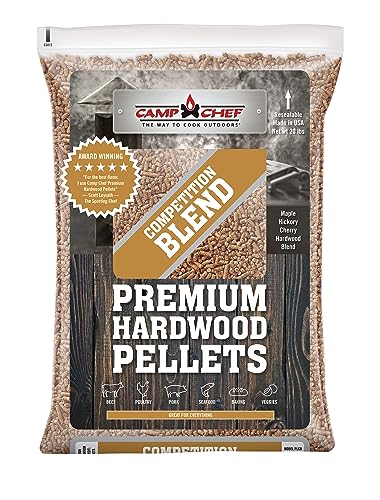
Camp Chef Competition Blend BBQ Pellets
Pellets are not interchangeable in practice, and flavor outcomes vary more between blends than between grill brands at similar quality tiers. Camp Chef’s Competition Blend is a popular middle-of-the-road choice that owners report as versatile enough for poultry, pork, and beef without the overpowering acridity some 100-percent hickory blends produce. The 20-pound bag fills most standard hoppers in a single pour, reducing refill frequency during long cooks.
- Pro: Blended profile works across proteins without needing separate pellet stocks per cook.
- Pro: Widely available in stores, eliminating the wait on specialty online orders.
- Con: Competition blends are generic by design and may lack distinctive character for purists.
Skip it if you are chasing a single-origin mesquite or fruitwood flavor profile; buy a dedicated bag for that cook.
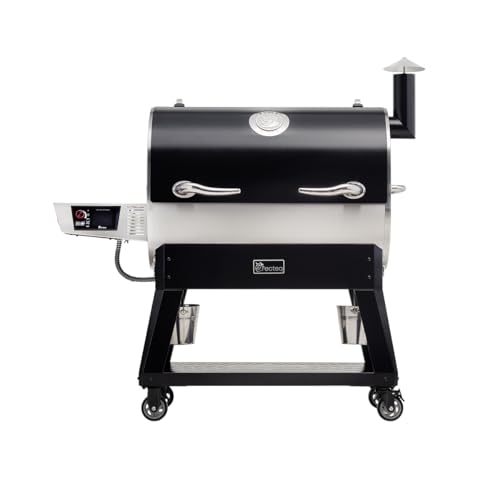
recteq Pellet Grill Smoker Flagship 1600
The Flagship 1600 occupies a different conversation from the other grills here. Its 1667 square inches of cooking space and 40-pound hopper put it in the range of units used for serious catering or competition prep. Wi-Fi integration across all controllers on the recteq line means you can manage multiple cook zones from one app. The build quality reflects the price, with thicker panels that owners consistently report as better at retaining heat in wind and cold.
- Pro: 1667 square inches handles quantities no other unit here can match.
- Pro: 40-pound hopper means you rarely think about refilling during long sessions.
- Con: The price is roughly double the Pit Boss Navigator with similar core features.
Skip it if you cook for eight or fewer on most occasions; the Navigator gives you 90 percent of the function at half the cost.
Brisk It Zelos-450 Wood Pellet Grill & Smoker
Brisk It is better known for offset stick burners, so the Zelos-450 signals a deliberate entry into the pellet segment with modern controller tech. At 450 square inches it targets apartment balconies, small patios, and first-time buyers who want Wi-Fi and even an AI-assisted cooking mode without spending five hundred dollars. The price is competitive with Pit Boss entry units but the feature list reads more like a mid-range grill.
- Pro: Wi-Fi and AI cooking modes at this price point are unusual in the market.
- Pro: Compact footprint makes it practical for smaller outdoor spaces.
- Con: Limited cook space rules out whole briskets or multiple racks simultaneously.
Skip it if you regularly smoke large-format cuts; the extra square inches on the Pit Boss 500 FB2 matter for packer brisket placement.
Traeger Grills Signature Blend 100% All-Natural Wood Pellets
Traeger’s own blend is engineered to complement the brand’s controllers and firebox geometry, which is a real advantage when you are already cooking on a Traeger grill like the Woodridge. The Signature Blend is described as all-natural hardwood and positioned as a do-everything option for grilling, baking, and smoking. The 18-pound bag is slightly smaller than the Camp Chef offering, meaning marginally more frequent refills on long cooks.
- Pro: Designed in tandem with Traeger grills for consistent burn behavior across the temperature range.
- Pro: All-natural composition avoids the binder-heavy pellets that produce bitter off-flavors at low temps.
- Con: 18-pound bag falls short of 20-pound competitors for hopper fill volume.
Skip it if your grill is from another brand and you are experimenting with pellet flavors outside the Traeger ecosystem; a dedicated single-origin bag will teach you more about what you actually like.
Buying Guide
Cooking Space and Hopper Capacity
Square inches alone is a misleading number. What matters is the layout of that space and whether the unit’s shape allows you to slide a full packer brisket between two racks without stacking. On hopper capacity, do the math on your longest cook. A typical pellet grill burns roughly one to two pounds per hour at low temperatures, so a five-pound hopper gives you three to five hours of runway before you need to refill. If you plan overnight smokes, treat twenty pounds as a realistic minimum.
Temperature Control and Connectivity
The 180°F to 500°F range is nearly universal across modern pellet grills, so the real question is stability within that range rather than its span. Controllers with meat probes give you closed-loop feedback that prevents overcooking on long smokes. Wi-Fi and Bluetooth add monitoring convenience and push alerts, but they do not improve temperature accuracy on their own. Prioritize the probe first, connectivity second.
Flame Broilers and Searing
Many pellet grills at every price tier cannot produce the direct radiant heat needed for a proper sear because the flame deflector plate covers the firepot. A flame broiler lets you retract or remove that plate and expose food to open flame, which is the single most practical upgrade if you grill burgers, steaks, or chicken thighs alongside your smokes. If you plan to sear only after a low-temp finish, a cast-iron skillet on the grate is a sufficient workaround.
Our Verdict
The Pit Boss 500 FB2 is the best overall pick for most buyers. It adds a meat probe over the 440 Mahogany for under twelve dollars more, keeps the flame broiler for searing, and its 518 square inches of space covers the vast majority of weekend cooking without demanding the patio real estate of the Navigator or the storage budget of a 1600-unit. For tight budgets, the Brisk It Zelos-450 delivers Wi-Fi and AI cooking features at a price that is competitive with units offering far less. And if your priority is feeding twenty-plus people at a single event, the recteq Flagship 1600 wins outright because no other unit here combines 1667 square inches with a 40-pound hopper and that build quality.
FAQ
Can I use any brand of pellets in any brand of grill?
Physically yes, because most pellets are the same diameter and feed the same way. In practice, burn rate, ash production, and flavor intensity vary by brand and blend, so a pellet engineered for one firebox geometry may produce slightly different heat curves or soot in another. Start with the manufacturer’s recommended blend and branch out from there.
Do Wi-Fi controllers actually improve cooking results?
No. Wi-Fi is a monitoring and convenience layer, not a temperature-control upgrade. The internal probe and PID algorithm determine how tightly the grill holds its set temperature. Wi-Fi lets you catch a problem from inside the house before the food is ruined, which is genuinely useful for overnight smokes, but it does not change the quality of the heat itself.
How long do pellets last during a typical cook?
Burn rate scales with set temperature. Expect roughly one pound per hour at 225°F for low-and-slow smoking and up to two or three pounds per hour at searing temperatures. Multiply that by your planned cook duration and match it to hopper capacity to know whether you need a mid-cook refill or can load once and walk away.
Is a meat probe worth paying extra for?
For cooks longer than three hours, yes. Opening the lid to check doneness drops internal temperature and extends total cook time, which is especially problematic in cold or windy weather. A probe with a digital readout gives you a real-time internal temperature target without lid-opening, and the difference in results on something like a packer brisket is immediately noticeable on your first comparison cook.