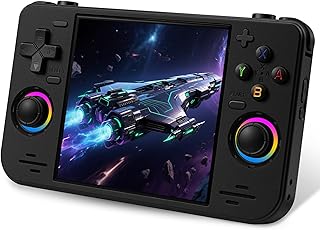
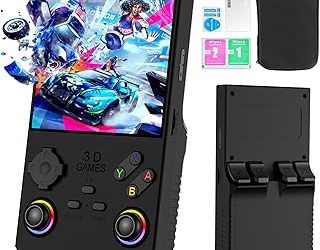
Key takeaways
- Stated stills resolution: 64MP class (interpolated maximum)
- Video: 2.7K, plus lower resolutions for longer clips
- Autofocus: yes, contrast-detection class
- Screen: 2-inch IPS, waist-level orientation
- Storage: 16GB card included, microSD class expansion
- Body: mini/compact, retro two-tone styling
The best retro style camera for most shoppers who want both photos and video is the Minolta MND70 Retro 48MP Wi-Fi 5K dual-lens model: it pairs a gold-and-brown classic body with a dual-lens setup, 5K video and wireless transfer, so it suits hybrid shooters who want vintage looks without giving up modern output. If you want that styling for the least money, the EJXHKNF Vintage Digital Camera is the budget pick, with autofocus, 2.7K video, a 2-inch waist-level screen and a 16GB card in the box. If the point of retro for you is a physical print rather than a file, the Polaroid Supercolor 635 is the one — a genuine 600-series instant camera with a built-in flash that turns every frame into a tangible photo.
This guide compares twelve currently listed film-inspired cameras on what actually changes how they feel to use: sensor size rather than megapixel marketing, lens type (fixed, digital zoom or true optical zoom), autofocus behaviour, video resolution and frame rate, and how easily each one travels. There are no per-product prices here, because listings move daily — instead you get spec classes, tier guidance, and the arithmetic behind card capacity, battery runtime and cost per print so you can decide before you buy.
Top 3 Picks
Best overall: Minolta MND70 Retro 48MP Wi-Fi 5K
The strongest all-rounder among the best retro style cameras here. A dual-lens design, 48MP stills, 5K Ultra HD video and Wi-Fi transfer in a gold-and-brown body that reads as vintage from across a room. It suits anyone who wants one camera for stills and clips rather than a novelty that only does one thing.
Best budget: EJXHKNF Vintage Digital Camera
Autofocus, 2.7K video and a 2-inch IPS waist-level screen at the entry tier, with a 16GB card included. It suits beginners, students and gift buyers who want the waist-level shooting posture and a screen they can actually frame with, without premium-tier spend.
Best for prints: Polaroid Supercolor 635
A real 600-series instant camera with built-in flash, using currently produced Polaroid 600 film. It suits people who want the ritual — one shot, one print, no memory card — and who accept roughly $2.50–$3.00 of film per photo.
Quick Comparison
| Product | Best for | Key specs (as listed) | Price tier |
|---|---|---|---|
| Minolta MND70 Retro 48MP Wi-Fi 5K | Overall photos + video hybrid | 48MP, 5K UHD video, dual lens, Wi-Fi, gold/brown body | Premium |
| ASTYPHER 4K 64MP 6X Optical Zoom Retro | Zoom reach and travel video | 64MP class, 4K video, 6x optical zoom, autofocus | Premium |
| Polaroid Supercolor 635 | Instant prints | 600-series instant film, built-in flash, vintage body | Premium |
| EJXHKNF Vintage Digital Camera | Budget all-rounder | 64MP class, 2.7K video, autofocus, 2″ IPS waist-level screen, 16GB card | Budget |
| Lacegre Vintage Digital Camera | First-time point-and-shoot | 2.7K video, retro point-and-shoot body, beginner-oriented | Budget |
| CHUZHAO (JOYTRIP) Vintage Mini TLR | TLR styling in a pocket | 1080P FHD video, mini TLR-style body, pocket size | Budget |
| CHUZHAO (Chocapt) Retro TLR Autofocus | Autofocus TLR-style vlogging | 1080P FHD video, 12MP photos, autofocus, mini vlogging body | Budget |
| Dienspeak Retro Mini Keychain | Always-on-you novelty | 2K HD video class, keychain form, 16GB card, brown | Budget |
| Maxmango D53 Vintage Digital Camera | Screenless deliberate shooting | 12MP stills, screenless, disposable-camera-inspired body | Mid-range |
| Klik Screen-Free Digital Camera | Staying present, no chimping | Screen-free design, retro photo output | Mid-range |
| Voxcamy Screen-Free 12MP | Kids, camp and shared use | 12MP stills, screen-free, reusable | Mid-range |
| Kodak Charmera Key Chain Blind Box | Collecting and gifts | Keychain camera, random style blind box | Mid-range |
How We Chose
Selection started from the listings themselves, not from brand prestige. Every product here had to fit the retro or film-inspired design brief in its own right — visible styling cues such as waist-level screens, TLR bodies, screenless operation, two-tone panels or instant-film hardware — and had to be a real, currently listed item rather than a discontinued model that only appears in archive pages. From there we sorted by category fit: is this a stills camera, a hybrid, an instant camera, or a novelty you carry on a keyring? Those are different jobs, and mixing them produces bad recommendations.
The second filter was use case and upgrade path. Budget-tier cameras were judged on whether they give a beginner the essentials — autofocus or fixed-focus simplicity, a usable screen, a card in the box, video that is at least 1080p — and on whether they leave the buyer with a clear next step. Mid-range and premium entries were judged on whether they add something the cheaper options genuinely cannot: optical zoom, higher-resolution video, Wi-Fi transfer, or a film format that no digital camera can imitate. Specs are taken from published listing information and manufacturer material for the brands involved; where a figure is a class description rather than a confirmed number, we say so. Nothing here is a claim of testing, and no product was borrowed, benchmarked or measured by us.
1. EJXHKNF Vintage Digital Camera – Best for budget all-rounders
The EJXHKNF Vintage Digital Camera is for the shopper who wants one small camera doing a bit of everything — stills, short clips, and a little retro theatre — without paying premium-tier money. Its unusual combination at this tier is autofocus plus a 2-inch IPS screen mounted in the waist-level style of a mid-century twin-lens camera. That screen position matters more than it sounds: framing from the waist keeps your shoulders square and your face out of the camera, which is the posture that makes candid party and street photos look natural rather than posed.
The listing states 64MP stills, 2.7K video, autofocus, a 2-inch IPS display, a 16GB card in the box and a compact mini body. Treat the 64MP figure as an interpolated maximum rather than a native array — that is normal for the class, and the arithmetic in the How to Choose section shows why a small sensor plus a huge megapixel number is not free quality. In practice you will get cleaner indoor results dropping to a mid-resolution stills mode.
- Stated stills resolution: 64MP class (interpolated maximum)
- Video: 2.7K, plus lower resolutions for longer clips
- Autofocus: yes, contrast-detection class
- Screen: 2-inch IPS, waist-level orientation
- Storage: 16GB card included, microSD class expansion
- Body: mini/compact, retro two-tone styling
Where it earns its place is convenience. The card is included, so the camera is usable the moment it arrives; the screen is large enough to check focus and exposure, which screenless cameras in this list cannot offer; and autofocus removes the main frustration of fixed-focus budget cameras, namely soft faces in indoor light. Video at 2.7K is generous for the tier — most budget rivals stop at 1080p — and the waist-level screen makes handheld clips steadier because you brace the camera against your body rather than holding it out at arm’s length.
Pros
- Autofocus at a budget price, which is the single biggest usability upgrade
- 2-inch IPS waist-level screen for candid framing
- 2.7K video, above the 1080p norm for entry-tier cameras
- 16GB card included, so no immediate extra purchase
- Small enough to live in a jacket pocket
Cons
- 64MP is an interpolated mode; genuine detail is far below the number
- Small sensor means noisy low-light photos and limited dynamic range
- No optical zoom — any zooming is digital and costs sharpness
- Built-in battery and fixed lens mean no upgrade path within the body
Against the nearest alternative, the Lacegre Vintage Digital Camera, the EJXHKNF wins on framing hardware: the Lacegre is a straightforward retro point-and-shoot, which is simpler but gives you a conventional rear screen and a more generic look. Against the Chocapt CHUZHAO Retro TLR Autofocus, the EJXHKNF trades the TLR silhouette for a bigger, easier screen. If styling is the priority, the TLR shape wins; if you want the easiest camera to actually operate, this one does.
2. Minolta MND70 Retro 48MP Wi-Fi 5K – Best for hybrid photo and video
The Minolta MND70 is the pick for someone who wants one retro-styled camera that handles stills and serious video without compromise. Minolta is a heritage optics name, and this model leans into that with a gold-and-brown body and a dual-lens arrangement — the kind of twin-eye front panel that reads as vintage immediately. It suits travellers, content creators and family documentarians who would otherwise carry a modern mirrorless camera and wish it looked less like a computer.
The listing states 48MP stills, 5K Ultra HD video, a dual-lens system and Wi-Fi connectivity. That Wi-Fi point is the quiet advantage: transferring to a phone without pulling the card turns a retro camera from a novelty into something you actually post from. 5K video is above what most cameras in this roundup offer, and it gives you headroom to crop to 1080p or 4K in editing while keeping detail.
- Stated stills resolution: 48MP class
- Video: 5K Ultra HD, plus lower resolutions and frame rates
- Lens: dual-lens system
- Wireless: Wi-Fi transfer to phone or tablet
- Finish: gold and brown retro body
- Positioning: premium tier, hybrid stills and video
In use, the appeal is that nothing about the workflow feels like a downgrade. You get modern file handling, wireless transfer and high-resolution video, wrapped in a body that does not look like every other camera on the table. The dual-lens design suggests the camera covers more than one field of view, which is genuinely useful for travel: a wider view for architecture and interiors, a narrower one for people and details. For a shopper comparing this against a plain 1080p retro camera, the difference is not cosmetic — it is the difference between clips you can edit and clips you can only watch.
Pros
- 5K video is the highest-resolution capture in this roundup
- Wi-Fi transfer removes the card-swapping step
- 48MP stills give useful cropping room for prints and posts
- Dual-lens design covers more than one field of view
- Genuine heritage brand with strong retro design language
Cons
- Premium tier pricing — the most expensive digital option here alongside the ASTYPHER
- High-resolution modes eat card space fast (see the storage table below)
- Retro body styling rarely includes the manual control dials enthusiasts expect
- Sensor is still small compared with an interchangeable-lens camera, so low light is a limit
Its closest rival is the ASTYPHER 4K 64MP with 6x optical zoom. The ASTYPHER wins on reach — real optical zoom beats any digital trick — while the Minolta wins on video resolution and on the two-tone finish that most buyers picture when they think retro. If you shoot distant subjects, choose the ASTYPHER; if you shoot people, interiors and short films, the MND70 is the better fit.
3. Dienspeak Retro Mini Digital Camera Keychain – Best for carrying everywhere
The Dienspeak Retro Mini is for the person who wants a camera on their keys, not in a bag. It is a keychain-format digital camera in brown, listed with 2K HD video and a 16GB card included. It suits commuters, students and anyone who keeps missing small moments because their phone is buried in a pocket — the value here is proximity, not image quality.
What the listing states is straightforward: keychain form factor, 2K HD video class, 16GB card bundled, retro brown finish. The included card matters more than it does on a full-size camera, because the whole point of a keychain camera is that it works with zero preparation. There is no bag, no strap, no charger ritual — it is already with you.
- Format: keychain, attaches to keys or a bag zip
- Video: 2K HD class
- Stills: small-sensor class, sized for screen viewing
- Storage: 16GB card included
- Finish: retro brown
- Best use: candid moments, notes-to-self, social clips
Strengths are about friction, not fidelity. A camera you always have produces photos a camera you plan to use does not. The retro finish also means it does not look like a gadget — it reads as a trinket, which lowers the social cost of pulling it out. The 16GB card holds thousands of small stills and well over an hour of compressed video, so you will not be managing storage weekly.
Pros
- Genuinely pocketable — keychain form means it is never left behind
- 16GB card included, so it works straight out of the packaging
- 2K video class is respectable for a device this small
- Retro brown finish suits the film-camera aesthetic
- Low-stakes enough to use in situations where a big camera feels intrusive
Cons
- Output is for screens, not prints — do not expect enlargements
- No meaningful low-light ability
- Shaky handheld video without stabilisation
- Small controls and a tiny screen make framing approximate
Its nearest alternative is the Kodak Charmera keychain camera. The Charmera is sold as a blind box, so you get a surprise colourway and a collectible angle, while the Dienspeak is a known quantity in a fixed brown finish. If you want a predictable everyday carry, take the Dienspeak; if you enjoy the unboxing and the collecting, the Charmera is more fun. Both sit in the same “carry it, don’t plan it” category.
4. Maxmango D53 Vintage Digital Camera – Best for screenless deliberate shooting
The MaxMango D53 is for shooters who want the disposable-camera experience without the waste. It is a 12MP screenless vintage-styled digital camera — no rear display, no instant review, no chimping. It suits anyone who finds that a screen changes how they behave: you shoot, you move on, and you look at the results later.
The listing states 12MP stills, a screenless design and a body inspired by disposable film cameras. That 12MP figure is worth pausing on, because it is a realistic native-class number rather than an interpolated headline. In the arithmetic later in this guide, 12MP JPEGs run around 4MB each, so a 16GB card holds roughly 3,700 of them — you can shoot freely without watching the counter.
- Stills: 12MP, native-class rather than interpolated
- Display: none — screenless operation
- Design: disposable-camera-inspired retro body
- Storage: microSD class
- Best use: parties, travel, everyday documentary shooting
- Tier: mid-range
The strength of screenless shooting is behavioural. Without review, you stop deleting, stop re-shooting and stop interrupting the moment. The trade-off is technical: you have no histogram, no exposure preview and no way to confirm focus, so you learn to trust the framing and accept that some frames will miss. That is exactly how disposable cameras worked, and for many people it is the reason the photos feel more alive.
Pros
- Screenless design removes the biggest distraction in modern photography
- 12MP output is honest and printable at normal sizes
- Small file sizes mean very long shooting sessions per card
- Disposable-camera styling makes it a conversation piece
- Simple enough to hand to anyone
Cons
- No preview means no second chance on focus or framing
- Fixed lens limits what you can shoot
- Harder to learn on, since you get no immediate feedback
- Mid-range price for what is technically a simple camera
Its nearest alternative is the Klik Screen-Free Digital Camera. Both deliberately remove the screen; the MaxMango leans into the disposable-camera look and states 12MP, while Klik positions its camera around the “stay present” idea with a more minimalist design. If you want the disposable aesthetic, take the D53. If you want the philosophy without the plastic-camera look, take the Klik.
5. Polaroid Supercolor 635 Instant Camera – Best for instant prints
The Polaroid Supercolor 635 is for the buyer who wants a photograph they can hand to someone. It is a genuine 600-series instant camera with a built-in flash, and it uses currently manufactured Polaroid 600 film, so it is not a display piece — it still works. It suits gift-givers, party hosts, wedding-table planners and anyone who values the physical object over the file.
The listing states compatibility with 600-series instant film and a built-in flash. Two facts matter here. First, 600-series cameras need 600 film specifically, because the battery that powers the camera lives in the film pack — i-Type film is designed for Polaroid’s newer cameras and will not power a 600 body. Second, the prints are small squares: the 600 format image area is about 79mm × 79mm inside a larger frame.
- Format: Polaroid 600-series instant film (battery in the film pack)
- Flash: built-in, automatic in low light
- Print size: roughly 79mm × 79mm image area within a larger bordered frame
- Exposures per pack: 8
- Development time: roughly 10–15 minutes, protected from light
- Tier: premium (film cost is ongoing)
The economics are the part most buyers underestimate. A single pack holds 8 exposures, and multi-packs are the usual way to buy. If a pack runs roughly $20–$25 and a five-pack roughly $95–$110, that is about $2.40–$3.10 of film per photo before you consider a dud frame. A 40-shot evening is therefore a meaningful line item. The upside is that each frame is a finished object: no editing, no printing, no cloud storage, no cable.
Pros
- Real instant prints with no printer or phone involved
- 600 film is still in production, so the camera remains usable
- Built-in flash handles indoor parties without accessories
- Instant social object — people keep these
- Classic Polaroid silhouette that needs no explanation
Cons
- Highest running cost of anything in this guide, at roughly $2.50–$3.00 per shot
- Eight frames per pack, so you ration shots
- No video at all — this is a stills-only device
- Film is temperature-sensitive; Polaroid recommends shooting within roughly 13–28°C for consistent colour
There is no direct alternative in this list, because nothing else produces a physical print. The closest comparison is the ASTYPHER or Minolta if you want more frames per session: those cost nothing per shot after the card is bought. Buy the Supercolor 635 when the print itself is the product; buy a digital retro camera when volume matters.
6. Kodak Charmera Key Chain Digital Camera Blind Box – Best for collectors and gifts
The Kodak Charmera is for the buyer who wants the fun of a blind box wrapped around a camera. It is a keychain digital camera sold in random styles, so you do not know which colourway you get until it arrives. It suits gift-givers, collectors of small cameras and anyone buying for a teenager who cares as much about the object as the images.
The listing states a keychain digital camera in a random-style blind box. Kodak’s name carries weight in retro imaging, and the blind-box format is the point: part of the product is the surprise. Functionally it is a carry-everywhere camera in the same class as the Dienspeak, with output sized for phone screens and social posts rather than printing.
- Format: keychain camera
- Purchase model: blind box, random style
- Output: small-sensor stills and short clips, screen-sized
- Brand: Kodak
- Best use: gifts, collecting, everyday novelty shooting
- Tier: mid-range
The strength is that it works as both a camera and a small collectible. Blind boxes encourage trading and completing a set, which is a different kind of enjoyment from photography. The Kodak branding also makes it an easy gift: it is recognisable, it is small, and it does not require the recipient to know anything about cameras.
Pros
- Blind-box format makes it a genuine gift and a collectible
- Kodak name gives instant retro credibility
- Keychain size means it is always with the owner
- Low commitment — no film, no developing, no printing
- Fun for younger users who like the unboxing experience
Cons
- You cannot choose the colourway — that is deliberate but not for everyone
- Image quality is novelty-grade, not archival
- Small sensor struggles indoors
- Mid-range pricing for a novelty-class camera
Against the Dienspeak Retro Mini, the trade is certainty versus surprise. The Dienspeak is a known brown keychain camera with a stated 16GB card included and 2K video class; the Charmera is a Kodak-branded mystery box. Buyers who want to know exactly what they are getting should take the Dienspeak. Buyers shopping for a gift, or who enjoy collecting, should take the Charmera.
7. ASTYPHER 4K 64MP 6X Optical Zoom Retro Vintage Autofocus – Best for zoom reach
The ASTYPHER is for the traveller who keeps wanting to get closer. It is the only camera in this roundup with a stated 6x optical zoom, paired with 4K video, a 64MP stills class and autofocus, all in a retro-styled body. It suits safari-goers, concert attendees, city-break travellers and parents photographing school sports from the sidelines.
Optical zoom is the key specification, and it is worth explaining why. Digital zoom crops the frame and enlarges pixels; optical zoom moves glass, so the sensor receives a genuinely magnified image. A 6x optical zoom at the long end gives you roughly the same framing as a 6x crop while retaining full sensor resolution — a real, measurable advantage that no amount of megapixels can substitute for.
- Zoom: 6x optical (the only true optical zoom in this list)
- Video: 4K class
- Stills: 64MP class (interpolated maximum, as with most budget-sensor cameras)
- Focus: autofocus
- Styling: retro vintage body
- Tier: premium
Combined with autofocus, the zoom makes this the most versatile camera here for subjects you cannot approach. It also handles video well: 4K capture lets you crop to 1080p in editing and still keep detail, which effectively extends your reach further. For anyone whose shooting involves distance — architecture across a river, wildlife at a fence line, a child on a stage — this is the camera that solves the actual problem.
Pros
- 6x optical zoom is a genuine optical advantage nothing else here matches
- 4K video gives editing headroom
- Autofocus paired with zoom makes distant subjects achievable
- 64MP stills mode offers heavy cropping flexibility
- Retro body keeps the classic look
Cons
- Premium tier — the same bracket as the Minolta MND70
- 64MP is interpolated, so the true detail ceiling is lower than the number suggests
- Zoom lenses on small sensors lose light at the long end, hurting low-light shots
- Larger and heavier than the keychain and mini cameras here
Its nearest rival is the Minolta MND70. The Minolta offers a dual-lens design and 5K video, while the ASTYPHER offers 6x optical zoom and 4K. If your subjects are close and your priority is video resolution, the MND70 is the better camera. If your subjects are far away, the ASTYPHER is the only sensible choice in this list.
8. Lacegre Vintage Digital Camera – Best for first-time point-and-shoot buyers
The Lacegre Vintage Digital Camera is aimed squarely at beginners: a 2.7K retro point-and-shoot with a familiar shape and a simple operating model. It suits someone buying their first dedicated camera, a parent wanting something simpler than a phone, or a shopper who wants the retro look without a learning curve.
The listing states 2.7K video and a retro point-and-shoot body designed for beginners. The advantage of a point-and-shoot format is that it is self-explanatory: hold it, frame on the rear screen, press the shutter. There is no mode confusion, no lens to choose, no exposure triangle to learn. 2.7K video is above the entry-tier norm and gives reasonably detailed clips without the storage cost of 4K.
- Video: 2.7K class
- Stills: compact-sensor class
- Body: retro point-and-shoot, compact
- Audience: beginners and casual users
- Storage: microSD class
- Tier: budget
What makes it a good first camera is that nothing about it requires knowledge. The retro styling also means it does not feel like a compromise purchase — beginners often want something that looks intentional, and a point-and-shoot in vintage dress does that job. It is light enough to carry all day and simple enough that a child can use it with brief instruction.
Pros
- Simple, self-explanatory operation for absolute beginners
- 2.7K video is generous at the budget tier
- Compact retro body that is easy to carry
- Low cost of entry with a clear upgrade path later
- Good candidate for a first camera for a younger user
Cons
- No autofocus advantage over the EJXHKNF, which offers it at the same tier
- Fixed lens with no optical zoom
- Small sensor limits indoor and evening shooting
- Fewer features than similarly priced options in this roundup
Compared with the EJXHKNF Vintage Digital Camera, the Lacegre is the simpler camera: it does not offer the waist-level 2-inch IPS screen and its autofocus position is less clearly stated. If you want the easiest possible start, either works; if you want the waist-level framing style and a bundled card, the EJXHKNF is the more complete package at the same tier. The Lacegre’s appeal is its uncomplicated point-and-shoot familiarity.
9. CHUZHAO (JOYTRIP) Vintage Mini Digital Camera – Best for TLR styling in a pocket
The CHUZHAO Vintage Mini, listed under the JOYTRIP brand, is for the shopper who wants the twin-lens-reflex silhouette in the smallest possible package. It is a mini TLR-style retro point-and-shoot with 1080P FHD video, designed to slip into a pocket. It suits stylists, students and anyone who treats the camera as part of the outfit as much as a tool.
The listing states a TLR-style body, mini and pocket-sized dimensions, and 1080P Full HD video. The TLR reference is a design cue rather than a mechanical one: a real twin-lens reflex has two lenses, one for viewing and one for taking, and a waist-level viewfinder. A mini digital interpretation borrows the look — the stacked lens panel, the boxy vertical body — to deliver that mid-century feel at pocket scale.
- Video: 1080P Full HD
- Stills: compact-sensor class
- Body: mini TLR-style, pocket-sized
- Design cues: stacked lens panel, vertical retro silhouette
- Storage: microSD class
- Tier: budget
Its strength is presence. A camera that looks like this gets used, and it gets commented on. Pocket dimensions mean it comes along without a bag, and 1080P video is entirely adequate for social clips. For a budget-tier camera, the styling is doing the heavy lifting, and that is a legitimate reason to buy — photography you enjoy is photography you do.
Pros
- Distinctive TLR styling that stands out from generic point-and-shoots
- Pocket-sized, so it travels without a bag
- 1080P FHD video is fine for social sharing
- Budget tier keeps the commitment low
- Strong gift and accessory appeal
Cons
- 1080P only — no 2.7K or 4K option
- No stated autofocus, so expect fixed-focus-class behaviour
- Very small controls and a small screen
- Small sensor limits low-light results
Its nearest alternative is the Chocapt CHUZHAO Retro TLR Autofocus, which shares the TLR family look but states 12MP photos, 1080P FHD video and autofocus, plus a vlogging-oriented body. If you want the styling with autofocus for video, the Chocapt version is the better buy. If you want the smallest possible TLR-style body for photos and short clips, this JOYTRIP-listed mini is the more pocketable of the two.
10. Klik Screen-Free Digital Camera – Best for staying present
The Klik Screen-Free Digital Camera is for the buyer who wants a camera that deliberately refuses to show you the photo. There is no rear display, so you shoot and move on. It suits people who feel that reviewing every frame breaks the moment — parents at a school play, guests at a wedding, travellers who want to look up rather than down.
The listing states a screen-free design with retro photo output. The concept is simple and increasingly popular: by removing the display you remove the loop of shoot, check, delete, re-shoot. What is left is the older discipline of trusting your framing. Files are still digital and still transferable, so nothing is lost except the interruption.
- Display: none — screen-free by design
- Output: retro-styled digital photos
- Operation: point, frame, shoot, review later
- Design intent: presence over preview
- Tier: mid-range
The strength of this approach is behavioural rather than technical, and it genuinely changes how a session feels. Without a screen you shoot more freely, take more risks and come home with frames you would have deleted on the spot. It also makes the camera simpler to hand to a child, since there is nothing to fiddle with.
Pros
- Screenless design keeps you in the moment
- No chimping means more spontaneous frames
- Simple enough for children and non-photographers
- Retro aesthetic matches the philosophy
- Digital files, so no film cost or development
Cons
- No exposure preview, histogram or focus confirmation
- Harder to learn composition without feedback
- Mid-range price for a deliberately minimal feature set
- Some frames will inevitably miss
Its closest alternative is the MaxMango D53, which also removes the screen but leans harder into the disposable-camera look and states 12MP stills. The Klik is the more design-led, minimalist option; the D53 is the more explicitly disposable-inspired one. Buyers who want a stated megapixel figure should take the D53; buyers who want the cleaner, more contemporary take on screenless shooting should take the Klik.
11. Voxcamy Screen-Free Digital Camera – Best for camp and shared use
The Voxcamy Screen-Free Digital Camera is a reusable 12MP retro camera positioned for summer camp and similar shared settings. It suits parents equipping a child for camp, schools and clubs that need a durable simple camera, and anyone who wants a screenless camera they can hand around without worrying about it.
The listing states 12MP stills, a screen-free design, reusable operation and a retro body aimed at summer-camp use. The word “reusable” is doing real work: the alternative in a camp bag is usually a disposable film camera, which is single-use and produces prints you have to develop. A reusable digital camera with a stated 12MP output gives you hundreds of frames, no developing, and no risk of the camera being thrown away after a week.
- Stills: 12MP
- Display: screen-free
- Reusability: multiple sessions, no consumables
- Use case: summer camp, kids, shared group settings
- Storage: microSD class
- Tier: mid-range
The practical advantage over disposable cameras is arithmetic: a disposable typically gives you around 27 frames, while a 12MP digital camera on a modest card gives you thousands. Even accounting for the camera’s higher upfront cost, the per-photo cost falls below a dollar within the first card. For a camp session, that is a straightforward win, and there is no waste plastic to throw away.
Pros
- 12MP output is print-capable at standard sizes
- Reusable — no film, no developing, no single-use waste
- Screenless design suits children and shared use
- Much lower cost per photo than disposable film
- Retro look that younger users actually like
Cons
- Screenless means no way to check photos until later
- Fixed lens with no zoom
- Compact-sensor low-light limitations
- Mid-range price versus a basic disposable’s upfront cost
Its nearest alternative is the Klik Screen-Free Digital Camera. Both remove the display; the Voxcamy is explicitly framed around camp and children with a stated 12MP output, while the Klik is positioned more around adult mindfulness and design. If the camera is going into a child’s bag, the Voxcamy’s framing and stated resolution make it the easier recommendation. If it is for you, the Klik is the more considered object.
12. CHUZHAO (Chocapt) Retro TLR Autofocus – Best for autofocus TLR-style vlogging
The CHUZHAO Digital Camera, listed under the Chocapt brand, is for the buyer who wants the TLR look plus autofocus and a vlogging-friendly design. It states 12MP photos, 1080P FHD video and autofocus in a portable vintage mini body. It suits younger creators, vloggers starting out, and anyone who wants the retro silhouette without giving up reliable focus.
The listing states 1080P Full HD video, 12MP photos, autofocus and a mini vintage TLR-style body aimed at vlogging. Autofocus is the differentiator here: among the budget-tier cameras in this roundup, only this one and the EJXHKNF clearly state it, and autofocus matters most when you are filming yourself or filming people who move.
- Video: 1080P Full HD
- Stills: 12MP
- Focus: autofocus
- Body: mini vintage TLR style, portable
- Positioning: vlogging and casual content creation
- Tier: budget
For vlogging, 1080P is the sensible resolution: it uploads fast, edits on a phone without complaint, and keeps file sizes manageable. The arithmetic in the storage table below shows 1080P at typical bitrates gives you well over two hours on a 16GB card, which is far more than a mini camera’s battery will manage in one session. Autofocus plus a small body makes handheld self-filming practical, even without stabilisation.
Pros
- Autofocus at the budget tier — a real usability advantage
- 12MP stills are honest and printable at normal sizes
- TLR-style retro body with genuine character
- 1080P FHD is efficient for phone editing and upload
- Compact enough for handheld vlogging
Cons
- 1080P only — no 2.7K or 4K
- No optical zoom
- Small sensor struggles in dim indoor light
- Handheld footage will show shake without stabilisation
Its nearest alternative is the JOYTRIP-listed CHUZHAO Vintage Mini TLR, which shares the styling but does not state autofocus and offers 108