Key takeaways
- Target systems: Decide the ceiling you need. Simple Linux units handle NES through PS1 beautifully, while Snapdragon-class Android handhelds are required for smooth Nintendo 64, Dreamcast, PSP, and light GameCube play.
- Screen quality: An IPS or OLED panel with proper aspect-ratio scaling matters far more than raw resolution. Look for 3.5-inch and larger displays if you plan long sessions, and prioritize integer scaling for crisp pixel art.
- Controls and ergonomics: Hall-effect analog sticks resist drift, and well-spaced shoulder buttons make emulators like PSP and N64 far more playable. Test grip comfort against your hand size before committing.
- Operating system: Linux firmware such as EmuELEC boots fast and stays simple, while Android opens streaming, storefronts, and heavier emulators at the cost of setup complexity. Pick based on how much tinkering you enjoy.
- Battery and storage: A 4000mAh-plus cell keeps you playing for hours, and expandable microSD support lets you build a library without deleting favorites. Preloaded game counts are marketing noise, so judge on hardware instead.
What's inside
Emulation handhelds have exploded into a genuinely crowded category in 2026, and the gap between a frustrating toy and a pocket-sized retro powerhouse has never been wider. Whether you want to relive 8-bit and 16-bit classics on a bus ride or push into demanding PlayStation Portable and Dreamcast libraries, there is now a device built for your exact budget and ambition. The tricky part is cutting through thousands of near-identical listings to find the models that actually deliver smooth frame rates, comfortable controls, and firmware you will not fight with.
This guide narrows the field to the standout emulation handhelds worth buying this year, spanning cheap Linux pocket consoles all the way up to Android-powered devices that chew through 3D systems. We break down what separates a capable emulator from a marketing gimmick, then walk through the top picks so you can match the right hardware to the games you actually plan to play.
As an Amazon Associate we earn from qualifying purchases.


⚡ Save on Your Next PC — Amazon Prime
Prime members get fast free shipping on the systems above, plus early access to Prime Day & Black Friday PC deals. New members get a 30-day free trial.
Watch: Best Emulation Handheld 2026 — Video Review
How to Choose an Emulation Handheld
- Target systems: Decide the ceiling you need. Simple Linux units handle NES through PS1 beautifully, while Snapdragon-class Android handhelds are required for smooth Nintendo 64, Dreamcast, PSP, and light GameCube play.
- Screen quality: An IPS or OLED panel with proper aspect-ratio scaling matters far more than raw resolution. Look for 3.5-inch and larger displays if you plan long sessions, and prioritize integer scaling for crisp pixel art.
- Controls and ergonomics: Hall-effect analog sticks resist drift, and well-spaced shoulder buttons make emulators like PSP and N64 far more playable. Test grip comfort against your hand size before committing.
- Operating system: Linux firmware such as EmuELEC boots fast and stays simple, while Android opens streaming, storefronts, and heavier emulators at the cost of setup complexity. Pick based on how much tinkering you enjoy.
- Battery and storage: A 4000mAh-plus cell keeps you playing for hours, and expandable microSD support lets you build a library without deleting favorites. Preloaded game counts are marketing noise, so judge on hardware instead.
The Best Emulation Handhelds Reviewed
Retroid Pocket 5
The Retroid Pocket 5 is the enthusiast’s sweet spot, pairing a Snapdragon 865 processor and Adreno 650 GPU with a gorgeous 5.5-inch 1080p touchscreen. That combination handles Dreamcast, PSP, and most Nintendo 64 titles at full speed, and its Android 13 base means Wi-Fi 6 cloud streaming and modern storefronts are one tap away. With 8GB of RAM and 128GB of storage, it is the model to buy if you want a single device that scales from Game Boy to serious 3D emulation.
Retroid Pocket Flip 2
For players who want that Snapdragon-class muscle in a clamshell they can pocket safely, the Retroid Pocket Flip 2 delivers a stunning 5.5-inch AMOLED 1080p display, hall-effect sticks that shrug off drift, and a 5000mAh battery for marathon sessions. The folding form factor protects the screen and makes it the most travel-friendly high-end pick, all while retaining the horsepower to run demanding libraries smoothly.
R36s (2026)
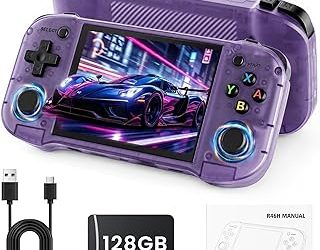
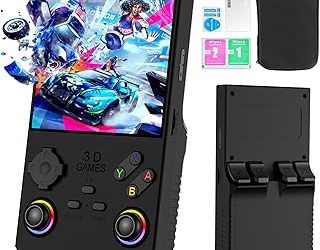
If you just want cheap, cheerful retro fun, the R36s remains the budget champion. Its 3.5-inch IPS screen, Linux system, and support for more than 20 emulators cover everything from arcade boards through PlayStation without asking much of your wallet. It is not built for 3D-heavy systems, but for 2D classics and casual play it punches dramatically above its price.
RG56PRO
The RG56PRO carves out the large-screen budget niche with a roomy 5.5-inch IPS panel, an open Linux system, and a 5000mAh battery bundled with a 128GB card. The generous display makes 16-bit sprites and PS1 3D pop, and it is a smart choice for anyone who finds smaller handhelds cramped but does not want to jump to Android pricing.
RG43H Pro
Sitting between budget and midrange, the RG43H Pro leans on an RK3562 chip and dual EmuELEC and RGBOX systems to give tinkerers flexibility. A 4.3-inch screen, 4000mAh battery, and HDMI TV output make it a versatile pick that plays comfortably in the hand and hooks up to a television when friends come over, covering PS1-era systems and below with ease.
Frequently Asked Questions
Do these handhelds come with games already installed?
Many advertise tens of thousands of preloaded titles, but those counts are unreliable and legally murky. Treat the hardware as the real purchase, and plan to load your own legally obtained ROMs and BIOS files onto a microSD card for the best and most stable experience.
What is the difference between Linux and Android models?
Linux handhelds like the R36s boot straight into a game menu, stay simple, and sip battery. Android devices such as the Retroid Pocket 5 add streaming, app stores, and the power for heavier emulators, but they require more setup and cost more. Your tolerance for tinkering should guide the choice.
Can any of these run PSP or GameCube games?
PSP runs smoothly on Snapdragon-class devices like the Retroid Pocket 5 and Flip 2, and those same handhelds manage many N64 and Dreamcast titles. Full-speed GameCube remains demanding even for flagship handhelds, so temper expectations and test individual games rather than assuming universal compatibility.
How long do the batteries actually last?
Real-world runtime depends on the systems you emulate and screen brightness. Lightweight 2D emulation on a 5000mAh device can stretch past six hours, while heavy 3D titles at full brightness drain faster. Models with larger cells like the RG56PRO and Flip 2 give you the most comfortable margin.
Final Thoughts
The right emulation handheld comes down to how far up the console ladder you want to climb. If you crave flagship 3D performance and streaming, the Retroid Pocket 5 or Flip 2 justify their price, while the R36s and RG56PRO prove you can enjoy decades of classics for very little money. Match the device to your target systems, prioritize a good screen and comfortable controls, and you will have a pocket arcade that keeps you happily playing throughout 2026.