Key takeaways
- HDMI 2.1: Required for 4K at 120Hz from current consoles and useful for modern gaming PCs.
- VRR: Synchronizes the screen with changing game frame rates, reducing tearing and uneven motion.
- ALLM: Automatically switches to a lower-latency picture mode when a game starts.
- Input lag: Look for approximately 10 milliseconds or less at 4K and 120Hz.
- HDR tone mapping: A TV that handles bright highlights well can look better than one that simply advertises a higher peak brightness.
- Port count: Four HDMI 2.1 inputs on LG models are convenient; some competing TVs provide only two.
The best 65 inch OLED TV for most movie-and-gaming rooms is the LG C5 OLED, while the Samsung S95F is the stronger pick for bright rooms and wide-color HDR, and the LG G5 is the premium choice when peak brightness and wall mounting matter most.
Our top picks



As an Amazon Associate we earn from qualifying purchases at no extra cost to you. Ratings are shown as listed on Amazon.
Quick comparison: the best 65-inch OLED choices
| Model | Best for | Gaming features | HDR and room behavior | Typical market range |
|---|---|---|---|---|
| LG C5 OLED | Best all-round value | 4K at 120Hz, VRR, HDMI 2.1, Dolby Vision gaming | Strong contrast and HDR; works best in moderate light | Usually $1,500–$2,300 |
| LG G5 OLED | Bright rooms and premium movie viewing | 4K at 165Hz, VRR, HDMI 2.1, Dolby Vision gaming | Higher peak brightness; excellent control of reflections | Usually $2,300–$3,500 |
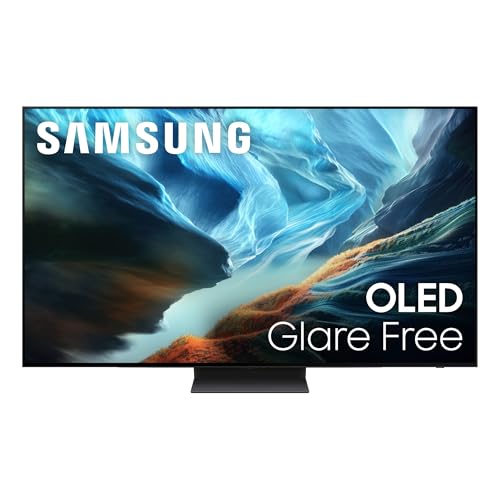
| Samsung S95F OLED | Bright rooms and vivid HDR | 4K at 165Hz, VRR, HDMI 2.1, FreeSync support | Very bright QD-OLED color; no Dolby Vision | Usually $2,000–$3,200 |
| Samsung S90F OLED | Colorful gaming at a lower price | 4K at 144Hz, VRR, HDMI 2.1 | Excellent contrast and color; panel brightness can vary by size | Usually $1,400–$2,300 |
| Sony BRAVIA 8 II | Film-first picture processing | 4K at 120Hz, VRR, HDMI 2.1 | Natural motion and accurate HDR; fewer high-refresh inputs | Usually $2,000–$3,000 |
| Panasonic Z95B | Home-cinema enthusiasts | 4K at 144Hz, VRR, HDMI 2.1 | High-end HDR and strong built-in audio | Usually $2,500–$3,500 |
Which 65-inch OLED should you buy?
Choose the LG C5 for the safest all-round decision
The LG C5 is the easiest recommendation when the TV must handle films, console gaming, PC gaming, and everyday streaming without a major weakness. Its OLED panel delivers perfect black levels, excellent shadow detail, and fast pixel response. Four HDMI 2.1 ports are useful if you have two consoles, a gaming PC, and an eARC soundbar or AV receiver.
It supports 4K gaming at 120Hz, variable refresh rate, ALLM, Dolby Vision gaming, and a broad range of gaming controls. The C5 is not as bright as the top premium OLED models, so it is a better fit for a room where you can close blinds or reduce direct sunlight during daytime viewing.
Choose the LG G5 when brightness and wall mounting come first
The LG G5 adds a brighter OLED panel and is particularly attractive for HDR films, sports, and games in rooms with substantial daylight. Its extra brightness does not change OLED’s perfect blacks, but it makes bright highlights—sunlight, explosions, neon signs, and reflections on water—more forceful.
The G5 is also designed around flush wall mounting. Its built-in stand arrangement and premium construction make it less convenient if you plan to place the TV on a narrow media cabinet, so check the included mounting and stand accessories before buying. Its 165Hz capability mainly benefits PC owners; PlayStation 5 and Xbox Series X games top out at 120Hz.
Choose the Samsung S95F for a bright room and wide color
The Samsung S95F uses QD-OLED technology, which can produce particularly rich colors at high brightness. It is a strong match for a room with daylight, especially when colorful HDR games and movies are more important than absolute cinema accuracy.
Its anti-reflection treatment can reduce distracting light reflections, but it cannot eliminate sunlight shining directly onto the screen. The major compatibility question is Dolby Vision: Samsung TVs do not support Dolby Vision. Netflix, Apple TV+, and some 4K Blu-ray content may therefore use HDR10 or HDR10+ instead. If your movie collection or streaming setup specifically depends on Dolby Vision, choose an LG, Sony, or Panasonic model.
Choose the Samsung S90F for high-value gaming
The S90F offers the core benefits of OLED—near-instant response, perfect blacks, and excellent contrast—at a lower price than flagship models. It is a compelling choice for PC gamers who want 4K at up to 144Hz, and for console players who want a responsive 120Hz display without paying for premium brightness.
Check the exact 65-inch version before purchase because Samsung’s panel technology can vary by size and production region. That variation can affect brightness and color volume. The S90F also lacks Dolby Vision, just like Samsung’s other OLED televisions.
Choose the Sony BRAVIA 8 II or Panasonic Z95B for movies
The Sony BRAVIA 8 II is aimed at viewers who prioritize film-like processing, natural skin tones, smooth motion, and good upscaling of ordinary HD content. It is a better choice than a high-refresh gaming flagship if most viewing consists of films, broadcast television, and streaming shows.
The Panasonic Z95B is a premium home-cinema option with strong HDR presentation, filmmaker-focused picture modes, and more capable built-in audio than most thin OLED TVs. It makes sense when adding a soundbar is difficult. Sony and Panasonic generally offer fewer HDMI 2.1 gaming inputs than LG, so count your devices before buying.
Match the TV to room brightness
| Room condition | What matters most | Best fit |
|---|---|---|
| Dark or controlled room | Shadow detail, accurate HDR, motion processing | LG C5, Sony BRAVIA 8 II, Panasonic Z95B |
| Moderately bright room | Brightness, good reflection handling, strong contrast | LG G5, Samsung S95F, LG C5 |
| Large windows or daytime sports | Peak brightness and anti-reflection performance | LG G5 or Samsung S95F |
| Direct sunlight on the screen | Light control matters more than model choice | Use blinds or curtains; no OLED performs ideally in direct sun |
OLED televisions remain vulnerable to visible reflections because their black pixels can turn gray when strong room light falls on the panel. Before upgrading the TV, consider blinds, angled lamps, or moving the screen away from a window. These changes can improve perceived contrast more than a modest increase in peak brightness.
Choose the correct viewing distance
A 65-inch 4K OLED is most versatile from roughly 6.5 to 9 feet away. At 6 to 7 feet, the image feels immersive and fine 4K detail is easier to appreciate. At 8 to 9 feet, it feels more relaxed for broadcast content and long gaming sessions. Beyond about 10 feet, the benefit of 4K becomes harder to see, and a larger screen may be more appropriate.
A useful calculation is based on horizontal viewing angle. A 65-inch 16:9 screen is approximately 56.7 inches wide. At an 8-foot distance, its horizontal viewing angle is:
2 × arctangent(56.7 ÷ (2 × 96)) = approximately 33 degrees.
That is an immersive but comfortable angle for movies and games. At 6 feet, the angle increases to approximately 43 degrees, which suits cinematic gaming but may make low-quality video look more distracting. If your seating distance is 10 feet or more, consider an 77-inch model instead of moving a 65-inch TV closer.
Gaming features that actually matter
- HDMI 2.1: Required for 4K at 120Hz from current consoles and useful for modern gaming PCs.
- VRR: Synchronizes the screen with changing game frame rates, reducing tearing and uneven motion.
- ALLM: Automatically switches to a lower-latency picture mode when a game starts.
- Input lag: Look for approximately 10 milliseconds or less at 4K and 120Hz.
- HDR tone mapping: A TV that handles bright highlights well can look better than one that simply advertises a higher peak brightness.
- Port count: Four HDMI 2.1 inputs on LG models are convenient; some competing TVs provide only two.
The bandwidth requirement explains why HDMI 2.1 matters. Uncompressed 4K at 120Hz with 10-bit RGB requires roughly 40 gigabits per second before additional protocol overhead. HDMI 2.0’s practical limit is generally insufficient for that combination, while HDMI 2.1 supports it with an appropriate Ultra High Speed cable. Use a certified cable no longer than necessary, and connect the console directly to the TV if an older receiver interrupts 4K/120Hz or VRR.
Recommended settings for movies and gaming
For films
- Start with Filmmaker Mode, Cinema, or a similarly accurate picture preset.
- Set color temperature to Warm rather than Cool; this is closer to the intended white point.
- Disable excessive motion smoothing for films, or use the lowest custom setting if you dislike judder.
- Keep dynamic contrast low or off unless the room is very bright.
- Use OLED care features such as pixel shifting and automatic screen protection.
For games
- Enable Game Optimizer or the manufacturer’s low-latency gaming mode.
- Turn on VRR on both the TV and console or PC.
- Use 4K at 120Hz for PlayStation 5 and Xbox Series X when supported by the game.
- On PC, choose 10-bit output and RGB or the correct full-range setting when the graphics card and TV allow it.
- Leave static HUD elements on screen for reasonable sessions, but vary content and use the TV’s OLED protection features to reduce long-term image-retention risk.
Final buying decision
Buy the LG C5 if you want the most balanced 65-inch OLED for movies and gaming. Choose the LG G5 when the room is bright or you want the strongest premium HDR presentation with four high-speed gaming ports. Choose the Samsung S95F for vivid QD-OLED color and effective reflection handling, provided Dolby Vision is not important. The Samsung S90F is the value gaming option, while the Sony BRAVIA 8 II and Panasonic Z95B make more sense for viewers who put cinematic processing and home-theater presentation ahead of maximum refresh rate.