Key takeaways
- Choose warm sound for bass-driven music and films, but look for an equalizer if you also listen to acoustic recordings.
- Choose balanced sound for podcasts, classical music, vocals, and long sessions where excessive bass becomes tiring.
- Prioritize ANC for constant low-frequency noise such as engines and trains. Ear-tip seal matters almost as much as the electronics for higher-frequency voices.
- Prioritize microphones if you take calls outdoors. Look for multiple microphones, wind-noise processing, sidetone, and a transparency mode that lets you hear your own voice naturally.
- Prioritize comfort over small specification differences. An imperfect seal reduces bass, weakens ANC, and can make microphones work harder to separate your voice from background sound.
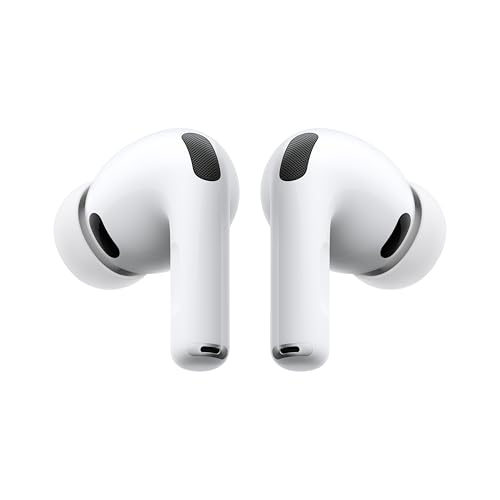
The best wireless earbuds for most listeners are the Sony WF-1000XM5, while the Bose QuietComfort Ultra Earbuds are the stronger pick for maximum noise cancellation, the Technics EAH-AZ80 for detailed sound, and the Apple AirPods Pro 2 for seamless iPhone use.
There is no single winner because earbuds trade sound tuning, ANC strength, call quality, comfort, battery life, codecs, and device integration differently. The right choice depends more on your phone, commuting environment, preferred music, and tolerance for frequent charging than on one headline specification.
Our top picks


As an Amazon Associate we earn from qualifying purchases at no extra cost to you. Ratings are shown as listed on Amazon.
Best wireless earbuds at a glance
| Model | Sound profile | ANC and microphones | Rated earbud battery | Codecs and compatibility | Best for |
|---|---|---|---|---|---|
| Sony WF-1000XM5 | Warm, adjustable, strong detail | Excellent ANC; good call quality with voice processing | Up to 8 hours with ANC, depending on codec and settings | SBC, AAC, LDAC; Android and iPhone | Best all-rounder, especially for Android |
| Bose QuietComfort Ultra Earbuds | Energetic bass and spacious presentation | Among the strongest ANC options; clear microphones in suitable conditions | Up to about 6 hours | SBC, AAC; broad Bluetooth compatibility | Air travel and loud commutes |
| Technics EAH-AZ80 | Balanced, spacious, highly adjustable | Good ANC; strong voice pickup | Up to about 7 hours with ANC | SBC, AAC, LDAC; Android and iPhone | Music detail and multipoint connections |
| Sennheiser Momentum True Wireless 4 | Refined, lively, powerful bass control | Good ANC; respectable call performance | Up to about 7 hours with ANC | SBC, AAC, aptX Adaptive, aptX Lossless; best with Android | Codec flexibility and serious listening |
| Apple AirPods Pro 2 | Balanced, clear, naturally tuned | Very effective ANC and transparency; excellent Apple call integration | Up to about 6 hours with ANC | AAC, SBC; best features require Apple devices | iPhone, iPad, and Mac owners |
| Google Pixel Buds Pro 2 | Clean, slightly warm, app-adjustable | Strong ANC and useful voice features | Up to about 8 hours with ANC | SBC, AAC; strongest integration with Android | Pixel phones and lightweight comfort |
Battery figures are manufacturer estimates under stated conditions. Volume, call use, temperature, spatial audio, multipoint, and high-bitrate codecs can reduce actual runtime. A charging case usually adds two to three full recharges, but case capacity is not the same as continuous listening time.
Head-to-head: which earbuds fit your priorities?
For the best overall balance: Sony WF-1000XM5
Sony’s WF-1000XM5 combines effective adaptive ANC, a compact design, rich sound, and unusually broad Android codec support. Its LDAC mode can deliver more audio data than standard SBC or AAC, although the audible benefit depends on the recording, phone, app, and fit. The sound is slightly warm by default, with enough equalizer control to reduce bass or add treble.
It is the most versatile recommendation for someone who uses Android, listens to several genres, and wants one pair for travel, work, and exercise. The foam-style ear tips improve isolation for some ears but can feel less comfortable than silicone tips during long sessions. Call quality is good in quiet and moderate environments, but no tiny earbud microphone is immune to wind or heavy traffic.
For the quietest commute: Bose QuietComfort Ultra Earbuds
The Bose QuietComfort Ultra Earbuds are designed around powerful noise reduction. They are particularly convincing with low-frequency airplane engines, buses, and air-conditioning noise. Their sound is energetic, with substantial bass that suits electronic music, hip-hop, and action films; the Bose app can reshape it for listeners who prefer a flatter balance.
The compromise is battery life: roughly six hours per charge is competitive but not class-leading. They are also physically larger than some rivals, so fit should be treated as a decision criterion rather than an afterthought. Choose them when ANC matters more than the smallest case or longest runtime.
For detailed music listening: Technics EAH-AZ80
The EAH-AZ80 presents vocals and instruments with a spacious, controlled character. It offers a useful equalizer, stable multipoint support, and LDAC for compatible Android devices. Its ANC is effective for everyday noise, although Bose is usually the safer choice when maximum isolation is the main goal.
These earbuds make sense for listeners who switch between a phone and laptop and want sound quality without giving up practical controls. Their larger housings may suit people who prefer a secure fit, but smaller ears should check the shape carefully.
For codec flexibility: Sennheiser Momentum True Wireless 4
The Momentum True Wireless 4 is the codec specialist in this group. It supports common SBC and AAC connections plus higher-quality aptX variants on compatible Android hardware. That makes it attractive to listeners whose phone and music service support those formats, though codec support alone does not guarantee better sound than a well-tuned AAC connection.
Its presentation is lively and full, with useful equalizer controls. ANC, transparency, and microphones are competitive, but the strongest reasons to buy it are its sound and Android codec options rather than class-leading isolation or the longest battery.
For Apple devices: AirPods Pro 2
AirPods Pro 2 is the easiest recommendation for people already using an iPhone, iPad, or Mac. Fast pairing, automatic device switching, spatial-audio features, Find My integration, and reliable transparency mode are more valuable in daily use than a long codec list. The earbuds use AAC and SBC rather than LDAC or aptX, but Apple devices are optimized around that ecosystem.
They offer a balanced sound signature, strong ANC, excellent transparency, and comfortable silicone tips in multiple sizes. Android users can use them as Bluetooth earbuds, but many ecosystem features disappear, so another model usually provides better value outside Apple hardware.
For lightweight Android comfort: Google Pixel Buds Pro 2
Pixel Buds Pro 2 are small and light, making them a strong option for listeners who dislike bulky earbuds. They provide a warm, accessible sound, adjustable controls, ANC, transparency mode, and especially smooth integration with Pixel phones. Battery life is competitive, with up to roughly eight hours under specified ANC conditions.
They are less compelling if you need advanced Bluetooth codec choices or use iOS. For a Pixel owner who values comfort, voice features, and simple controls over audiophile codec support, they are a well-matched choice.
How to choose by sound, ANC, and calls
- Choose warm sound for bass-driven music and films, but look for an equalizer if you also listen to acoustic recordings.
- Choose balanced sound for podcasts, classical music, vocals, and long sessions where excessive bass becomes tiring.
- Prioritize ANC for constant low-frequency noise such as engines and trains. Ear-tip seal matters almost as much as the electronics for higher-frequency voices.
- Prioritize microphones if you take calls outdoors. Look for multiple microphones, wind-noise processing, sidetone, and a transparency mode that lets you hear your own voice naturally.
- Prioritize comfort over small specification differences. An imperfect seal reduces bass, weakens ANC, and can make microphones work harder to separate your voice from background sound.
Battery life: calculate what you actually need
Suppose you commute 90 minutes each way, work eight hours, and exercise for 45 minutes. That is 11.75 hours of possible listening in one day. You may not listen continuously, so assume 70 percent usage: 11.75 × 0.70 = 8.2 hours. Earbuds rated for six hours with ANC would require a case top-up during the day, while an eight-hour model might finish the day with little margin.
For this pattern, select earbuds rated for at least eight hours with ANC, or choose a model with fast charging. A claim such as “60 minutes from a 10-minute charge” can be more useful than two additional hours of maximum case capacity if you regularly forget to charge overnight.
Compatibility decision matrix
| Your situation | Best direction | Reason |
|---|---|---|
| iPhone, iPad, and Mac | AirPods Pro 2 | Automatic switching, spatial audio, Find My, and strong transparency mode |
| Android phone with LDAC support | Sony WF-1000XM5 or Technics EAH-AZ80 | High-bitrate Bluetooth option plus broad app controls |
| Android phone with aptX support | Sennheiser Momentum True Wireless 4 | Uses compatible aptX modes where the phone and settings allow them |
| Pixel phone and small ears | Google Pixel Buds Pro 2 | Compact fit and deep Google integration |
| Frequent flights or loud public transport | Bose QuietComfort Ultra Earbuds | Noise reduction is the primary strength |
| Phone plus work laptop | Technics EAH-AZ80 or Sony WF-1000XM5 | Multipoint makes switching between two active devices easier |
Settings that improve daily performance
Start with the smallest ear tip that creates a seal without pressure. Run the manufacturer’s fit test if available, then compare ANC with music paused. If outside voices sound sharp or bass disappears, try a different tip before changing equalizer settings.
For calls, disable high-bitrate codec modes if your connection becomes unstable, especially in crowded wireless environments. LDAC and aptX Lossless can consume more bandwidth and may use a more aggressive connection-quality setting. For commuting, an adaptive or standard quality mode is often the better practical choice.
Use transparency mode when walking near traffic, but keep volume moderate. Enable multipoint only if you need it; maintaining two connections can slightly reduce battery life and occasionally complicate automatic switching. Finally, keep firmware and the companion app updated, since ANC behavior, multipoint reliability, and call processing can change through software.
Final recommendation
Buy the Sony WF-1000XM5 if you want the most balanced package across sound, ANC, battery, codec support, and device compatibility. Choose Bose for the strongest noise cancellation, Technics for detailed music and multipoint use, Sennheiser for Android codec flexibility, AirPods Pro 2 for Apple ecosystems, and Pixel Buds Pro 2 for lightweight Pixel-focused comfort. The best wireless earbuds are the ones whose fit, connection features, and real-world battery schedule match how you listen every day.