Key takeaways
- For lap use, prioritize a dense, evenly distributed wire layout over maximum wattage.
- For shoulder-to-foot coverage, check the finished dimensions rather than the advertised category name.
- Keep the controller near the edge of the throw so it does not sit underneath your body.
- A higher wattage does not automatically mean more comfortable warmth; poor wire spacing can create hot and cool patches.
The best electric throws combine low running costs with even heat, a soft washable fabric, and safety controls that match your room and how long you sit there; for most people, a 50–100W single-zone throw with a removable controller and two- to four-hour auto-shutoff is the best fit.
Our top picks
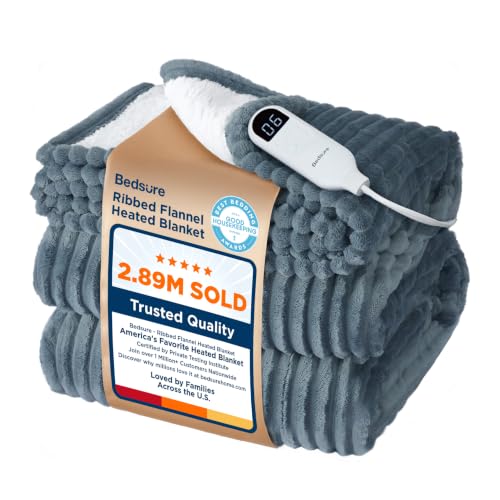


As an Amazon Associate we earn from qualifying purchases at no extra cost to you. Ratings are shown as listed on Amazon.
Best electric throws by use case
| Your situation | Best specification | Why it fits | Typical price range |
|---|---|---|---|
| Desk gaming or working | 50–80W, fleece or microplush, 2–4 hour shutoff | Lightweight, quiet, inexpensive to run, and easy to keep over your legs | Usually $30–$60 |
| Cold living room or drafty apartment | 80–120W, sherpa-backed, five or more heat settings | More insulation and higher output help retain warmth between heating cycles | Usually $45–$90 |
| Two people sharing a sofa | Large throw or heated blanket with two heating zones | Separate controls prevent one person from overheating while the other stays cold | Usually $60–$120 |
| Overnight or extended use | Low-temperature mode, clear timer, overheat protection, and a long auto-shutoff | Reduces the chance of leaving the throw powered indefinitely | Usually $50–$100 |
| Travel or occasional use | Compact single-zone throw, detachable controller, 50–75W | Easier to fold, store, and clean than a larger heated blanket | Usually $30–$60 |
What “heating zones” really means
Most standard electric throws have one heating zone: a network of wires warms the entire usable surface from a single controller. That is normally enough for one person sitting in a chair or gaming at a desk. A throw does not need the independent foot and torso zones found on some heated mattress pads because it is covering a smaller area.
Two-zone control becomes useful when the product is large enough for two people. Each zone should have its own controller rather than merely offering two switches for the same heating circuit. Independent controls let one person use a low setting while the other uses medium or high. If a listing mentions “dual control” but does not clearly state that the zones operate independently, treat that as a specification to verify before buying.
How to judge heat coverage
- For lap use, prioritize a dense, evenly distributed wire layout over maximum wattage.
- For shoulder-to-foot coverage, check the finished dimensions rather than the advertised category name.
- Keep the controller near the edge of the throw so it does not sit underneath your body.
- A higher wattage does not automatically mean more comfortable warmth; poor wire spacing can create hot and cool patches.
Fabric softness, warmth, and practical comfort
Fleece is usually the lightest option and slides easily over clothing. It dries relatively quickly after washing, making it a sensible choice for a desk chair or shared family room. Microplush feels smoother and more substantial, but it can retain more heat even when the power is off. Sherpa-backed throws are the warmest-feeling choice because the deep pile traps air; they are also bulkier and may take longer to dry.
Look for a fabric described as machine washable only when the controller and power lead detach completely. Before washing, inspect the connector for bent pins, fraying, moisture, or heat discoloration. Never wash a controller, and do not reconnect it until the throw is fully dry. A removable controller also makes storage safer because the cable is less likely to be sharply folded with the blanket.
Softness is partly a personal preference, but room temperature changes the best choice. In a heated bedroom or office, a thinner fleece throw may prevent overheating. In a cold room where you are trying to heat yourself rather than the whole space, sherpa or microplush can let you use a lower electrical setting.
Energy use: the real cost is usually small
Electric throws generally use far less power than portable room heaters. A simple calculation shows why. Suppose a throw is rated at 80W and you use it for four hours:
80W ÷ 1,000 × 4 hours = 0.32 kWh.
At an electricity rate of $0.18 per kWh, that session costs about $0.06. Used every evening for 30 days, the estimate is:
0.32 kWh × 30 × $0.18 = $1.73 per month.
Actual consumption can be lower because thermostatic controllers cycle the heating elements instead of drawing full power continuously. The calculation is still useful for comparing products: a 120W throw running for the same four hours would use 0.48 kWh, or about $0.09 at that rate. Check your electricity bill for the local kWh price, since the cost difference is larger in high-rate regions.
Safety features that matter more than extra heat settings
Choose a throw with recognized electrical safety certification for your market, such as UL or ETL certification in the United States or an equivalent approved marking where you live. Certification is not a guarantee against misuse, but it indicates that the electrical design has been evaluated against applicable standards.
- Automatic shutoff: Two to four hours suits desk and sofa use. A longer timer can be useful overnight only if the product is specifically designed and labeled for that purpose.
- Overheat protection: The controller should reduce or cut power if an abnormal temperature is detected.
- Detachable controls: Essential for safe washing and easier storage.
- Clear temperature levels: Low, medium, and high are easier to manage than vague symbols or an imprecise dial.
- Visible controller indicators: Helpful in a dark gaming room, especially when the controller has a timer or low-heat mode.
- Strong cable connection: The connector should stay secure without being forced or bent.
Do not use an electric throw folded, bunched, tucked tightly under your body, or covered by heavy objects. Folds can concentrate heat and reduce the ability of the fabric to release it. Replace the throw if you find damaged wiring, scorch marks, a hot connector, a persistent electrical smell, or sections that heat much more than others.
Choosing the right size for your room and seat
A throw should warm the person, not leave a large powered area hanging on the floor. For a desk chair, a compact throw around 50 by 60 inches is often easier to manage than a full blanket. It can cover your lap and legs without catching on armrests or chair wheels. A larger throw around 60 by 70 inches offers better shoulder-to-foot coverage on a sofa but needs more room for safe positioning.
Measure the seat before buying. If the chair is narrow, a very wide sherpa throw can bunch at the sides. If you use a reclining chair, leave enough slack for the footrest to move without pulling the cable. Keep the power lead away from walkways and do not run it beneath a rug.
Decision checklist before buying
- Measure your main seat. Select a size that covers you while remaining clear of the floor and moving parts.
- Select the fabric for the room. Choose fleece for lightness, microplush for balanced softness, or sherpa for maximum insulation.
- Set a practical power target. Choose 50–80W for personal lap heating and roughly 80–120W for a larger, more insulated throw.
- Confirm the zone layout. One zone is sufficient for one user; choose independent dual zones for two people.
- Check the timer and safety details. Confirm automatic shutoff, overheat protection, detachable controls, and recognized certification.
- Plan cleaning and storage. Make sure the controller disconnects, the care label permits machine washing, and the throw can dry completely.
Our overall pick category
For most homes, the strongest choice is a medium-sized, single-zone fleece or microplush throw rated around 80W, with at least three heat levels, a detachable controller, overheat protection, and a two- to four-hour automatic shutoff. It gives enough warmth for a sofa or gaming chair without the bulk, cost, or management problems of a full heated blanket.
Move up to a sherpa-backed 100–120W design if the room is genuinely cold or poorly insulated. Choose a dual-zone large throw only when two people will use it regularly; otherwise, the extra controls and larger heated area add cost without improving one-person comfort.
Frequently asked questions
Can an electric throw replace a room heater?
It can reduce how much heating you need while you are sitting still, but it does not warm the room or protect exposed hands, feet, and furniture. Use it as personal heating rather than a replacement for safe whole-room heating when the room itself is dangerously cold.
Is a higher wattage always better?
No. Higher wattage may provide faster warm-up, but insulation, wire spacing, thermostat behavior, and fabric make a larger difference to comfort. A well-designed 80W throw can feel more even and pleasant than a poorly distributed 120W model.
Can you sleep with an electric throw?
Only if the manufacturer explicitly permits that use and provides suitable low-heat and shutoff controls. Otherwise, use it to pre-warm the bed and switch it off before sleeping. People with reduced heat sensitivity should seek medical advice before using heated products.