
Key takeaways
- Step 1: Check the SSD Length: Look at the model number of your M.2 SSD. It will usually say something like “2280” or “22110”. The last two or three digits indicate the length in millimeters (e.g., 80 mm or 110 mm). Ensure your heatsink matches this exact length.
- Step 2: Measure the Width with Calipers: Using a digital caliper, measure the widest part of the heatsink assembly. This is usually the metal clasp or screws holding the top and bottom plates together. It must be under 25 mm (0.98 inches) to slide into the slot without scratching the sides of the bay.
- Step 3: Measure the Bottom Clearance: Measure the thickness of the thermal pad and metal plate that sit underneath the SSD’s green circuit board. This bottom layer must not exceed 2.45 mm (0.096 inches), otherwise the SSD will not sit flush against the mounting screw post.
- Step 4: Check the Total Stack Height: Assemble the SSD, thermal pads, and heatsink completely. Measure the total thickness from the very bottom of the assembly to the highest point of the cooling fins. Ensure this number is safely under 11.25 mm (0.442 inches).
What's inside
Upgrading your PlayStation 5 storage is one of the most practical home-tech improvements you can make. However, because the console is often housed inside media consoles, credenzas, or tight shelving units, thermal management is a critical consideration. If your console cannot dissipate heat efficiently, it will throttle performance or, worse, shut down in the middle of a session.
To keep your system running cool, Sony requires any added M.2 NVMe SSD to be equipped with a heatsink. But the expansion bay is highly compact, and buying the wrong size can prevent your console cover from closing properly. As a home and furniture editor who specializes in integrating high-performance electronics seamlessly into living spaces, I have put together this comprehensive guide to the exact measurements, tolerances, and configurations required to fit a heatsink inside the PlayStation 5 SSD slot.
As an Amazon Associate we earn from qualifying purchases at no extra cost to you. Product prices and availability are accurate as of the date shown and are subject to change.


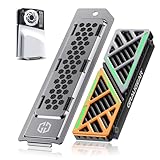
![GRAUGEAR PS5 SSD Heatsink Cover, M.2 NVMe PS5 Heatsink, Shuttle Shaped Design, Heat Dissipation with Heat Pipe Cooler and Aluminum Fin for NVMe M2 PCIe 4.0 [G-PS5HS04] (PS5)](https://m.media-amazon.com/images/I/51GgjhTeQkL._SL160_.jpg)
The Short Answer
The PlayStation 5 expansion slot accommodates an M.2 SSD and heatsink combination with a maximum width of 25 mm (0.98 inches), a maximum length of 110 mm (4.33 inches), and a maximum total thickness/height of 11.25 mm (0.442 inches).
Crucially, this total height measurement is split relative to the SSD’s circuit board (PCB). From the center of the SSD card, there can be no more than 2.45 mm (0.096 inches) of clearance underneath, and no more than 8.0 mm (0.314 inches) of clearance above. If your heatsink exceeds any of these parameters, you will not be able to screw the metal expansion slot cover back on, which can disrupt the console’s internal pressure-based airflow system.
Standard Sizes
To ensure your drive fits perfectly, you must understand both the standard sizes of the SSDs themselves and the physical boundaries of the heatsink enclosure. Most consumer SSDs use the 2280 form factor (22 mm wide by 80 mm long), but the heatsink added on top increases these dimensions significantly.
The table below outlines the strict physical limitations of the PS5 SSD bay compared to standard SSD and heatsink dimensions:
| Dimension Parameter | Maximum Allowed (Metric) | Maximum Allowed (Imperial) | Typical Heatsink Range |
|---|---|---|---|
| Total Width | Up to 25 mm | 0.98 inches | 23 mm to 24.8 mm |
| Total Length | Up to 110 mm | 4.33 inches | 80 mm to 110 mm (2280 is standard) |
| Total Height (Thickness) | Up to 11.25 mm | 0.442 inches | 7 mm to 11.2 mm |
| Clearance Above SSD PCB | Up to 8.0 mm | 0.314 inches | 5 mm to 7.5 mm |
| Clearance Below SSD PCB | Up to 2.45 mm | 0.096 inches | 1.5 mm to 2.3 mm |
When shopping for aftermarket parts, look for products explicitly certified as “PS5 Compatible.” Standard PC heatsinks are often much taller (sometimes 15 mm to 25 mm high) because desktop PC cases have ample vertical clearance. Those will not fit inside the PS5 without modifications that are not recommended for home safety.
How to Measure Your Space
If you already own an SSD and an aftermarket heatsink, or if you are planning to assemble a custom cooling setup, you should physically verify the clearances. Follow these steps to measure your components accurately:
- Step 1: Check the SSD Length: Look at the model number of your M.2 SSD. It will usually say something like “2280” or “22110”. The last two or three digits indicate the length in millimeters (e.g., 80 mm or 110 mm). Ensure your heatsink matches this exact length.
- Step 2: Measure the Width with Calipers: Using a digital caliper, measure the widest part of the heatsink assembly. This is usually the metal clasp or screws holding the top and bottom plates together. It must be under 25 mm (0.98 inches) to slide into the slot without scratching the sides of the bay.
- Step 3: Measure the Bottom Clearance: Measure the thickness of the thermal pad and metal plate that sit underneath the SSD’s green circuit board. This bottom layer must not exceed 2.45 mm (0.096 inches), otherwise the SSD will not sit flush against the mounting screw post.
- Step 4: Check the Total Stack Height: Assemble the SSD, thermal pads, and heatsink completely. Measure the total thickness from the very bottom of the assembly to the highest point of the cooling fins. Ensure this number is safely under 11.25 mm (0.442 inches).
By Room or Use Case
As we look at the standard for home entertainment setups in 2026, where media consoles are sleeker and ventilation is often sacrificed for minimalist interior design, your choice of heatsink should align with how and where your console is stored.
The Enclosed Media Cabinet Setup
If your PlayStation 5 is stored inside a closed wooden credenza, a TV stand with glass doors, or a tight cubby with less than 4 inches of clearance on the sides, heat buildup is a major threat. An SSD operating under heavy load can reach temperatures upwards of 80°C (176°F), drawing about 6 to 9 Watts of power.
For this use case, standard passive heatsinks may struggle. You should opt for high-airflow replacement covers that replace the stock PS5 metal slot plate entirely. These specialty covers (typically retailing between $15 and $25) feature cellular ventilation holes or integrated heat pipes that extend outward from the slot, utilizing the console’s main fan to pull hot air away from the drive. This keeps your furniture cabinet cooler and prevents the surrounding wood from absorbing excess heat.
The Open-Air Floating Shelf Setup
If your console sits vertically on an open-air floating shelf or a spacious metal media frame, you have excellent natural convection. In this environment, a standard sandwich-style aluminum heatsink (priced in the $10 to $15 range) is perfectly sufficient. These lightweight options (weighing roughly 15 to 30 grams) use thermal silicone pads to transfer heat to aluminum fins, which dissipate energy naturally into the open room. Because the air around the console is constantly circulating, you do not need complex heat pipes to keep the SSD under its thermal throttling limit.
The PS5 Slim and PS5 Pro Configurations
The internal SSD bay dimensions for the PS5 Slim and PS5 Pro models are virtually identical to the original “fat” PS5, meaning the core SSD size requirements (2280 form factor, under 11.25 mm height) remain unchanged. However, the outer shell and the bay cover designs differ. If you are using an integrated heatsink-cover combo—where the heatsink acts as the bay door itself—you must ensure the product is specifically molded to fit the Slim or Pro chassis, as the original PS5 expansion covers will not screw down onto the smaller consoles.
Common Sizing Mistakes
Avoiding these common physical layout mistakes will save you the hassle of returning components or damaging your console’s delicate internal connectors:
- Using Desktop-Class Heatsinks: Many high-end PCIe 4.0 and 5.0 SSDs come pre-packaged with massive, blocky aluminum heatsinks designed for open-air desktop motherboards. These are almost always too tall (often exceeding 15 mm) and will prevent you from reattaching the console’s outer plastic plates.
- Doubling Up on Thermal Pads: Using thermal pads that are too thick (e.g., 1.5 mm pads on both sides when the manufacturer specified 0.5 mm pads) can artificially bloat the height of your assembly. This extra millimeter can warp the SSD circuit board when you tighten the assembly screws, potentially cracking the flash memory chips.
- Forgetting the Mounting Screw Spacer: The PS5 comes with a small metal ring (spacer) and screw inside the expansion bay. You must place this spacer underneath the SSD at the appropriate length mark (usually the “80” hole) before screwing the drive down. Skipping this step causes the SSD to bend downward at an angle, misaligning the heatsink height.
- Forcing the Stock Metal Cover: If your heatsink is slightly too tall, do not force the stock silver expansion cover back on. Forcing it down applies dangerous physical pressure to the M.2 connector on the motherboard. If it doesn’t fit, either buy a lower-profile heatsink or replace the stock cover with a raised, breathable aftermarket cover designed to accommodate larger heatsinks.
FAQ
Can I run a PS5 SSD without a heatsink?
No. Sony strictly mandates the use of a heatsink or thermal dissipation sheet. High-speed PCIe 4.0 M.2 SSDs generate extreme heat. Without a heatsink, the drive will quickly exceed its safe operating temperature (usually around 70°C to 80°C), causing the console to experience severe lag, game crashes, or an abrupt thermal shutdown to protect the hardware.
Do pre-installed heatsink SSDs fit inside the PS5?
Some do, but many do not. You must check the specific dimensions of the pre-installed bundle. Major manufacturers now make “PS5-Ready” editions of their popular drives (such as the WD_BLACK SN850X or Samsung 990 Pro with Heatsink) which are pre-assembled to fit exactly within the 11.25 mm height limit. Always double-check the product measurements before purchasing.
How much clearance is needed below the SSD?
The maximum clearance allowed beneath the SSD’s PCB is 2.45 mm (0.096 inches). Most standard heatsinks use a very thin bottom tray (around 1 mm to 1.5 mm thick) combined with a 0.5 mm thermal pad to stay safely under this limit. If your heatsink has a thick, solid metal baseplate, it may not sit correctly on the PS5’s mounting posts.
Can I leave the metal expansion slot cover off to fit a larger heatsink?
It is highly discouraged to leave the slot completely open without any cover. The PS5’s internal cooling fan relies on negative air pressure created by the sealed chambers to pull heat away from the main processor. Leaving the bay wide open disrupts this airflow loop. If you must use a taller heatsink, you should purchase a ventilated, raised aftermarket cover plate (typically costing $10 to $20) that seals the chamber while providing extra physical headroom.


