
Key takeaways
- What is your carry volume? (Slim vs. System Case): Do you only need to protect the handheld console while slipping it into a daily backpack, or do you need to transport the entire setup—including the TV dock, AC adapter, HDMI cable, and a Pro Controller? A slim case is highly portable but holds nothing extra; a full system case is bulky but acts as a mobile gaming station.
- Hard Shell vs. Soft Fabric: Hard shell cases (usually made of molded EVA plastic) offer superior impact defense against drops and crush forces. Soft canvas or fabric bags offer a more casual, everyday aesthetic and extra flexibility for packing odd-sized accessories, but they provide minimal protection if stepped on or dropped from shoulder height.
- Do you use an ergonomic grip? If you use aftermarket ergonomic grips or bulky comfort cases on your console, a standard, form-fitting Switch case will not close. You must decide upfront if you are willing to buy an oversized case specifically designed to accommodate wider, thicker grips.
What's inside
- Decide These 3 Things First
- 1. Size, Capacity, and Internal Dimensions
- 2. Exterior and Interior Materials
- 3. Construction, Zippers, and Joystick Protection
- 4. Comfort, Portability, and Carrying Performance
- 5. Price Tiers: What Do You Actually Get?
- 6. Warranty and Lifespan
- 7. Shipping, Packaging, and Out-of-Box Readiness
- Spec Checklist
- Red Flags to Avoid
- FAQ
When buying a Nintendo Switch carrying case, most people make the same critical mistake: they shop with their eyes first. It is easy to get lured in by a vibrant pastel colorway, a cute character print, or a rock-bottom price tag. However, a carrying case is not just a fashion accessory—it is insurance for a highly sensitive, portable computer with exposed joysticks, a delicate screen, and fragile shoulder buttons.
- Decide These 3 Things First
- 1. Size, Capacity, and Internal Dimensions
- 2. Exterior and Interior Materials
- 3. Construction, Zippers, and Joystick Protection
- 4. Comfort, Portability, and Carrying Performance
- 5. Price Tiers: What Do You Actually Get?
- 6. Warranty and Lifespan
- 7. Shipping, Packaging, and Out-of-Box Readiness
- Spec Checklist
- Red Flags to Avoid
- FAQ
Choosing the wrong case can lead to cracked screens, broken zippers, and worst of all, accelerated analog stick drift caused by constant, passive pressure while packed inside a tight bag. In 2026, the portable gaming landscape is more diverse than ever, with users switching between original consoles, OLED models, and next-generation iterations. To keep your console safe during daily commutes or long-haul flights, you need to know exactly what structural details, materials, and design features actually protect your hardware.
As an Amazon Associate we earn from qualifying purchases at no extra cost to you. Product prices and availability are accurate as of the date shown and are subject to change.

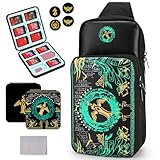


Decide These 3 Things First
Before diving into denier counts and zipper grades, you must narrow your search by answering three fundamental questions about how you play and travel.
- What is your carry volume? (Slim vs. System Case): Do you only need to protect the handheld console while slipping it into a daily backpack, or do you need to transport the entire setup—including the TV dock, AC adapter, HDMI cable, and a Pro Controller? A slim case is highly portable but holds nothing extra; a full system case is bulky but acts as a mobile gaming station.
- Hard Shell vs. Soft Fabric: Hard shell cases (usually made of molded EVA plastic) offer superior impact defense against drops and crush forces. Soft canvas or fabric bags offer a more casual, everyday aesthetic and extra flexibility for packing odd-sized accessories, but they provide minimal protection if stepped on or dropped from shoulder height.
- Do you use an ergonomic grip? If you use aftermarket ergonomic grips or bulky comfort cases on your console, a standard, form-fitting Switch case will not close. You must decide upfront if you are willing to buy an oversized case specifically designed to accommodate wider, thicker grips.
1. Size, Capacity, and Internal Dimensions
A carrying case must fit your specific console model like a glove. A case that is too loose allows the console to slide around, generating friction that can scuff the chassis or wear down the rubber on the joysticks. A case that is too tight puts constant pressure on the screen and buttons.
Standard slim cases typically measure around 10.2 x 5.0 x 1.8 inches and weigh between 6 and 10 ounces when empty. These are designed to hold the console with Joy-Cons attached, plus a few small accessories. If you own an OLED model, look for internal dimensions of at least 9.5 x 4.0 x 0.6 inches to ensure a seamless fit. For larger travel cases designed to carry the entire system dock and extra controllers, dimensions jump to roughly 12.0 x 9.5 x 5.0 inches, with weights ranging from 1.5 to 2.5 pounds empty.
Storage capacity also applies to physical game cards. Budget cases usually feature a single flip-down flap with 8 to 10 elastic game slots. Premium cases often feature dual-flap storage systems that can hold 20 to 30 game cartridges securely without adding excessive bulk.
2. Exterior and Interior Materials
The materials of your case dictate both its durability and how well it protects the console from environmental hazards like rain, dust, and drops.
For the exterior, Ethylene Vinyl Acetate (EVA) is the industry standard for hard-shell protection. Look for cases that use high-density EVA foam with a thickness of at least 3mm to 5mm. The outer fabric wrapped over the EVA shell should ideally be a high-denier polyester or ballistic nylon. A rating of 1680D (denier) ballistic nylon offers military-grade water resistance and tear protection, while cheaper cases often use 600D polyester, which is thinner and prone to fraying over time.
The interior material is just as important. The inner lining should be made of a plush, non-abrasive microfiber or soft brushed cotton. Avoid cases with rough polyester interiors, as these can micro-scratch the plastic screen of a standard Switch or the glass screen of an OLED model over months of travel. If the case has an accessory pocket, ensure the zipper on that pocket is either made of soft rubber or completely recessed behind a fabric lip so it cannot scrape against the console’s screen.
3. Construction, Zippers, and Joystick Protection
The structural design of a case determines its survival rate during a drop. The most critical area to evaluate is the joystick clearance. When a case is zipped shut, there should be zero contact between the inner lid and the analog sticks. Premium cases solve this by molding recessed “wells” or depressions into the top and bottom lids, allowing the joysticks to sit freely in 3D space. If you press down on the exterior of a zipped case and feel the analog sticks clicking underneath, reject the case immediately.
Zippers are the single most common failure point on any carrying case. Look for reputable zipper brands, such as YKK, or heavy-duty No. 5 or No. 8 nylon coil zippers. The zipper teeth should be tightly aligned, and the pull tabs should be heavy-gauge metal or molded TPU. A dual-zipper design is mandatory; it allows you to open the case from either side and provides a backup if one zipper slider fails.
Additionally, check the screen protection flap. This internal divider should hook or strap down securely over the screen to prevent the console from tumbling out when you open the case. Elastic straps are common, but hook-and-loop fasteners or magnetic tabs offer a more secure hold that won’t lose elasticity over time.
4. Comfort, Portability, and Carrying Performance
How you carry the case dictates your daily comfort. For slim cases, a low-profile exterior handle is essential. Look for handles made of reinforced TPU (thermoplastic polyurethane) or thick webbing stitched with cross-box reinforcement. Cheap, thin nylon fabric loops will cut into your fingers over time.
For larger, full-system travel bags, a high-quality shoulder strap is a necessity. The strap should be at least 1.5 inches wide to distribute weight evenly across your shoulder, and it must include a movable, padded neoprene shoulder pad. Pay close attention to the connection hardware: plastic carabiners and D-rings are prone to snapping under the weight of a fully loaded dock and console setup. Opt for zinc alloy or steel swivel hooks instead.
Weight distribution is another factor. A well-designed full-system case will feature molded foam cutouts on the interior to keep heavy components—like the AC adapter and dock—at the bottom of the bag, preventing the case from becoming top-heavy and tipping over when set on a table.
5. Price Tiers: What Do You Actually Get?
The market for carrying cases is highly saturated, but products generally fall into three distinct price tiers based on material quality and licensing:
- Budget ($10 to $18): These cases are typically made from thin (2mm) EVA foam wrapped in basic 600D polyester. They usually feature simple elastic bands to hold the console down and standard plastic zippers. While they offer basic scratch protection, they lack joystick recesses and heavy drop protection.
- Mid-Range ($19 to $35): This is the sweet spot for most gamers. In this tier, you get 1680D ballistic nylon or heavy-duty EVA shells, YKK zippers, microfiber interiors, molded joystick wells, and capacity for 10 to 20 game cards. You will also find official Nintendo-licensed cases in this bracket, which guarantee a precise fit.
- Premium ($36 to $60+): Premium cases include leather exteriors, high-end messenger-style travel bags, and heavy-duty hard cases with custom-cut, high-density foam inserts. They often feature water-resistant sealed zippers, metal hardware, lifetime warranties, and dedicated compartments for multiple controllers, docks, and premium audio gear.
6. Warranty and Lifespan
While a carrying case is a relatively low-cost accessory, a good warranty is a strong indicator of manufacturing quality. Budget, no-name brands rarely offer anything beyond the standard 30-day retail return window. If a zipper splits or a strap tears after two months, you are out of luck.
Established accessory brands typically offer a 1-year or 2-year limited warranty covering defects in materials and workmanship. Premium manufacturers sometimes offer limited lifetime warranties, promising to replace the case if a seam rips or a zipper fails under normal wear and tear. When evaluating a case, check if the manufacturer has a clear customer service channel and a history of honoring replacements.
7. Shipping, Packaging, and Out-of-Box Readiness
Because EVA foam is manufactured using chemical blowing agents, cheap carrying cases often arrive with a strong, offensive chemical odor (off-gassing). When a case is packaged in airtight plastic immediately after manufacturing and shipped directly to your door, that trapped gas accumulates.
High-quality manufacturers allow their cases to cure and air out before packaging, or they use eco-friendly, certified low-VOC materials. Look for cases that ship in breathable cardboard packaging rather than sealed plastic bags. Additionally, check that the case is shipped with foam inserts inside to prevent it from getting crushed or warped during transit.
Spec Checklist
Use this quick-reference table to compare what you should expect across the three major price tiers:
| Feature / Spec | Budget ($10 – $18) | Mid-Range ($19 – $35) | Premium ($36 – $60+) |
|---|---|---|---|
| Exterior Material | 600D Polyester / Thin EVA | 1680D Ballistic Nylon / Thick EVA | Premium Leather / Ballistic Nylon / Molded Hard Case | Interior Lining | Standard felt or polyester | Plush microfiber | Ultra-soft brushed fleece / Custom-cut foam |
| Zipper Brand & Type | Generic nylon coil (single or dual) | YKK or branded dual-zipper tracks | YKK water-resistant sealed zippers |
| Joystick Protection | Flat lid (puts pressure on sticks) | Molded recesses / 3D structural lid | Deep custom-molded foam compartments |
| Game Card Capacity | 5 to 8 slots (elastic bands) | 10 to 24 slots (padded flaps) | 24+ slots or dedicated hard cases included |
| Hardware & Straps | None or thin fabric loop | Reinforced TPU handle / Nylon strap | Metal alloy D-rings / Padded neoprene shoulder strap |
| Warranty | 30-day return window only | 1-year to 2-year limited warranty | Lifetime warranty / Satisfaction guarantee |
Red Flags to Avoid
When shopping, steer clear of cases that exhibit any of the following warning signs:
- Flat, Featureless Interior Lids: If the inside lid of a slim case is perfectly flat with no molded recesses for the Joysticks, it will press down on the analog sticks every time you zip it closed. This is a primary driver of stick drift.
- Exposed Internal Metal Zippers: Look closely at the inner accessory pocket. If it uses a metal zipper pull that sits directly above the screen when the case is closed, it will eventually scratch your console.
- A Strong “Chemical” or “Gasoline” Smell: This indicates cheap, uncured EVA foam and industrial adhesives. Not only is the smell unpleasant, but the off-gassing chemicals can sometimes degrade the rubberized coatings on your Joy-Cons over time.
- Loose or Oversized Game Pockets: If the elastic slots for the game cards are loose right out of the box, cartridges will slip out during transit, rattling around inside the case and potentially scratching your screen.
- Plastic D-Rings on Shoulder Straps: For large travel cases, plastic load-bearing rings will fatigue and snap. If a bag drops to the pavement because a plastic clip broke, your console and dock will take the full impact.
FAQ
Will my Switch fit in a standard carrying case with an aftermarket grip attached?
No, standard cases are designed strictly for the console with stock Joy-Cons attached. If you use a bulky ergonomic grip (such as those from Satisfye or Skull & Co.), you must purchase a specialty, oversized case designed specifically to accommodate those exact grip dimensions.
What is the difference between an EVA hard shell and a soft fabric sleeve?
An EVA hard shell is molded from dense plastic foam, providing structural rigidity that protects against drops, impacts, and crushing forces (like being squeezed inside a packed suitcase). A soft fabric sleeve only protects against surface scratches, dust, and minor splashes; it offers virtually no drop protection.
Do officially licensed Nintendo cases offer better protection than third-party cases?
Officially licensed cases guarantee a perfect, snug fit and meet Nintendo’s basic standards for material safety. However, many premium unlicensed third-party brands offer superior materials (like 1680D nylon and YKK zippers) and better joystick protection than the basic licensed models.
Can I safely charge my console while it is zipped inside the carrying case?
Absolutely not. The Nintendo Switch generates significant heat while charging. Charging the console inside a closed, insulated EVA foam case traps that heat, which can cause the console to overheat, degrade the lithium-ion battery life, or even warp the plastic chassis.


