Key takeaways
- Encode headroom: Your host needs a modern GPU with a dedicated encoder so game rendering and video streaming don’t fight for resources.
- Input consistency: Wired or low-latency wireless peripherals prevent double-lag when your inputs already travel over the network.
- Clean audio capture: A flip-to-mute or cardioid mic keeps party chat intelligible even after Parsec’s audio compression.
- Wired ethernet priority: Anything that lets you hardwire the host beats Wi-Fi for jitter, so favor devices that free up your network.
- Cross-device comfort: Lightweight headsets and portable controllers make sense if you jump between a couch client and a desk.
What's inside
Dialing in Parsec for low-latency remote play is only half the battle. Once you’ve capped your host resolution, matched frame rates, and switched to the H.265 codec, the hardware you sit behind matters just as much as the software sliders. A crisp mic, a responsive mouse, and a machine powerful enough to encode on the fly are what actually make streaming feel like sitting at the desktop itself.
Below we’ve gathered the peripherals and hardware that pair best with a tuned Parsec setup, whether you’re hosting from a beefy tower or connecting from a lightweight client. Each pick was chosen for the traits that survive a compressed video stream: clean audio, consistent input, and thermal headroom.
As an Amazon Associate we earn from qualifying purchases.




🎮 Get More From Your Setup — Free
Prime Gaming gives you free PC games every month, in-game loot, and a free Twitch channel sub — plus fast free shipping on all the gear above. New members get a 30-day free trial.
Watch: Best Parsec Best Settings For Gaming — Video Review
How to Choose Gear for a Parsec Setup
- Encode headroom: Your host needs a modern GPU with a dedicated encoder so game rendering and video streaming don’t fight for resources.
- Input consistency: Wired or low-latency wireless peripherals prevent double-lag when your inputs already travel over the network.
- Clean audio capture: A flip-to-mute or cardioid mic keeps party chat intelligible even after Parsec’s audio compression.
- Wired ethernet priority: Anything that lets you hardwire the host beats Wi-Fi for jitter, so favor devices that free up your network.
- Cross-device comfort: Lightweight headsets and portable controllers make sense if you jump between a couch client and a desk.
The Best Parsec-Ready Gear Reviewed
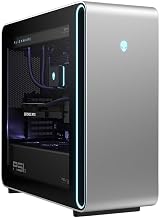
Alienware Aurora (RTX 5070)
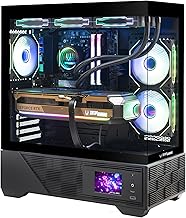
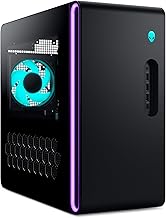
As a Parsec host, the Aurora is close to ideal: the RTX 5070 handles NVENC encoding without denting frame rates, and the Killer 2.5Gb ethernet keeps latency predictable. It’s the machine you leave running so everything else can connect to it.
Razer Basilisk V3
With a 26K optical sensor and fast switches, the Basilisk V3 delivers input crisp enough that Parsec’s added latency is the only delay you’ll notice. The programmable buttons help remap controls when streaming to unusual clients.
Logitech G535 Lightspeed
A lightweight wireless headset that pairs well with a couch-based client. The flip-to-mute mic and long USB-rechargeable battery mean you can host a long session without cables trailing across the room.
Cronus Zen Controller Emulator
For players who want a controller recognized cleanly across Xbox, PlayStation, and PC hosts, the Zen smooths out device compatibility headaches that can otherwise trip up a remote session.
UBeesize 10″ Desk Ring Light
If your Parsec sessions double as streaming or video calls, this clamp-mounted ring light gives your webcam even, flattering light with inline control, and it stays out of your keyboard’s way.
Frequently Asked Questions
Does Parsec need a powerful GPU on the client?
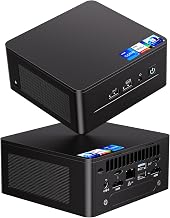
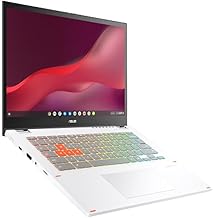
No. The heavy lifting happens on the host. Your client only decodes the video stream, so even a modest mini PC or laptop can connect smoothly.
What’s the single biggest latency fix?
Hardwiring the host to your router. Ethernet removes the jitter that Wi-Fi introduces, which matters far more than any in-app slider.
Should I use H.264 or H.265?
H.265 gives better image quality at the same bitrate on supported hardware, which is why a current-gen GPU host is worth the investment.
Will a wireless mouse add noticeable lag?
A quality low-latency wireless mouse is fine, but if you’re chasing every millisecond, a wired sensor removes one variable from the equation.
Final Thoughts
For a rock-solid Parsec experience, build around a capable host like the Alienware Aurora, pair it with the responsive Razer Basilisk V3, and grab the Logitech G535 for comfortable, cable-free chat on the client side. Nail the hardware and your tuned settings will finally feel like the real thing.