Key takeaways
- For responsiveness: An SSD offers dramatically faster boots and load times, making it the top priority for daily use.
- For maximum capacity: An HDD like the WD Blue Mobile gives you the most storage per dollar for archives.
- For gaming: An SSD such as the TEAMGROUP T-Force Vulcan Z shortens loading screens and reduces stutter.
- For a budget refresh: A low-cost SSD like the Kingston A400 or KingSpec breathes new life into an older PC.
- For a balanced build: Use an SSD for your OS and games and an HDD for backups and rarely-used files.
What's inside
SSD or HDD is one of the first questions any PC builder or upgrader runs into, and the answer shapes how fast and smooth your computer feels for years. Solid state drives use flash memory to deliver near-instant access, while hard disk drives use spinning platters to offer far more storage per dollar. Neither is simply better than the other; they solve different problems, and the ideal setup often uses both.
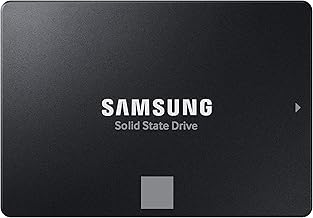
To keep things practical, we frame this around drives you can order right now, from SSD standouts like the Samsung 870 EVO, TEAMGROUP T-Force Vulcan Z, and Kingston A400 to a genuine mechanical drive in the WD Blue Mobile HDD. Comparing them directly shows exactly what you gain and give up with each format.
As an Amazon Associate we earn from qualifying purchases.


🎮 Get More From Your Setup — Free
Prime Gaming gives you free PC games every month, in-game loot, and a free Twitch channel sub — plus fast free shipping on all the gear above. New members get a 30-day free trial.
Watch: Ssd Hdd Vs: Full Comparison — Video Review
Quick Verdict
For your operating system, applications, and games, an SSD is the smarter buy thanks to its enormous speed advantage. An HDD like the WD Blue Mobile still makes sense as cheap, high-capacity storage for backups and large media. Many builders combine an SSD boot drive with an HDD for overflow storage.
Solid State Drives (SSD)
SSDs store data on flash chips with no moving components, so files, apps, and games load almost immediately. SATA drives such as the Samsung 870 EVO and TEAMGROUP T-Force Vulcan Z deliver read speeds around 550MB/s, transforming a sluggish system into a snappy one.
They also run silently, use little power, and survive bumps thanks to their solid-state design, which benefits both desktops and laptops. Affordable models like the Kingston A400, KingSpec, and PNY CS900 make it easy to add flash speed to multiple machines without a big outlay.
Hard Disk Drives (HDD)
An HDD records data on magnetic platters spun by a motor while a mechanical head reads and writes. The WD Blue Mobile HDD highlights the format’s appeal, packing plenty of capacity at a low price, which suits backups, video libraries, and files you open only now and then.
The trade-off is speed. Because the drive physically moves to find data, an HDD feels slow next to an SSD for booting and loading. The moving parts also make it more vulnerable to drops and can create faint noise during intensive use.
Head-to-Head: Which Should You Buy?
- For responsiveness: An SSD offers dramatically faster boots and load times, making it the top priority for daily use.
- For maximum capacity: An HDD like the WD Blue Mobile gives you the most storage per dollar for archives.
- For gaming: An SSD such as the TEAMGROUP T-Force Vulcan Z shortens loading screens and reduces stutter.
- For a budget refresh: A low-cost SSD like the Kingston A400 or KingSpec breathes new life into an older PC.
- For a balanced build: Use an SSD for your OS and games and an HDD for backups and rarely-used files.
Frequently Asked Questions
What is the main advantage of an SSD?
Speed. An SSD boots your system, opens programs, and loads games far faster than an HDD, which is the single most noticeable improvement most users experience.
Why would I still buy an HDD?
HDDs offer much more storage for the money, making them ideal for backups, media collections, and any large files where instant access is not important.
Can I clone my HDD to an SSD?
Yes. Free cloning tools let you copy your existing drive to a new SSD like the Samsung 870 EVO, so you keep your files and settings while gaining a big speed boost.
Do I need an NVMe SSD or is SATA enough?
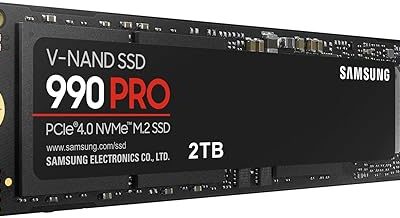
A SATA SSD is a massive upgrade over an HDD and is plenty for most gamers. NVMe drives are even faster and worth it if your motherboard has an M.2 slot and you want top performance.
Final Verdict
For the drive that runs your OS and games, the SSD wins decisively. Options like the Samsung 870 EVO, TEAMGROUP T-Force Vulcan Z, and Kingston A400 deliver a speed jump that no HDD can rival, improving every startup and load. Keep an HDD like the WD Blue Mobile for cheap bulk storage, and let the SSD handle the work you actually notice.