Key takeaways
- 2 pounds strawberries, washed, hulled, and quartered
- 3 cups granulated sugar
- 1/4 cup bottled lemon juice
Strawberry Jam Recipe: Easy 3-Ingredient Classic
This strawberry jam recipe uses 2 pounds of prepared strawberries, 3 cups of sugar, and 1/4 cup of bottled lemon juice—no added pectin—and cooks in about 25–35 minutes.
Ingredients and Exact Ratio
- 2 pounds strawberries, washed, hulled, and quartered
- 3 cups granulated sugar
- 1/4 cup bottled lemon juice
This ratio produces approximately 4 half-pint jars, or about 4 cups of jam, depending on how much water evaporates during cooking. Weigh the strawberries after removing the green tops. Extra leaves and stems change the fruit-to-sugar ratio and can reduce the final yield.
Our top picks

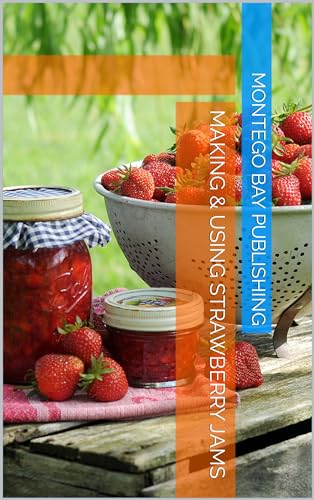

As an Amazon Associate we earn from qualifying purchases at no extra cost to you. Ratings are shown as listed on Amazon.
| Ingredient | Amount | Purpose |
|---|---|---|
| Prepared strawberries | 2 pounds | Fruit flavor, moisture, and natural pectin |
| Granulated sugar | 3 cups | Sweetness, preservation, and gel structure |
| Bottled lemon juice | 1/4 cup | Acidity, flavor balance, and more reliable setting |
Equipment
- Large, wide, heavy-bottomed saucepan or preserving pan
- Wooden spoon or heatproof spatula
- Potato masher
- Small chilled plate for testing the set
- Clean half-pint jars with new two-piece canning lids
- Jar lifter and deep pot with a rack, if canning
A wide pan is important because it gives the water more surface area to evaporate. A narrow, deep saucepan can make the jam take longer to thicken and increases the chance of scorching before the mixture reaches its setting temperature.
How to Make Pectin-Free Strawberry Jam
1. Prepare the strawberries
Wash the berries briefly under cool running water, drain them well, remove the hulls, and quarter large strawberries. Put the fruit in the saucepan and crush roughly with a potato masher. Leave some pieces intact for a textured jam, or mash more thoroughly for a smoother spread.
2. Combine the three ingredients
Add the sugar and bottled lemon juice to the strawberries. Stir until the berries are evenly coated. Let the mixture stand for 10–15 minutes if convenient; this draws juice from the fruit and helps the sugar begin dissolving before heating.
3. Dissolve the sugar gently
Set the pan over medium-low heat and stir until the sugar has dissolved. Do not rush this stage with high heat. Undissolved sugar can crystallize later, while dry sugar on the side of the pan may burn.
4. Boil and reduce
Increase the heat to medium-high. Once the mixture reaches a full boil that continues while stirring, cook uncovered for approximately 20–30 minutes. Stir frequently, scraping the bottom and corners of the pan. As the water evaporates, the bubbles will become slower and thicker, and the jam will cling to the spoon.
The exact cook time depends on the berries, pan width, batch size, and heat level. Use temperature and texture rather than the clock alone. The jam should reach approximately 220°F (104°C) at sea level. A thermometer is useful, but strawberry jam can finish a few degrees above or below that point depending on sugar concentration and altitude.
5. Check the set
Before cooking, place two small plates in the freezer. When the jam looks thick, spoon about 1 teaspoon onto a chilled plate and return it to the freezer for 60 seconds. Push the edge with your fingertip. If the surface wrinkles slightly and the jam moves slowly, it is ready. If it runs quickly, continue cooking for 2–3 minutes and test again.
Stop cooking as soon as the jam passes the test. Overcooking can produce a stiff, sticky spread with a cooked-fruit flavor. Remember that the jam thickens further as it cools.
6. Fill the jars
Remove the pan from the heat and skim off foam if desired. Ladle the hot jam into clean, hot jars, leaving 1/4 inch of headspace. Wipe the rims, apply the prepared lids, and tighten the bands only until fingertip-tight.
Storage Options
Refrigerator storage
For the simplest option, cool the filled jars, refrigerate them, and use the jam within about 3 weeks. Keep the jar refrigerated after opening and use a clean spoon each time. If you notice mold, fermentation bubbles, an alcoholic smell, or an unusual color change, discard the entire jar rather than removing only the affected surface.
Freezer storage
For longer storage without canning, cool the jam completely and transfer it to freezer-safe containers. Leave at least 1/2 inch of space at the top for expansion. Freeze for up to 12 months for best quality. Thaw one container in the refrigerator and use it within approximately 3 weeks.
Water-bath canning
To make shelf-stable jam, use clean canning jars and process the sealed jars in a boiling-water bath. Keep the jars covered by at least 1 inch of water. Start timing only after the water returns to a full boil.
| Elevation | Boiling-water processing time |
|---|---|
| 0–1,000 feet | 10 minutes |
| 1,001–6,000 feet | 15 minutes |
| 6,001–8,000 feet | 20 minutes |
| 8,001–10,000 feet | 25 minutes |
After processing, turn off the heat, remove the lid, and wait 5 minutes before transferring the jars to a towel-lined surface. Let them cool undisturbed for 12–24 hours. Check that each lid has sealed, remove the bands, wipe the jars, and label them with the date. Store sealed jars in a cool, dark, dry place and refrigerate any jar that fails to seal.
For the most conservative approach, use the specified bottled lemon juice and follow current guidance from a recognized home-canning authority. Do not reduce the lemon juice, replace it with fresh lemon juice of unknown acidity, or change the fruit and sugar amounts when preparing jars for room-temperature storage.
How to Adjust the Recipe for Different Amounts
Keep the ratio consistent: for every 1 pound of prepared strawberries, use 1 1/2 cups of sugar and 2 tablespoons of bottled lemon juice. For example, 3 pounds of berries requires 4 1/2 cups of sugar and 6 tablespoons of lemon juice.
| Prepared fruit | Sugar | Bottled lemon juice | Expected yield |
|---|---|---|---|
| 1 pound | 1 1/2 cups | 2 tablespoons | About 2 cups |
| 2 pounds | 3 cups | 1/4 cup | About 4 cups |
| 3 pounds | 4 1/2 cups | 6 tablespoons | About 6 cups |
Avoid doubling or tripling the batch in one pan. A very large volume takes longer to reduce, which can cause uneven cooking, scorching, or a weak set. Make separate batches instead.
Troubleshooting
The jam is too runny
First, chill a small sample because warm jam always appears thinner. If it remains runny when cold, return the batch to the pan and boil it for another 3–5 minutes, then repeat the chilled-plate test. Common causes include very juicy berries, an overcrowded pan, or stopping the cooking before enough water evaporated.
The jam is too firm
Stir in 1–2 tablespoons of hot water at a time while gently reheating the jam. Stop as soon as it becomes spreadable. Next time, remove the jam earlier, relying on the chilled-plate test rather than cooking far beyond 220°F (104°C).
The jam is grainy
Graininess usually comes from undissolved sugar or sugar crystals forming during cooling. Dissolve the sugar completely before the hard boil, avoid scraping dry crystals from the sides of the pan, and do not stir aggressively after the jam begins thickening.
Serving Ideas
Spread the finished jam on toast, biscuits, pancakes, or scones. It also works as a filling for thumbprint cookies, a topping for plain yogurt, or a glaze for a baked cheesecake. For a less sweet-tasting serving, pair it with cream cheese, unsweetened yogurt, or a sharp aged cheese.