
Key takeaways
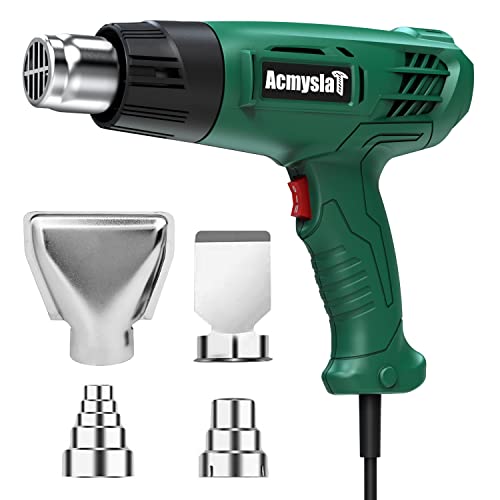
- Wide surface nozzle: Spreads heat across a broader area, helping soften paint more evenly on doors and flat boards. Keep it moving to avoid a hot strip or scorch mark.
- Concentrator nozzle: Directs heat into a smaller area for corners and narrow details. It heats a smaller patch more intensely, so use it cautiously and avoid holding it still.
- Deflector nozzle: Redirects heat away from an adjacent surface, such as glass beside a frame. It reduces direct exposure but cannot eliminate the risk of thermal shock.
- Scraper compatibility: A comfortable grip and manageable tool balance matter when you must hold the gun in one hand and a scraper in the other. A heavy or awkward model can make it harder to maintain a steady distance.
- Safety features: Overheat protection, a cool-down procedure and a stable resting position are useful. They do not replace eye protection, ventilation, a clear work area or supervision.
The best heat gun for removing paint is an adjustable 1,500–1,800 W model with two usable airflow settings, a broad surface nozzle, a concentrated nozzle and overheat protection; for delicate work, choose one with a low setting near 120–150°C rather than relying on a powerful fixed-temperature tool.
For paint removal, temperature control matters, but so do airflow and how easily you can keep the nozzle moving at a safe distance. A high-temperature setting can scorch wood, crack glass or overheat material behind the paint before the coating lifts. The comparisons below focus on control, nozzle usefulness, handling and safety—not just maximum temperature.
Our top picks


As an Amazon Associate we earn from qualifying purchases at no extra cost to you. Ratings are shown as listed on Amazon.
Shortlist: which heat gun suits the job?
| Model | Temperature and airflow | Useful features | Best fit |
|---|---|---|---|
| Wagner Furno 500 | 120–1,200°F (about 49–649°C); multiple fan settings | Digital controls, display and preset options | Frequent paint removal where repeatable settings help |
| DEWALT D26960K | 150–1,100°F (about 66–593°C); variable airflow | LCD temperature display and built-in overload protection | Users who want fine temperature adjustment and a sturdy corded tool |
| Steinel HL 2020 E | 122–1,202°F (about 50–650°C); adjustable airflow | Digital temperature control and display | Controlled work across different materials and coating types |
| Wagner Furno 300 | Two temperature settings, approximately 750°F and 1,000°F (about 399°C and 538°C) | Simple controls and a stable standing position | Occasional jobs on robust surfaces where fewer controls are acceptable |
Specifications can vary by region and product revision, so check the manual for the exact version you are considering. Temperature figures describe the tool’s output, not the temperature the work surface will reach.
Head-to-head: control, airflow and handling
Wagner Furno 500: the versatile choice
The Furno 500’s broad temperature range makes it easier to start conservatively and increase heat only if the coating does not soften. Its digital controls and display help you return to a setting that worked on a similar area. That repeatability is valuable on a long door or trim project, where changing heat unpredictably can produce uneven results.
Use a wide surface nozzle for broad, flat areas if one is included or available for the model. A narrow nozzle concentrates heat and is better reserved for small details; it can scorch a patch of wood if held still. The Furno 500 is a strong all-round pick, though any digital setting still needs to be adjusted to the material and kept moving.
DEWALT D26960K: precise adjustment in a familiar form
The D26960K combines a wide temperature range with an LCD display and variable airflow. The display makes it easier to make small changes, while the overload protection adds a safeguard if the tool’s airflow is obstructed or it overheats. These features help with control, but they do not make the tool safe to leave unattended or suitable for every painted surface.
Its corded format suits extended sessions without battery-runtime limits. Consider cord routing before you begin: a trailing cord can snag on a ladder, workpiece or scraper. Use a stable stance and keep the cord behind the hot nozzle and away from the stripping area.
Steinel HL 2020 E: a control-focused option
The HL 2020 E offers digital temperature adjustment and airflow control across a wide working range. That combination can be useful when moving between thick paint on solid wood and more heat-sensitive details. Look at the nozzle accessories sold with the specific kit; included attachments can differ, and the right reducer or surface nozzle is more useful than a long list of shapes you will not use.
Choose it if you value fine adjustment and expect to tackle varied jobs. For a one-off project, a simpler model may be enough if you can work patiently and keep the heat moving.
Wagner Furno 300: simple, but less adaptable
The Furno 300’s two settings make it easy to operate, but the limited adjustment leaves less room to respond to delicate trim or stubborn coatings. Its stable resting position is useful for brief pauses; the nozzle remains dangerously hot, so set the gun down only on a clear, heat-resistant surface and never leave it running unattended.
It can suit occasional stripping on sturdy, bare wood where you can test a hidden patch first. For painted window frames, detailed moulding or mixed materials, a gun with a genuine low-temperature setting offers more control.
Match the tool to the surface
| Surface or situation | Starting approach | What to watch for |
|---|---|---|
| Solid, unfinished wood | Start around 250–350°C with moderate airflow; test an inconspicuous spot | Stop or reduce heat if the wood darkens, smokes or scorches |
| Thin trim or veneer | Begin near 120–200°C with low airflow and a broad nozzle | Thin layers can burn or detach before paint lifts |
| Glass near painted frames | Prefer a deflector nozzle and the lowest effective heat | Rapid, uneven heating can crack glass; avoid directing heat at the pane |
| Painted metal | Use moderate heat and keep the nozzle moving | Metal carries heat quickly into nearby seals, wiring or adjoining materials |
| Unknown or potentially lead-painted coating | Do not use a heat gun until the coating has been assessed | Heat can release hazardous fumes or contaminated dust |
These are starting ranges, not guarantees: nozzle distance, airflow, paint thickness and the workpiece all change how quickly a surface heats. Follow the tool maker’s manual, test a small area, and increase the setting in small increments rather than beginning at maximum.
Nozzles, ergonomics and safety: what matters in practice
- Wide surface nozzle: Spreads heat across a broader area, helping soften paint more evenly on doors and flat boards. Keep it moving to avoid a hot strip or scorch mark.
- Concentrator nozzle: Directs heat into a smaller area for corners and narrow details. It heats a smaller patch more intensely, so use it cautiously and avoid holding it still.
- Deflector nozzle: Redirects heat away from an adjacent surface, such as glass beside a frame. It reduces direct exposure but cannot eliminate the risk of thermal shock.
- Scraper compatibility: A comfortable grip and manageable tool balance matter when you must hold the gun in one hand and a scraper in the other. A heavy or awkward model can make it harder to maintain a steady distance.
- Safety features: Overheat protection, a cool-down procedure and a stable resting position are useful. They do not replace eye protection, ventilation, a clear work area or supervision.
Before stripping old paint, consider that older coatings may contain lead. Do not heat suspected lead paint: stop and consult local guidance or a qualified professional about testing and safe removal. For any coating, work with strong ventilation, keep heat away from flammable materials, wear suitable eye and hand protection, and let the nozzle cool fully before storage. Never point a heat gun at a person, use it near solvents or dust that could ignite, or leave it unattended while hot.
A practical starting method
- Identify the surface and coating. If the paint may contain lead, do not proceed with heat. Remove nearby combustible items and check the tool manual.
- Fit the appropriate nozzle. Use a broad nozzle for a flat area; choose a deflector only when it helps shield an adjacent surface. Avoid narrow concentrators for broad stripping.
- Begin low and test. Set a low temperature and airflow, then warm a small inconspicuous patch. Raise the temperature gradually if the paint does not soften.
- Keep the gun moving. Hold it at the distance specified by the manufacturer and sweep steadily. When the coating begins to bubble or wrinkle, move the gun away and lift the softened paint with a scraper.
- Pause if the surface changes. Smoke, darkening, a burning smell or damage to nearby material means the area is too hot. Stop, let it cool, and restart at a lower setting or use a different removal method.
- Cool down safely. Use the tool’s recommended cool-down routine and rest it on a heat-resistant surface. Do not pack it away while the nozzle is hot.
Bottom line
For a single adjustable tool, the Wagner Furno 500 is a well-rounded choice; the DEWALT D26960K and Steinel HL 2020 E are alternatives for buyers who prioritize displayed, adjustable settings. The simpler Wagner Furno 300 is better suited to occasional work on robust surfaces than delicate trim. Whichever model you choose, a low starting temperature, appropriate nozzle and steady movement matter more than maximum heat—and suspected lead paint should not be treated with a heat gun.


