Key takeaways
- Using the Front USB-A Port (Original Model): The classic mistake is plugging the external drive into the flat, rectangular USB-A port on the front of the original console. This port is only rated for Hi-Speed USB (480 Mbps) and is meant for charging controllers or connecting keyboards. Always use the rear USB-A ports or the front USB-C port.
- Disconnecting the Drive Without Safely Removing It: Never unplug the USB drive while the console is powered on or in Rest Mode without safely stopping it first. To remove the drive, go to Settings > Storage > USB Extended Storage and select “Safely Remove from PS5.” Failure to do so can cause immediate partition corruption.
- Attempting to Partition the Drive: Do not try to split a large 5TB drive into two partitions to use half for your PC backups and half for your console games. The console requires exclusive control of the entire storage volume and will overwrite any existing partitions during the formatting process.
- Powering Off During Formatting: Interrupting the console while it is writing the new file system can result in a soft-bricked drive that can no longer be recognized by either the console or a computer without advanced command-line partition recovery.
Modern gaming consoles are marvels of engineering, but their internal storage space remains a major bottleneck for avid players. The PlayStation 5 ships with a custom high-speed solid-state drive (SSD), but after the system software claims its share, users are left with limited room for today’s massive game installations. To prevent constantly deleting and redownloading your library, expanding your setup with an external USB hard drive or portable SSD is the most practical solution.
However, simply plugging an off-the-shelf drive into your console will not work immediately. The drive must be formatted specifically to the proprietary file system required by the console. If this formatting process is executed poorly or interrupted, several issues can arise. You risk permanently corrupting the external drive’s partition table, causing the PlayStation 5 to get stuck in a repair loop, or experiencing sudden data loss that wipes out hours of downloaded game files. In worst-case scenarios, using the wrong USB port or a substandard cable can trigger power surges that temporarily disable your console’s USB hub. Preparing and executing this format correctly ensures a stable, high-performance storage expansion that integrates seamlessly with your home media center.
As an Amazon Associate we earn from qualifying purchases at no extra cost to you. Product prices and availability are accurate as of the date shown and are subject to change.

As we look at modern gaming setups in 2026, managing your digital library requires a seamless, high-capacity storage strategy. Taking a few minutes to understand the physical requirements and system settings will protect your hardware investment and keep your gaming library organized.
What You Need
Before beginning the formatting process, you must gather the correct hardware. The PlayStation 5 has strict compatibility requirements for external USB storage. The drive must support SuperSpeed USB (5 Gbps or later), have a minimum capacity of 250 GB, a maximum capacity of 8 TB, and connect directly to the console (not through a USB hub).
| Item | Why | Optional? |
|---|---|---|
| PlayStation 5 Console | The host system running the latest firmware to perform the secure formatting process. | No |
| Compatible External Hard Drive (HDD) or Solid-State Drive (SSD) | Provides the physical storage volume for your game library. Must be at least 250 GB up to 8 TB. | No |
| SuperSpeed USB Cable (USB 3.0 or higher) | Ensures reliable, high-bandwidth data transfer (at least 5 Gbps) between the console and the drive. | No (Often included with the drive) |
| DualSense Wireless Controller | Required to navigate the system settings and confirm the formatting command. | No |
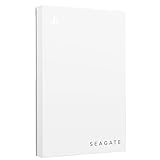
When selecting a drive, you have two primary pathways depending on your budget and aesthetic preferences. A dedicated option like the Seagate Game Drive for PS4/PS5 (5TB, Model STLV5000200) is designed specifically for console integration. This 2.5-inch portable drive features a clean white casing with a custom blue LED strip that matches the console’s lighting cues, operating quietly on a standard USB 3.0 interface. It typically retails in the range of $280 to $300, weighs approximately 0.59 pounds, and measures 4.54 x 3.19 x 0.8 inches.
Alternatively, if you prefer a more understated look for your media console, a general-purpose drive like the Seagate Portable 5TB External Hard Drive (Model STGX5000400) offers identical storage capacity in a matte black finish. This drive operates on USB 3.0, weighs around 0.57 pounds, measures 4.6 x 3.15 x 0.8 inches, and includes a 1-year Rescue Data Recovery Service. It is generally priced in the range of $200 to $220. Both drives draw their operational power directly from the console’s USB port (requiring approximately 4.5 watts under load), eliminating the need for an extra, unsightly wall adapter in your living room setup.
Step-by-Step
Follow these steps in order to safely format your external drive for storage. Ensure your console is connected to a stable power source before beginning.
Step 1: Connect the Drive to the Correct USB Port
Time Estimate: 1 minute
Unbox your external hard drive and connect the included SuperSpeed USB cable to the drive. Next, plug the other end of the cable into one of the compatible USB ports on your console. Note that not all USB ports on the console support external storage. On the original console, you must use the SuperSpeed USB-A ports located on the back of the unit, or the SuperSpeed USB-C port on the front. Avoid using the standard Hi-Speed USB-A port on the front, as the console will display an error message stating the drive is not fast enough.
Step 2: Navigate to the Storage Settings Menu
Time Estimate: 1 minute
Turn on your console and log into your primary user profile using the DualSense controller. From the main home screen, navigate to the top-right corner and select the gear icon to open the “Settings” menu. Scroll down through the list of system settings and select “Storage” (located between “Saved Data and Game/App Settings” and “Sound”).
Step 3: Select and Format the USB Extended Storage
Time Estimate: 2 to 3 minutes
Within the Storage menu, you will see two tabs: “Console Storage” and “USB Extended Storage.” Use the directional pad to select “USB Extended Storage.” The screen will display the name of your connected drive (such as your Seagate Game Drive or Seagate Portable drive). Select the button labeled “Format as USB Extended Storage.” A warning message will appear, informing you that formatting the drive will erase all data currently saved on it. Select “Yes” to confirm and initiate the formatting process. Do not touch the console, disconnect the cable, or turn off the power while the progress bar is active.
Step 4: Configure Default Installation Paths
Time Estimate: 1 minute
Once the formatting is complete, a confirmation message will display the successful setup. You can now choose to make this drive the default installation location for compatible games. In the same “Storage” menu, navigate to “Installation Location.” Here, you can set your console to automatically download and install all new PlayStation 4 games directly to the external USB drive, saving your ultra-fast internal SSD space exclusively for native PlayStation 5 games.
Mistakes to Avoid
- Using the Front USB-A Port (Original Model): The classic mistake is plugging the external drive into the flat, rectangular USB-A port on the front of the original console. This port is only rated for Hi-Speed USB (480 Mbps) and is meant for charging controllers or connecting keyboards. Always use the rear USB-A ports or the front USB-C port.
- Disconnecting the Drive Without Safely Removing It: Never unplug the USB drive while the console is powered on or in Rest Mode without safely stopping it first. To remove the drive, go to Settings > Storage > USB Extended Storage and select “Safely Remove from PS5.” Failure to do so can cause immediate partition corruption.
- Attempting to Partition the Drive: Do not try to split a large 5TB drive into two partitions to use half for your PC backups and half for your console games. The console requires exclusive control of the entire storage volume and will overwrite any existing partitions during the formatting process.
- Powering Off During Formatting: Interrupting the console while it is writing the new file system can result in a soft-bricked drive that can no longer be recognized by either the console or a computer without advanced command-line partition recovery.
How Often
Under normal operating conditions, you only need to format your external drive once during its initial setup. The file system is designed to run indefinitely without routine maintenance. However, if you notice game load times stalling, or if you regularly move the drive between different consoles, performing a clean format once every two to three years can help clear out fragmented system cache files and restore optimal read/write performance.
When to Call a Pro or Replace
While external drives are highly durable, they are mechanical and electronic devices subject to wear. If your drive begins making clicking, grinding, or high-pitched whining noises during operation, the internal read/write heads are failing. This is a physical hardware issue that software formatting cannot fix.
Additionally, if your console repeatedly displays the “USB drive was not disconnected properly” error message even when the cable is firmly seated, or if game transfers consistently freeze at the exact same percentage, the drive may have developed bad sectors. If these symptoms persist after attempting a fresh format on a PC or another console, it is time to replace the drive entirely. For drives bundled with data protection plans, such as the Seagate Portable HDD’s 1-Year Rescue Service, contact the manufacturer to initiate a data recovery claim rather than attempting to open the drive casing yourself, which voids the warranty.
FAQ
Can I play PlayStation 5 games directly from my external USB drive?
No. PlayStation 5 games require the ultra-high speeds of the console’s internal custom SSD or an approved internal M.2 NVMe SSD. You can use your external USB drive to store and archive PlayStation 5 games to free up space, but you must copy them back to the internal storage to play them. However, you can store and play PlayStation 4 games directly from the external USB drive without any restrictions.
Why does my console say my USB drive is not compatible even though it is USB 3.0?
This is almost always caused by using an inferior connection cable or plugging into an incompatible port. Many third-party USB-A to USB-C cables are designed only for power delivery and charge at USB 2.0 speeds. Ensure you are using the high-quality cable that came packaged with your drive, and make sure it is plugged into one of the SuperSpeed ports on the rear of the console.
Will formatting the drive delete my game save files?
Formatting the external drive will erase any data currently stored on that specific external drive. However, it will not delete your game save files. On this console, all game save data is stored exclusively on the secure internal console storage or synced with your cloud storage account. Your progress remains completely safe.
How much physical space and power do these 5TB portable drives require in my entertainment center?
Portable 2.5-inch drives, such as the Seagate Game Drive or Seagate Portable, are highly compact. They typically measure roughly 4.5 x 3.1 x 0.8 inches and weigh just over half a pound, making them easy to tuck behind your console or place flat on your media shelf. Because they are bus-powered, they draw their operational wattage (around 4.5W) directly from the console’s USB port, meaning you do not need to manage an extra power brick or find an open wall outlet.