Key takeaways
- The “Tightrope” Effect: Measuring only the straight-line distance from the console to your hands. This results in a cable suspended in mid-air. Not only is this a major trip hazard for family members and pets, but a single trip can violently yank your console out of its entertainment center, causing expensive damage.
- Ignoring Cable Stiffness: Cheap, thick, or braided cables can be incredibly stiff. A stiff cable does not drape easily and will pull on the controller in your hands. If you are buying a long cable (9+ feet), look for highly flexible silicone or soft-braided jackets that lay flat.
- Neglecting USB Power Limitations: USB standards limit how much power and data can travel over distance without signal loss. Standard passive USB 2.0 or USB 3.0 cables can start losing connection stability or fail to charge/power controllers properly if they exceed 15 feet in length.
What's inside
When designing a home gaming setup, we often obsess over television sizes, media console heights, and the ergonomics of our seating. Yet, one of the most frequently overlooked details is cable management—specifically, the length of your wired controller cables. A cable that is too short forces you to sit uncomfortably close to the screen, straining your eyes and ruining your posture. A cable that is too long becomes an unsightly trip hazard, tangles easily, and clutter your living space.
As home entertainment centers evolve in 2026, finding the perfect balance between wireless convenience and lag-free wired performance is more crucial than ever. Whether you are setting up a dedicated PC gaming desk or a sprawling living room media center, this guide will help you determine the exact cable length you need for your wired console controllers.
As an Amazon Associate we earn from qualifying purchases at no extra cost to you. Product prices and availability are accurate as of the date shown and are subject to change.


The Short Answer
For the vast majority of living room setups, a cable length of 9 to 10 feet is the ideal sweet spot. This length allows you to sit a comfortable 7 to 8 feet away from your television while leaving enough slack so the cable rests flat on the floor rather than hovering in the air like a tripwire.
If you are gaming at a desk (near-field setup), a much shorter cable of 5 to 6 feet is preferred. This keeps your workspace clean and prevents excess cord from tangling around your chair wheels or keyboard. If your couch sits more than 10 feet away from your media console, you will need to look into 12- to 15-foot cables, or utilize active USB extension cables to prevent signal degradation over long distances.
Standard Sizes
Wired controllers and USB-C connection cables generally fall into four standard size categories. Below is a breakdown of these dimensions in feet, inches, and centimeters, along with their primary use cases:
| Cable Category | Length (Feet) | Length (Inches) | Length (Centimeters) | Best Use Case |
|---|---|---|---|---|
| Short / Desktop | 5 to 6 ft | 60 to 72 in | 152 to 183 cm | PC gaming desks, near-field monitor setups, or charging on a side table. |
| Standard Living Room | 8 to 9 ft | 96 to 108 in | 244 to 274 cm | Small to medium living rooms, bedroom gaming, and typical console setups. |
| Long / Extended | 10 to 12 ft | 120 to 144 in | 305 to 366 cm | Large living rooms, home theaters, and setups with routed cable management. |
| Extra-Long | 15 ft+ | 180 in+ | 457 cm+ | Ultra-wide rooms or custom architectural routing behind walls or under floors. |
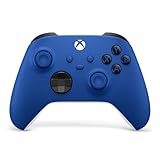
Budget wired controllers, such as the Logitech G F310 (priced around $15 to $20), typically feature a built-in, non-detachable cable measuring roughly 6.5 feet (198 cm). On the other hand, premium options like the official Xbox Wireless Controller bundled with a USB-C cable (ranging from $50 to $60) include a detachable 9-foot (274 cm) cable, offering significantly more flexibility for living room environments.
How to Measure Your Space
Do not guess your cable needs. Taking a few minutes to measure your room will save you the headache of returning cables or, worse, pulling your console off the shelf during an intense gaming session. Follow this step-by-step method to find your exact requirements:
- Measure the Direct Seating Distance: Sit in your preferred gaming position. Use a standard tape measure to find the straight-line distance from the front of your console (where the USB port is located) to the center of your chest. Let us assume this distance is 8 feet.
- Account for Seating Height and Depth: A controller is not held at floor level; you hold it in your lap or chest-high. Add 2 feet to your measurement to account for the vertical distance from the floor to your hands, as well as the depth of your sofa cushion when you lean back.
- Add Floor Slack (The Safety Margin): To prevent the cable from suspending mid-air, it must drape down from the console, run along the floor, and rise up to your hands. Add at least 2 to 3 feet of slack. This ensures the cable lies flat on the rug, reducing trip hazards.
- Calculate the Total: If your direct distance is 8 feet, adding 2 feet for seating ergonomics and 2 feet for floor slack means you require a minimum cable length of 12 feet.
By Room or Use Case
Your physical environment dictates your cable needs. Here is how to choose based on your specific gaming environment.
Desktop PC and Near-Field Gaming
If your console or PC is sitting on the same desk as your monitor, desk space is at a premium. A cable that is too long will bunch up behind your keyboard or get caught under your desk chair. For these setups, a 5 to 6-foot cable is perfect. Budget-friendly wired controllers like the VOYEE PC Controller (costing around $15 to $18) often come with a 6-foot cord, which is the industry standard for desktop play. This length provides enough room to lean back in your office chair without pulling on the PC tower.
Small Living Rooms and Dorm Rooms
In compact living spaces, dorms, or bedrooms, your seating is usually positioned 5 to 7 feet away from the screen. A 9-foot cable is the ideal choice here. It provides enough slack to drape safely onto the floor without creating a massive pile of tangled copper. If you use a controller with a detachable cable, such as an Xbox Wireless Controller connected via USB-C, a standard 9-foot replacement cable will keep your space tidy while giving you room to move.
Large Living Rooms and Home Theaters
In spacious living rooms or dedicated home theater rooms, your sofa may be situated 9 to 12 feet away from the television. In this scenario, standard 9-foot cables will not reach. You will need a 12- to 15-foot cable. Because passive USB cables can experience signal degradation and slight input lag at lengths over 15 feet, we highly recommend using an “active” USB extension cable if you must span distances greater than 15 feet. Alternatively, consider routing your cables along the baseboards of the room rather than straight across the floor, which will require a much longer cable run (typically 20 to 25 feet).
Common Sizing Mistakes
Avoid these frequent pitfalls when selecting a cable for your wired setup:
- The “Tightrope” Effect: Measuring only the straight-line distance from the console to your hands. This results in a cable suspended in mid-air. Not only is this a major trip hazard for family members and pets, but a single trip can violently yank your console out of its entertainment center, causing expensive damage.
- Ignoring Cable Stiffness: Cheap, thick, or braided cables can be incredibly stiff. A stiff cable does not drape easily and will pull on the controller in your hands. If you are buying a long cable (9+ feet), look for highly flexible silicone or soft-braided jackets that lay flat.
- Neglecting USB Power Limitations: USB standards limit how much power and data can travel over distance without signal loss. Standard passive USB 2.0 or USB 3.0 cables can start losing connection stability or fail to charge/power controllers properly if they exceed 15 feet in length.
FAQ
Does cable length affect input lag on controllers?
For practical home use, no. Electricity travels through copper wire at a significant fraction of the speed of light. You will not experience any perceptible input lag or latency differences between a 3-foot cable and a 15-foot cable. However, if you exceed 15 feet with a low-quality passive cable, you may experience connection dropouts or power failure, but not “slow” lag.
Can I use a USB extension cable for my controller?
Yes, you can use a USB female-to-male extension cable to extend your wired controller. To ensure a stable connection, make sure the extension cable is rated for USB 2.0 or higher. If you are extending your overall cable length past 15 feet, opt for an active USB extension cable, which features a small built-in chip to boost the signal.
Is a detachable USB-C cable better than a hardwired cable?
Generally, yes. Controllers with detachable USB-C ports (like premium Xbox or PlayStation controllers) offer much better longevity. If a pet chews the cord or the connector gets bent, you can easily buy a cheap replacement cable. With hardwired controllers, a broken cable usually means you have to replace the entire controller.
What is the safest way to run a long controller cable across a living room?
If you must run a cable across a high-traffic walkway, never leave it loose. Use a rubber floor cord protector (weighted cable ramp) to keep it flat and prevent tripping. Alternatively, you can run the cable underneath an area rug, provided the cable is flat-style and not subjected to heavy furniture legs pressing directly down on it.